Do You Need a Baby Monitor?
Is a baby monitor necessary? Learn when parents truly benefit, who may not need one, and how a non Wi Fi option like Babysense Prisma can support daily routines.


Updated October 21, 2021
AI Summary


Is a baby monitor necessary? The short answer is that it depends on your home, sleep setup, and daily routine. Many families benefit from a monitor, while others in smaller spaces or room sharing may do fine without one.
Definition: A baby monitor is necessary if your baby sleeps in a separate room, you have a larger home, you are a deep sleeper, you work or do chores away from the nursery, or you need to watch more than one child. It is optional for small homes or active room sharing.
Quick answer: do you need a baby monitor?
You likely need one | You may not need one |
|---|---|
Baby sleeps in a separate room | Consistent room sharing in a small space |
Large or multi-level home | You reliably hear baby from anywhere at home |
Deep sleeper or use white noise in your room | Very light sleeper and close to the crib |
Work from home or have chores away from nursery | Minimal daytime separation from baby |
Twins, toddler plus baby, or multiple rooms to watch | Single sleep space and short distances |
Who likely needs a baby monitor
- Separate room or floor: A monitor lets you rest and still respond quickly during naps and overnight.
- Big homes or outdoor spaces: Range helps when you are cooking, doing laundry, or on the patio.
- Deep sleepers: Alerts and audio can help you wake when your baby needs you.
- Work from home: Keep the parent unit near your desk so you can glance without leaving calls or tasks.
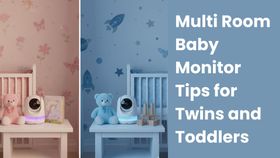
- Twins and toddlers: Split-screen and multi-camera options make it easier to watch more than one room.
When you may not need one
- Room sharing in a small apartment: You will likely hear your baby without extra devices.
- You wake easily: If you are very close to your baby and wake to small sounds, a monitor may be optional.
Information here is educational and not medical advice. For sleep or health concerns, speak with your pediatrician.
How to choose the right type
Non Wi Fi for simple, private monitoring
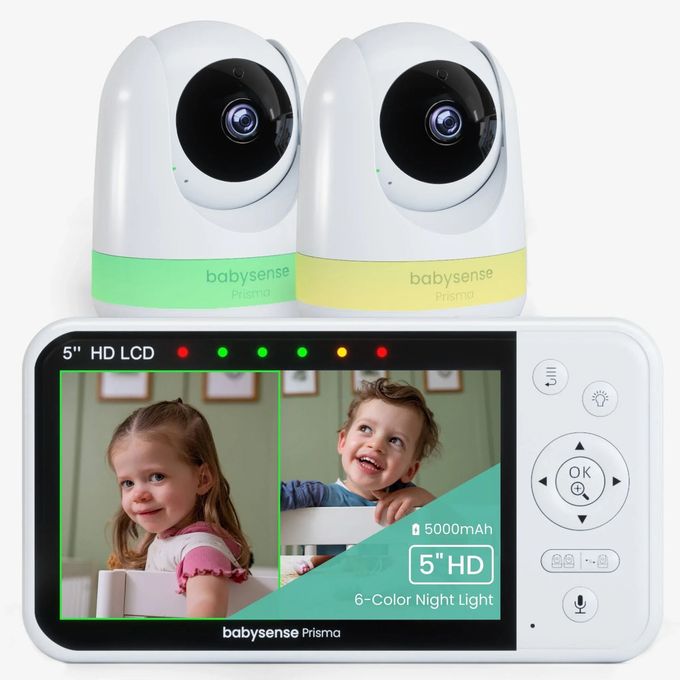
If you prefer a closed, direct connection, consider the Babysense Prisma. It offers secure FHSS transmission, a color screen, and helpful tools like lullabies and two-way talk.
The Babysense Prisma keeps things easy with a dedicated parent unit and no apps to manage. Families with two rooms can choose the 2-camera option for split-screen viewing.
What about breathing or wearable monitors?
Some products track motion or breathing. These tools can offer peace of mind for some parents, but they are not medical devices for preventing SIDS. A safe sleep setup is still most important according to the AAP.
Practical tips
- Place the camera 3 to 6 feet from the crib with a clear view. See our setup guide: where to put your baby monitor.
- Room sharing is recommended for at least the first 6 months; monitors can still help during naps and evenings. Learn more: how long should your baby sleep in your room.
- Watching two rooms? A split-screen option like the Prisma makes it easier. See our guide to split-screen monitoring.
- Shopping checklist: video quality, range, battery life, split-screen, two-way talk, lullabies. See top features parents look for.
FAQs
Do baby monitors prevent SIDS?
No. Home monitors have not been shown to prevent SIDS. Focus on a safe sleep environment and talk to your pediatrician if you have concerns. See the AAP overview on safe sleep.
When should I stop using a monitor?
Many families continue until they feel confident without video or audio support, or when a child can reliably call out. See our guide: when to stop using a baby monitor.
Is a monitor helpful if I work from home?
Yes, it can help you glance between tasks or meetings without entering the nursery. A non Wi Fi option like the Prisma keeps setup simple.
Should grandparents or relatives watch the feed remotely?
If you choose to involve others, make sure they are trusted, attentive, and understand when to call you. Prioritize privacy and follow safe sleep guidance.
Sources and further reading