How to Prepare for Your First Night Home With a Newborn Baby
The first night home with a newborn can feel intense, but most of what parents experience is completely normal. This post covers feeding expectations, safe sleep setup, normal newborn breathing, and the warning signs that need prompt medical attention.






Updated April 21, 2026
AI Summary


Bringing your baby home for the first time is one of the most exciting and nerve-wracking moments of parenthood. The hospital had nurses just down the hall. Now it's just you and your newborn, and that can feel overwhelming, especially in the middle of the night when you're exhausted and unsure what's normal.
Now, most of what you'll experience on the first night home with your newborn is completely normal. In this post, we will walk you through what to expect, how to set up for a safer and smoother night, and when something needs medical attention.

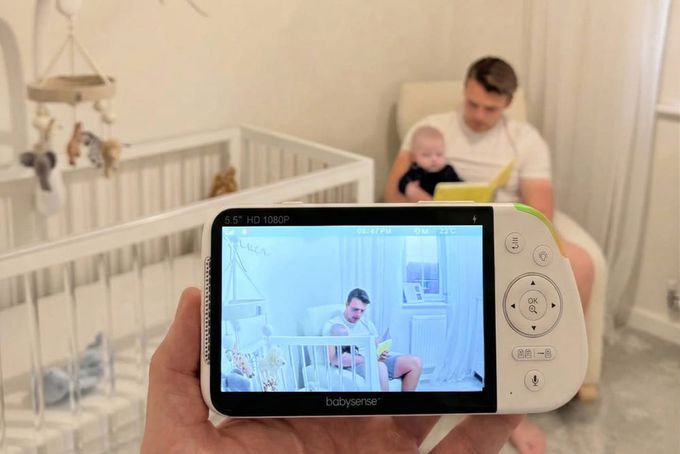
Keep an Eye on Your Baby at Night
Check in on your little one without stepping into the room and disturbing their sleep.
Why the First Night Home Feels So Intense
Many parents are caught off guard by how unsettled their newborn is on that first night. The day-night confusion is real, and it's one of the most common things.
The most common complaint from parents is that their baby is awake more at night and sleeps for longer periods during the daytime. This can be quite exhausting for parents, but it is developmentally normal.
Part of the reason is that your baby has spent months in a warm, dark, constantly moving environment. The hospital is already a big adjustment for your newborn's sleep schedule. Home is another one entirely, with different sounds, different lighting, and a very different kind of quiet.
How Your Newborn's Body Is Still Developing
Your newborn's brain and body are maturing in ways that directly shape how they behave overnight. Here's what's going on behind the scenes [1]:
Temperature regulation
Newborns can't hold body heat well and rely on calories from feedings to stay warm when the room is too cool. This is why the room temperature matters for more than just comfort.
Breathing
Most newborns don't yet use their diaphragm (main breathing muscle) fully. This means both the chest and belly rise and fall with each breath. It can look unusual at first, but it's completely normal.
Newborn reflexes
Reflexes like the moro reflex (the startle response) can wake a sleeping baby unexpectedly. This is a sign of the brain's early neurological stage, not a problem. These reflexes resolve naturally over the first few months.
Feeding on the First Night Home
How Often Should a Newborn Feed?
Expect your newborn to need a feeding every two to three hours, around eight to ten feedings in a 24-hour period. If you're breastfeeding, sessions may last five to twenty minutes per breast. Formula-fed babies will typically take one to two ounces per bottle.
Burping is also very important after the first breast or halfway through a bottle. It reduces gassiness and that uncomfortable "too full" feeling that can stop a baby from eating enough.
Some babies also cluster feed, meaning they feed every hour for a stretch before returning to a more regular schedule. This is normal and not a sign that something is wrong.
How to Tell If Your Baby Is Getting Enough
Three signs your baby is feeding well:
- At least six wet diapers in 24 hours.
- The stool gradually transitions from dark meconium (the thick, black-green first stool) to lighter brown and then yellow.
- No deepening of jaundice (yellow skin color caused by an immature liver).
Your baby's first doctor visit should happen within two to four days of discharge. Any feeding concerns can be picked up and addressed there.
Setting Up a Safe Sleep Space
AAP Safe Sleep Guidelines
How you set up your baby's sleep environment can significantly reduce the risk of Sudden Infant Death Syndrome (SIDS), the sudden, unexplained death of an infant under one year of age. In 2021, SIDS was responsible for over 30,000 infant deaths worldwide [4].
For a safe sleeping environment, the AAP (American Academy of Pediatrics) recommends:
- A separate sleep surface, such as a crib or bassinet, not your bed.
- A firm, flat mattress with a fitted sheet and nothing else in the sleep space.
- No blankets, pillows, bumpers, or incline devices in the cot.
- Room-sharing with parents for at least the first six months, which research shows reduces the risk of SIDS by 50 percent [5].
Getting Your Newborn's Room Environment Right
Temperature
To get the perfect room temperature for your baby, keep it between 16 and 18 degrees Celsius (62 to 64 degrees Fahrenheit). Overheating is a known SIDS risk factor.
Lighting and noise
Dim lighting and blackout curtains can help your baby settle more easily. Research shows that infants sleep better in dark environments. If you use a white noise machine, keep it at least 30 centimetres from the cot and below 80 decibels [6].
Normal Newborn Breathing and Movements
What Periodic Breathing Looks Like
One of the things that keeps new parents up on the first night, even when the baby is sleeping, is monitoring their baby's breathing and wondering if it looks right.
Newborns often have what's called periodic breathing, a normal pattern of brief, rapid breathing followed by short pauses of five to ten seconds. This is caused by the immaturity of the brain's breathing control centre and is not a cause for concern as long as your baby looks comfortable and has a good color [6].
Active Sleep: Twitches, Sounds, and Movements
During active sleep (REM sleep), babies twitch, make sounds, and move their arms and legs. This is completely normal newborn behavior and not a sign that anything is wrong.
If you notice your baby's leg shaking, try gently placing your hand on your baby's leg. If the movement stops, it's normal. If it continues, seek medical attention as it could indicate a seizure.
When to Call Emergency Services
Contact emergency services immediately if your baby:
- Stops breathing for 20 seconds or longer.
- Turns blue or grey around the face or lips.
- Feels limp and is unresponsive.
Warning Signs That Need Prompt Attention
Signs to Watch for Overnight
Beyond breathing, there are a few other red flags worth knowing before your first night home:
1. Won't wake for feedings consistently
One longer sleep stretch may not be a concern, but a baby who repeatedly won't wake to feed could be showing signs of infection, worsening jaundice, or a neurological issue.
2. Fewer than six wet diapers in 24 hours
This is a sign of dehydration, most often because the baby isn't getting enough milk or formula. Contact your doctor or a lactation consultant to review feeding.
3. Fever of 38°C (100.4°F) or higher
A fever in a newborn is always taken seriously. Use a rectal thermometer, as forehead and ear thermometers are less accurate in newborns and can miss a fever entirely. If your baby has a fever, go to the emergency room.
Protecting Against Infections
Newborns are vulnerable to bacterial and viral infections, including whooping cough (pertussis) and RSV, a respiratory virus that can cause serious breathing difficulties in young infants.
It may be best for anyone who is ill to reschedule their visit and keep the baby healthy. The arrival of a new baby is exciting, but a newborn's immune system is not ready for exposure to illness.
Speak with your doctor about available protections before or shortly after birth, and don't hesitate to ask unwell visitors to wait.
Listen to Your Gut
The first night home with your newborn will probably not go perfectly, and that's okay. There will be unexpected wakings, sounds that make your heart skip, and moments where you feel completely unsure of what you're doing. Every new parent feels this way.
What matters is that you're informed, your baby's sleep space is set up safely, you know how to tell if feeding is going well, and you know which signs need medical attention. The rest you'll figure out as you go, just like every parent before you.
Stay Worry-Free While Your Baby Sleeps
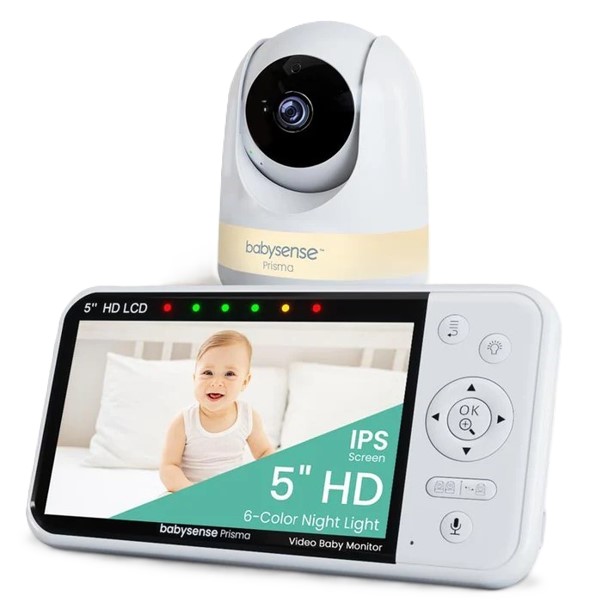
You don't have to hover over the cot to know your baby is okay. Babysense non-WiFi monitors keep you connected all night long.
References
1. Philadelphia, C. H. O. (n.d.). Warmth and Temperature Regulation | Children’s Hospital of Philadelphia. Children’s Hospital of Philadelphia. https://www.chop.edu/pages/warmth-and-temperature-regulation
2. Sleep and your newborn. (n.d.). Nemours KidsHealth. https://kidshealth.org/en/parents/sleepnewborn.html
3. Sun, Y., Peng, H., Chen, Q., Qin, L., Ren, Y., & Cheng, Y. (2025). Global, regional, and national burden of sudden infant death syndrome, 1990–2021: a comprehensive analysis of GBD 2021 data with insights into the impact during the COVID-19 pandemic. Frontiers in Pediatrics, 13, 1606910. https://doi.org/10.3389/fped.2025.1606910
4. Beijers, R., Cassidy, J., Lustermans, H., & De Weerth, C. (2018). Parent–Infant room sharing during the first months of life: Longitudinal links with behavior during middle Childhood. Child Development, 90(4), 1350–1368. https://doi.org/10.1111/cdev.13146
5. Oster, E., PhD. (2026, February 18). Are white noise machines safe for babies? | ParentData by Emily Oster. ParentData by Emily Oster. https://parentdata.org/babies/white-noise-developmental-delays/
6. Professional, C. C. M. (2025, December 5). Periodic breathing in newborns. Cleveland Clinic. https://my.clevelandclinic.org/health/articles/periodic-breathing
FAQs
How do I know if my baby is eating enough?
The most reliable sign is weight. Babies lose some weight in the first 24 hours after birth due to fluid loss, but should start gaining it back as feeding picks up. A baby still losing weight at the first doctor visit is likely not getting enough. Wet diaper count and stool color are also helpful day-to-day indicators. If you're breastfeeding and worried about supply, a lactation consultant can help you find solutions.
Should I be worried about the umbilical cord stump?
The cord stump is not painful and doesn't need to be cleaned. Simply keep the area dry and allow it to separate naturally, which usually happens within one to three weeks. A small amount of dried blood or light discharge during the process is normal. However, if the surrounding skin becomes red, develops a foul smell, or produces yellow or green discharge, call your doctor as these can be signs of infection.
What is cluster feeding and is it normal?
Cluster feeding is when your baby feeds every hour or so for a stretch of time before settling back into a more regular two to three hour schedule. It can feel relentless, especially on the first night home, and many parents worry it means their milk supply is too low or that something is wrong. It isn't. Cluster feeding is a normal newborn behavior and doesn't indicate a problem with your supply. Ride it out, keep offering feeds, and it will settle into a more predictable rhythm over the coming days.
How much crying should I expect from my newborn?
Quite a bit, especially in those early weeks. Newborns cry when they're hungry, uncomfortable, gassy, or cold, but they also cry simply because crying is how they communicate at this stage.
Crying can occur quite frequently during the first six weeks of life, for a total of three hours per day. After age three months, most babies cry less frequently and for shorter durations.
If your baby has been fed, burped, and has a clean diaper but is still crying, try skin-to-skin contact, gentle rocking, or swaddling. If crying seems excessive, high-pitched, or is accompanied by other symptoms, contact your doctor.
How can I protect my newborn from RSV?
RSV (respiratory syncytial virus) causes mild cold symptoms in older children and adults, but can be serious in newborns, leading to breathing difficulties and in many cases, hospitalization. There are two ways to protect your baby.
A maternal vaccine can be given during the last trimester of pregnancy, which transfers immunity to your baby before birth. Alternatively, a vaccine can be given to your baby after birth and provides around six months of protection. If your baby is born between September and March, they may receive this at the hospital. If not, ask about it at your first doctor visit.