Watching TV With a Newborn in the Room: Is It Safe?
New parents need downtime too, but a TV playing near a sleeping newborn raises real questions about sleep disruption and early brain development. Here's what's actually safe, plus practical ways to watch TV without waking your baby or missing an important cue.




Updated October 6, 2026
AI Summary


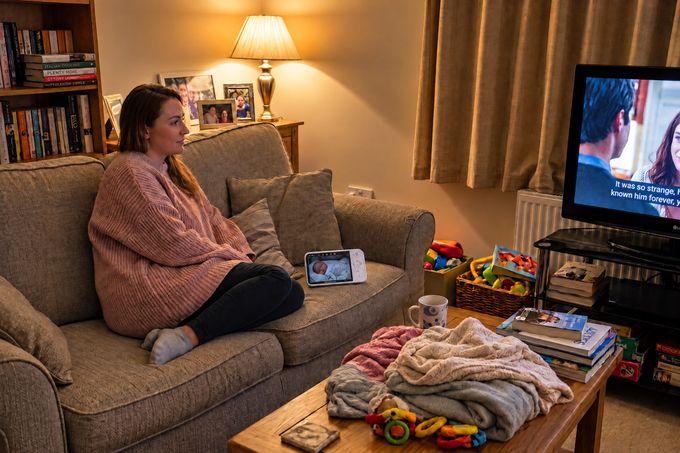
New parents spend a huge chunk of their day in survival mode, so it makes sense that the first quiet moment after baby's asleep feels like a reward. Watching TV with a newborn in the room is one of the most common ways parents try to unwind. It's still fair to wonder whether the sound or the flickering light could wake your baby, or worse, affect their development.
Below, you'll find out whether it's actually safe, what pediatricians say about newborns and television, and when screen time in the room becomes something to think about more seriously. You'll also get a few simple, low-effort ways to watch without disturbing your baby's sleep, plus how to read your baby's cues even while you're half-watching a show.
Check In Without Missing a Beat
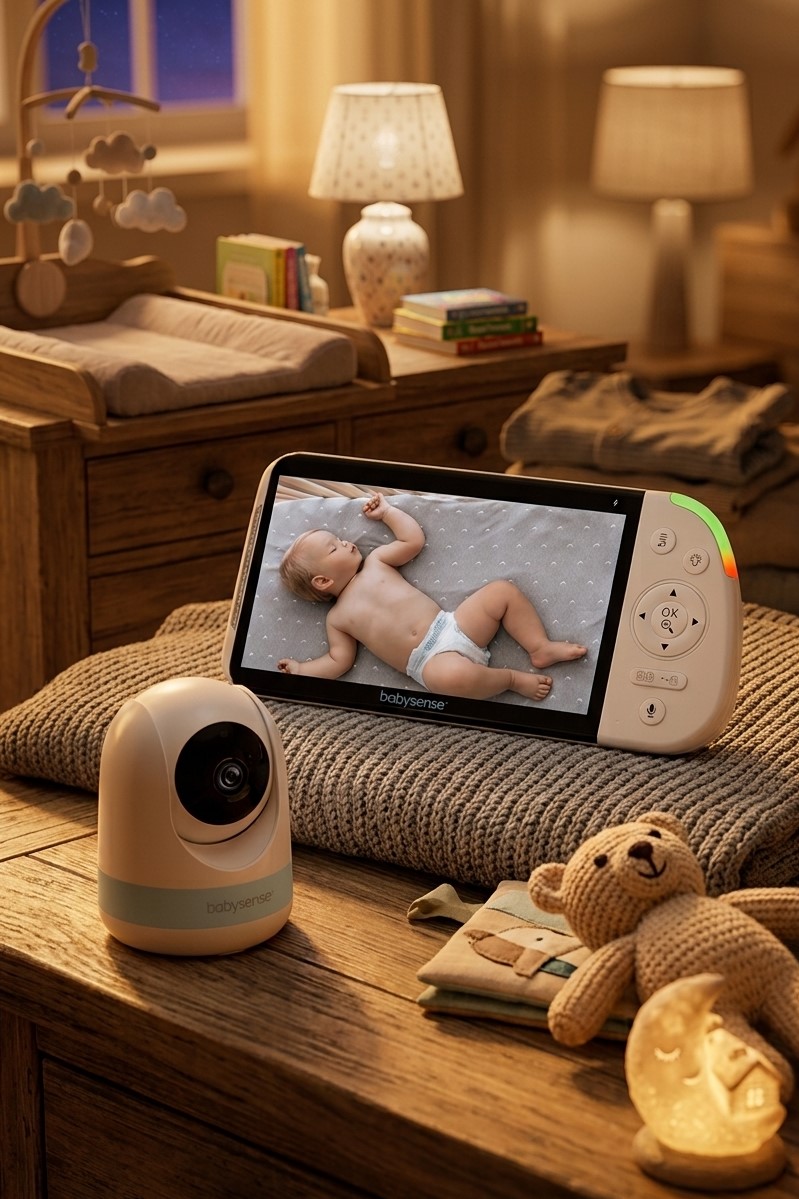
A dedicated monitor screen means you can glance over anytime, even with the TV holding your attention.
Can Parents Watch TV While a Baby Sleeps?
The short answer is yes: you can watch TV with a newborn in the room, but how and when you do it matters. A quiet show with the volume low, played a few feet away from a sleeping baby, generally isn't a problem. The concerns come in when the TV is loud, bright, or running for hours on end while your baby is trying to settle.
4 Reasons Watching TV Isn't Ideal With a Sleeping Baby in the Room
A little infant television exposure here and there won't undo anything, but here's why it's worth being intentional about when and how the TV runs.
1. TV Might Disturb Your Baby
Babies who are sensitive to sound or light may stir when the TV is on. Once they're alert enough to notice the screen, they might start to fight sleep. Getting them back down can take longer than if the TV had stayed off.
Signs your baby's noticed the TV:
- Eyes open and tracking toward the light or movement
- Head turning toward the sound
- A startled flinch at a sudden volume change
2. Television Can Impact Brain Development
Regular screen exposure before age two has been linked to real effects on a baby's reading skills, language development, and short-term memory [1]. Your baby doesn't need to be staring at the TV for this to apply. Screen time playing in the background while they glance over still counts.
Babies can't follow a plot, but they notice the moving shapes, colors, and sounds. Real learning happens through back-and-forth with people, not screens, so TV time doesn't build those skills the way play and conversation do. With the TV on, everyone in the room also tends to talk less, and infants learn language largely by listening to the people around them [2].
None of this means one lazy afternoon is going to set your baby back. It's the regular, daily habit of pairing newborns and television that adds up, not the occasional background noise.
» Check out these proven brain-boosting habits you can start with your baby from birth.
3. You Might Not Hear Your Baby Monitor
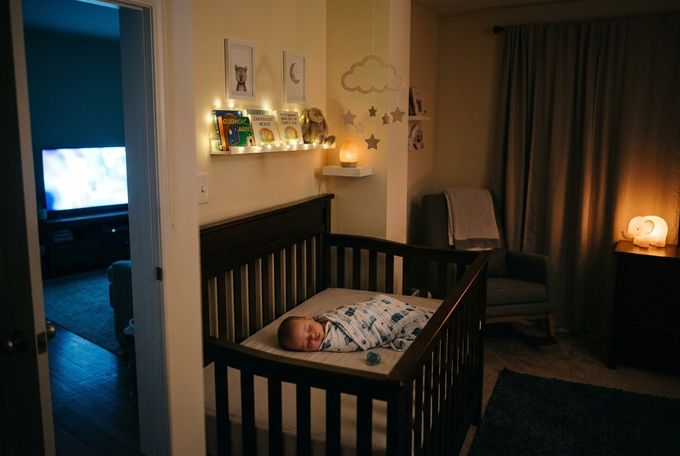
This may not be a problem if you’re hanging out in the same room, but if your baby is sleeping peacefully in their nursery while you blare the football game in the living room, you could miss the sound of the video baby monitor.
No parent wants to miss their baby’s cries, and even the thought of it could cause some anxiety. Rather than enjoying some downtime while they sleep, you could end up hyper-fixated on every snore or groan your infant makes.
A breathing motion monitor offers parents some reassurance in situations like these. Instead of relying on you detecting a cry over the TV, it tracks your baby's breathing movements directly through under-mattress sensor pads. The monitor then sends real-time alerts if that motion stops or changes.
4. TV Light Can Disrupt Sleep Onset
Even with the sound down, light from a screen can delay sleep. Researchers found that an hour of light exposure before bed suppressed melatonin in preschoolers by 70 to 99%, with even dim light averaging a 78% drop [3]. Melatonin didn't rebound in most kids even 50 minutes after the light went off. A dim room and the correct color light do more for your baby's sleep than a muted TV does.
When Is It Okay to Watch TV With a Baby?
The answer really comes down to whether the baby is directly watching a screen or if there's simply a TV on nearby. A show playing quietly in the background occasionally isn't the concern. However, regular, deliberate screen time is.
Is It Bad for a Newborn to Watch TV?
Once your baby crosses into toddlerhood, occasional, co-viewed, high-quality programming is fine. The AAP suggests capping it around an hour a day for toddlers aged between 2 and 5 years, and watching together rather than leaving them in front of a screen alone [5].
Before that age, the goal isn't to eliminate every flicker of a TV in the house, just to keep direct, deliberate screen time off the table until your baby is developmentally ready.
3 Ways to Watch TV Without Disturbing Your Baby
If you want to unwind in front of the TV while your newborn sleeps nearby, a few small adjustments make it easier on everyone:
1. Mute the Sound (and Use Closed Captions)
Turning off the audio and switching on subtitles lets you follow along without any noise competing with your baby's sleep, or with your ability to hear them if they wake up. Most streaming apps and cable boxes let you toggle captions with a single remote button, so it's an easy habit to build into your evening routine.
If you're leaning on background sound to help your baby sleep instead, it's worth reading up on how white noise affects baby sleep, since it works differently than TV audio does.
2. Use Headphones
A splitter or a set of wireless headphones lets you keep the volume exactly where you want it, right in your ears instead of filling the room. It's an easy fix if the mix of newborns and TV noise feels like too much of a risk to your baby's sleep schedule.
A few options that work well:
- A cheap audio splitter for wired headphones plugged straight into the TV
- A Bluetooth transmitter that pairs wireless headphones with an older TV
- A soundbar or TV with a built-in app for phone-based listening
Of course, if you’re still worried about missing the sound of the baby monitor, you can always just use one headphone and keep your monitor close by.
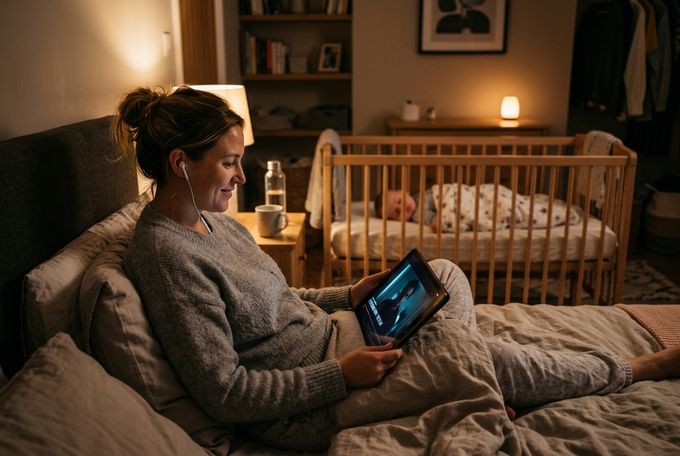
3. Watch on a Smartphone or Tablet
Streaming on a smaller, dimmer screen positioned away from your baby cuts down on both the light and sound reaching the crib. You get your show without the trade-offs of a full-size TV running nearby.
Finding the Right Balance With Baby Nearby
Watching TV with a newborn in the room is safe in moderation. Keep the volume low, dim the room where you can, and save any direct, on-screen viewing until your baby is at least 18 months old. A little intention around when and how you watch goes a long way toward protecting both your baby's sleep and your own sanity.
That said, downtime works a lot better when you're not straining to listen for your baby over the sound of the TV. Babysense's breathing motion monitors track your baby's breathing directly, whether the room is silent or the television's on. If you'd rather see your baby too, Babysense's non-Wi-Fi video monitors give you a dedicated, closed-loop screen, while the smart Wi-Fi lineup adds the option to check in remotely from your phone.
References
1. Zimmerman, F. J., & Christakis, D. A. (2005). Children's television viewing and cognitive outcomes: A longitudinal analysis of national data. Archives of Pediatrics & Adolescent Medicine, 159(7), 619–625. https://doi.org/10.1001/archpedi.159.7.619
2. Munzer, T. (2026). Helping Kids Thrive in a Digital World: AAP Policy Explained. https://www.healthychildren.org/English/family-life/Media/Pages/helping-kids-thrive-in-a-digital-world-AAP-policy-explained.aspx
3. Akacem, L. D., Wright, K. P., & LeBourgeois, M. K. (2018). Sensitivity of the circadian system to evening bright light in preschool-age children. Physiological Reports, 6(5), e13617. https://physoc.onlinelibrary.wiley.com/doi/10.14814/phy2.13617
4. Hill, D. L. (2016). Why to Avoid TV for Infants & Toddlers. https://www.healthychildren.org/English/family-life/Media/Pages/Why-to-Avoid-TV-Before-Age-2.aspx
5. American Academy of Pediatrics, Council on Communications and Media. (2016). Media and young minds. Pediatrics, 138(5), e20162591. https://publications.aap.org/pediatrics/article/138/5/e20162591/60503/Media-and-Young-Minds
FAQs
Is it okay to have the TV on in the background while my baby is in the room?
Yes, occasional background TV is fine as long as the volume stays low and it's not running for hours at a time. The bigger concern is direct, regular screen exposure, not a show playing quietly nearby.
When can babies watch TV safely?
The AAP recommends holding off on screen media until 18 to 24 months, aside from video chatting with family. After that, occasional, co-viewed programming is fine in small doses.
Does background TV noise count as white noise for a baby?
Not reliably. TV audio changes in volume and tone constantly, which can startle or stimulate a baby rather than soothe them the way consistent white noise does. A dedicated white noise machine is a more predictable option if you want background sound.
Can a loud TV affect my newborn's sleep quality?
Yes. Sudden volume spikes or a TV left on too loud can interrupt light sleep cycles, even if your baby doesn't fully wake up. Keeping the volume low or using headphones protects deeper, more restorative sleep.
Does the "no screen time" guidance apply to video chats?
No, video calls are the one exception pediatricians carve out. Chatting with a grandparent or relative over video is interactive, with a real person responding in real time. This is different from passively watching a show. It's fine at any age, unlike direct, on-screen viewing.