Wake Windows by Age: A Science-Backed Guide to Baby's Sleep Rhythms
Wake windows change rapidly through the first two years of life as the baby's brain and circadian rhythm mature. This post breaks down typical wake windows at every stage from newborn to toddler, with expert guidance on tired cues, nap transitions, and when sleep difficulties may need medical attention.






Updated September 30, 2026
AI Summary


If you've ever put your baby down too late and paid for it with an overtired, inconsolable mess at bedtime, you already understand wake windows, even if you didn't know the term. Wake windows are when your baby can comfortably stay awake between sleep periods. Get them right and sleep feels manageable. Get them wrong and everyone suffers.
The tricky part is that wake windows change constantly in the first two years of life, sometimes faster than you can keep up. In this guide, we break down what to expect at each stage, from the newborn days all the way through toddlerhood, so you can work with your baby's natural rhythms instead of against them.
» Learn how to create a safe sleeping environment for your baby.
What Are Wake Windows and Why Do They Matter?
Wake windows are driven by brain development. The areas of the brain that control sleep and wakefulness, the brainstem and hypothalamus, are immature at birth. This is why newborns spend most of their sleep in active sleep (REM sleep), with lots of eye movements and small body twitches.
As the brain matures through the first year, babies gradually develop longer periods of quiet sleep, where the body is still and resting more deeply [1].
What Influences Wake Window Tolerance
Not every baby follows the same timeline, and several factors can shorten or extend how long your baby can comfortably stay awake [2]:
- Growth spurts: Growth hormone is secreted during sleep, particularly in the first six months. During a growth spurt, your baby may need more sleep than usual.
- Illness: Nasal congestion and general discomfort can shorten your baby's sleep intervals and disrupt wake windows significantly.
- Temperament: Some babies are naturally more alert and curious, while others tire more quickly. Follow your baby's cues alongside any general guidelines.
How to Read Your Baby's Tired Cues
Tired cues change as your baby grows, but some stay consistent across ages.
In newborns, watch for:
- Intermittent eye closing
- Eye rubbing
- Yawning
- Soft noises while drifting off
Keep in mind that brief startle movements as they fall asleep are normal and not a sign of a neurological issue.
Subtle mouth sucking movements may also be seen, which is why some infants use a pacifier while falling asleep.
Older babies may:
- Rub their eyes
- Suck their thumb
- Tap a foot rhythmically
Some babies lift and drop their head against the mattress repeatedly as a self-soothing behavior. While this can look alarming, don't worry. This is simply a sleep-associated soothing behavior and not a cause for concern.
» Worried about your baby's sleeping patterns? Find out how long they should sleep.
Baby Wake Windows by Age
Newborn Wake Windows (0 to 2 Weeks)
During a newborn's sleep schedule, wake windows are very short, typically just 30 to 60 minutes, and mainly built around feeding. Newborns don't yet have a mature circadian rhythm (the internal body clock that regulates sleep and wakefulness), so there's no real day or night for them yet [3].
Managing day-night confusion
By the two-week visit, most newborns sleep more during the day and are wide awake in the middle of the night.
This approach isn't about eliminating nighttime feedings. It's about helping your baby begin to understand the difference between day and night.
Wake Windows at 2 to 8 Weeks
Wake windows begin to lengthen slightly during this period, ranging from 30 to 60 minutes of sleep for one-month-olds. Babies are still feeding frequently, but you may start to notice slightly longer alert periods during the day.
Every baby is different at this stage, and some two-month-olds may only need one feeding after 11pm or midnight. Following your baby's hunger and tired cues is more reliable than following a rigid schedule.
» Look into the pros and cons of co-sleeping vs using a crib for baby.
Wake Windows at 2 to 4 Months
Between two and four months, the circadian rhythm starts to regulate more consistently. Babies begin producing melatonin (the hormone that promotes sleep in darkness) more reliably, and the brain's sleep homeostasis (its ability to build and release sleep pressure) becomes more developed [4].
Wake windows at this stage typically extend to 60 to 90 minutes. Babies can take larger feeds during the day, which means they may not need to wake as frequently overnight.
Wake Windows at 4 to 6 Months
By five to six months, many babies are capable of sleeping through the night, though in practice this varies widely. Melatonin production is fully functional by four months, which is a significant development for nighttime sleep [5].
Wake windows at this stage are typically 1.5 to 2.5 hours. Naps are beginning to consolidate, and you may notice your baby settling into a more predictable pattern of two to three naps per day.

Stay Connected During Nap Transitions
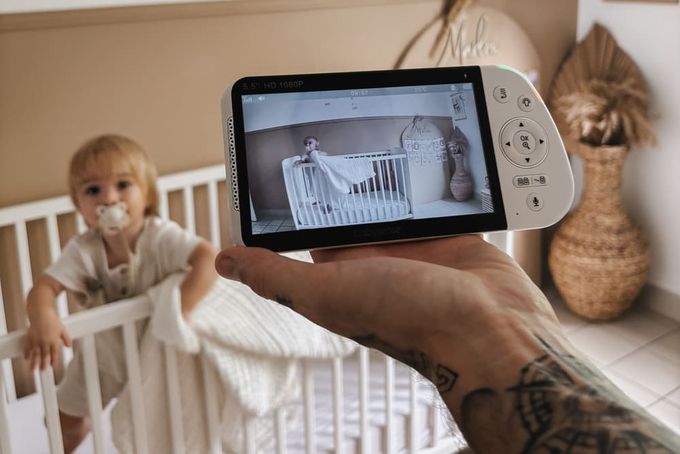
The Babysense PRO provides clear, hack-proof video and audio monitoring day and night.
Wake Windows at 6 to 9 Months
Between six and nine months, babies are more active and socially engaged. They're rolling, sitting, crawling, and exploring, and that stimulation can make it harder for them to recognize when they're tired and experience sleep regression.
Wake windows are usually around 2 to 3.5 hours at this stage. Daytime naps average two to three per day.
Wake Windows at 9 to 12 Months
By 12 months, total recommended sleep is 11 to 14 hours per day. Most babies no longer need a late-night feeding, thanks to eating three meals plus snacks during the day. Wake windows are usually around 3 to 4 hours at this stage.
The transition from three naps to two often happens somewhere in this window. But, keep in mind that not every baby makes the shift at the same time.
Wake Windows at 12 to 18 Months
The total recommended sleep at this age remains 11 to 14 hours per day, with up to 80 percent of 12-month-olds getting most of it overnight. Wake windows are typically 3 to 4.5 hours.
Managing the two-nap to one-nap transition
The shift of going to one nap can come with bedtime resistance, as toddlers may not feel tired at their usual time. Even if your toddler refuses to nap, offering some calm "down time" can help prevent overtiredness.
What down time can look like
- Lying quietly in the crib with the lights dimmed.
- Sitting with you for a calm, low-stimulation activity.
- Reading books or listening to soft music together.
If your baby fights sleep consistently, an earlier bedtime can help prevent the overtired spiral.
Wake Windows at 18 to 24+ Months
By age two, most of the recommended sleep hours happen overnight, and daytime naps become less predictable. Wake windows can extend to 5 to 6 hours for some toddlers.
The length of the daytime nap now matters as much as whether the nap happens at all. A longer nap in the afternoon can push bedtime later, which may or may not suit your family's schedule.
A one-hour nap is less likely to interfere with bedtime. Longer daytime naps may result in later bedtimes.
Toddlers at this age are also asserting more independence, and bedtime resistance is common. Keeping a consistent wind-down routine helps signal that sleep is coming, regardless of how alert your toddler seems.
» Learn why some babies breathe fast while sleeping.
Finding Your Baby's Rhythm
Wake windows aren't about following a rigid schedule. They're about understanding where your baby is developmentally and responding to what their body is telling you. The windows will keep shifting through the first two years, but so will your ability to read your baby's cues.
When in doubt, watch your baby more than you watch the clock. Tired cues, feeding patterns, and how your baby wakes up from sleep will tell you more than any chart.
References
1. Chen, H., Gao, J., Chen, Y., Xie, J., Xie, Y., Spruyt, K., Lin, J., Shao, Y., & Hou, Y. (2022). Rapid Eye Movement Sleep during Early Life: A Comprehensive Narrative Review. International Journal of Environmental Research and Public Health, 19(20), 13101. https://doi.org/10.3390/ijerph192013101
2. Lampl, M., & Johnson, M. L. (2011). Infant growth in length follows prolonged sleep and increased naps. SLEEP, 34(5), 641–650. https://doi.org/10.1093/sleep/34.5.641
3. Tham, E., Schneider, N., & Broekman, B. (2017). Infant sleep and its relation with cognition and growth: a narrative review. Nature and Science of Sleep, Volume 9, 135–149. https://doi.org/10.2147/nss.s125992
4. Wong, S. D., Wright, K. P., Spencer, R. L., Vetter, C., Hicks, L. M., Jenni, O. G., & LeBourgeois, M. K. (2022). Development of the circadian system in early life: maternal and environmental factors. Journal of PHYSIOLOGICAL ANTHROPOLOGY, 41(1), 22. https://doi.org/10.1186/s40101-022-00294-0
5. Professional, C. C. M. (2026, February 11). Sleep in Your Baby's First Year. Cleveland Clinic. https://my.clevelandclinic.org/health/articles/14300-sleep-in-your-babys-first-year
FAQs
When will my baby sleep through the night?
There's no guaranteed timeline, and every baby is different. Realistically, sleeping through the night for a young baby means six to eight consecutive hours, not a full adult night. Most babies get there somewhere between four and six months, but there's a wide range of normal. If you're worried, bring it up at your next pediatric visit.
Is it okay to keep my baby awake longer to tire them out?
This tends to backfire. An overtired baby becomes irritable and much harder to settle than one who's been put down at the right time. Work with your baby's natural wake windows rather than trying to push past them.
What is colic and how does it affect sleep?
Colic is when a baby cries intensely for several hours at bedtime, usually between four weeks and three months of age, with no obvious cause. Around 20 percent of infants experience it. It's exhausting for parents, and most soothing strategies have limited effect. The good news is that it almost always resolves on its own by three months. If you're concerned, speak with your doctor to rule out a milk allergy or GERD (gastroesophageal reflux disease, or acid reflux).
My baby's sleep seems really disrupted. Could something else be going on?
It's worth mentioning to your doctor. Premature babies, for example, often experience delays in sleeping through the night even after their circadian rhythm develops. Sleep difficulties are also common in babies with conditions like cerebral palsy, autism, or craniofacial differences that affect breathing. If your instinct says something is off, trust it and get it checked out.
Is it safe to add cereal or food to my baby's bottle to help them sleep longer?
No. This trend, sometimes called the "knock out bottle," has been circulating on social media, but it's genuinely dangerous. Adding food to a bottle thickens the liquid and raises the risk of choking and aspiration (breathing liquid into the lungs). Please don't try it, regardless of what you've seen online.