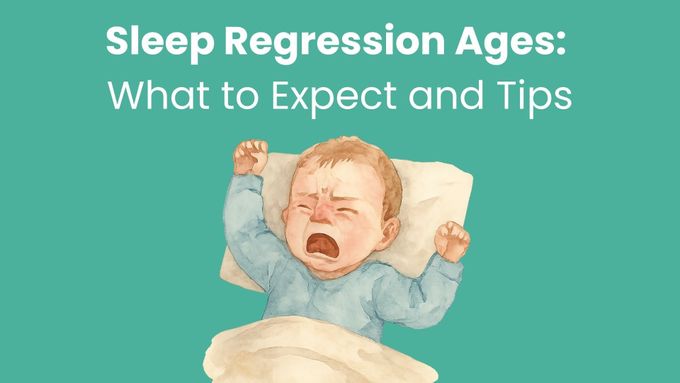
Sleep Regression Ages: What to Expect and Tips
Sleep regression ages often occur at 4, 8–10, 12, 18 and 24 months. Learn why they happen, how long they last, and gentle ways to support better rest.


Published March 8, 2020
AI Summary


Sleep regression ages most often cluster around 4 months, 8 to 10 months, 12 months, 18 months, and about 2 years. These brief phases reflect fast brain and body growth. Below you will find what to expect at each age and calm steps that may help.
Sleep regressions at a glance
Quick list of common sleep regression ages
- ~4 months sleep becomes more adult-like in cycles
- ~8 to 10 months mobility and separation awareness surge
- ~12 months new standing and words can disrupt sleep
- ~18 months big toddler leaps plus boundary testing
- ~2 years language burst, independence, nap shifts
Not every child hits every regression and timing varies. These ages are approximations seen in clinical and editorial guidance.
Healthy sleep needs remain important during regressions. Consensus guidance recommends roughly 12 to 16 hours in 24 hours for ages 4 to 12 months and 11 to 14 hours for ages 1 to 2 years, including naps.
The sleep regression ages timeline
~4 months
Around this time, infant sleep cycles mature, with lighter and deeper stages that make brief night wakings more likely. This change is developmental. Calm routines and practice falling asleep in the crib may help.
Babies’ sleep cycles gradually regulate across early months, which is why some infants wake more as patterns shift.
~8 to 10 months
New mobility, object permanence, and separation awareness can disrupt settling. Expect more bedtime protests and brief night wakings. Keep a steady routine and offer reassuring check-ins.
~12 months
Pulling to stand, first steps, and language gains can stir sleep. Most one‑year sleep dips resolve within a few weeks when routines stay consistent and the room is calm and dark.
~18 months
Toddlers test boundaries and may resist naps or bedtime. Many do not have a distinct 18‑month regression, but if they do, it is typically short‑lived when healthy sleep habits are reinforced.
~2 years
Independence, language bursts, and nap transitions can cause pushback. Keep routines and limits clear and expect the phase to pass.
Signs of a regression vs other causes
These patterns can help you tell a normal regression from something else that needs a different plan or medical advice.
Pattern you notice | Likely cause | What may help |
|---|---|---|
Sudden night wakings after weeks of steady sleep; practicing new skills | Typical regression at 4, 8–10, 12, 18, or ~24 months | Consistent routine, brief reassuring check‑ins, age‑appropriate schedule |
Fever, cough, labored breathing, poor feeding, or dehydration signs | Illness | Seek medical advice promptly; follow pediatric guidance |
Painful gums, drooling, daytime irritability around tooth eruption | Teething | Comfort measures as advised by your clinician |
Crib has pillows, blankets, bumpers, or baby sleeps on inclined surface | Unsafe sleep setup can fragment sleep and increase risk | Back to sleep on a firm, flat surface in a clear crib |
For safe sleep setup, follow current AAP and CDC guidance on back sleeping, firm flat surfaces, and a clear crib.
What may help during any regression
- Protect bedtime. Keep a calm, repeatable 20 to 30 minute routine and a consistent bedtime and wake time.
- Adjust the schedule. Slightly earlier bedtime or age‑appropriate awake windows can reduce overtiredness.
- Practice new skills in daylight. Crawling, standing, and words are exciting. Extra daytime practice can ease nighttime restlessness.
- Keep the room sleep‑friendly. Dark, quiet, and comfortably cool with a firm, flat sleep surface and a clear crib.
- Respond, then return to routine. Offer brief reassurance without adding new habits you will need to undo later.
For a deeper dive into timing and routines, see our internal guides on what sleep regression means, a focused 4‑month regression guide, a broader baby sleep schedule guide, and how room conditions can support sleep.
When to call your pediatrician
- Breathing difficulty, color change, or repeated pauses in breathing
- Persistent fever, poor feeding, vomiting, dehydration signs, or weight concerns
- Snoring with gasps or very restless sleep most nights
- Sleep disruption lasting beyond several weeks despite steady routines
Your pediatric clinician can rule out medical causes and personalize next steps. For general infant sleep and safety basics, start with AAP and CDC resources.
Product spotlight
A reliable non Wi‑Fi monitor can support steady routines without app distractions. The Babysense Prisma offers secure, dedicated‑link monitoring so you can focus on your soothing plan. Read our Prisma review for details.
FAQs
Last updated: September 5, 2025 • Babysense Editorial Team
This article is for general education and is not a substitute for personalized medical advice.
Sleep regression ages include 4, 8 to 10, 12, 18 and 24 months. See why they happen, how long they may last, and calm steps that can support better sleep.