Babysense in Japan: The Baby Breathing Movement Monitor Trusted for 30 Years
Babysense Home, known as the Babysense 7 in the US, is a baby breathing movement monitor built on the same technology used in Japanese neonatal wards for nearly 30 years. This post covers how Babysense earned its clinical credibility in Japan, what the research says, and which institutions trust it.




Updated September 30, 2026
AI Summary


One of the hardest parts of being a new parent is the worry that creeps in when everything goes quiet. Is my baby okay? Should I check on their breathing? For most parents, that anxiety doesn't fully go away, and that's exactly why Babysense Home was created.
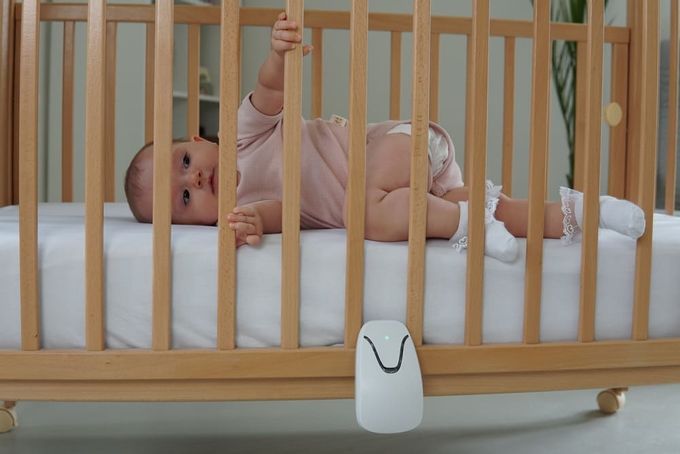
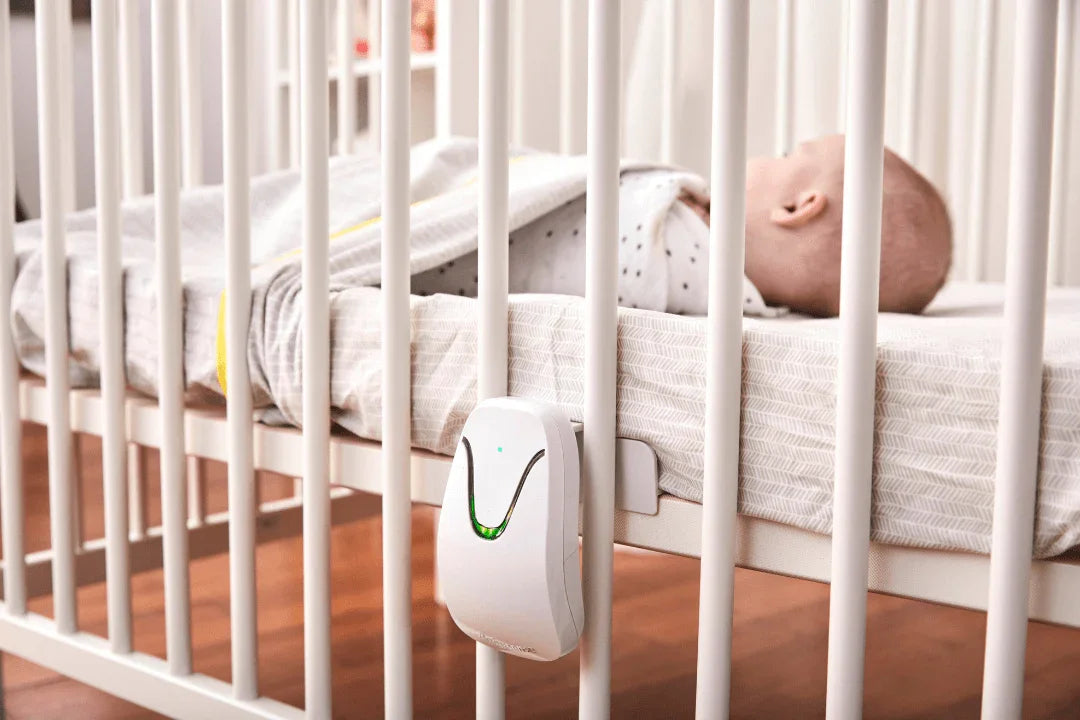
Sitting under your baby's mattress, it monitors their breathing movements using the same technology trusted by Japanese neonatal wards, now built into home devices like the Babysense 7, Babysense 8, and Babysense Connect.
One Less Thing to Worry About
Babysense breathing motion monitors track your baby's breathing movements, alerting you to any changes in real-time.
Why Japan Trusted Babysense Home
In the late 1990s, Japan was grappling with a serious concern: Sudden Infant Death Syndrome, or SIDS.
SIDS is the sudden, unexplained death of an otherwise healthy infant during sleep. At the time, Japan was recording close to 500 SIDS-related deaths per year [1].
Japan's Approach to Reducing SIDS
Japan's health authorities responded with an approach to reduce the risk of SIDS that included:
- Placing babies on their backs to sleep and avoiding tobacco smoke.
- Encouraging breastfeeding wherever possible.
- Investing in caregiver education and awareness.
- Evaluating infant breathing motion monitors as a practical, additional layer of vigilance.
That evaluation brought Babysense to Japan. Developed outside Japan and selected strictly for its clinical performance in the country, Babysense went on to become the most trusted infant breathing movement monitor across Japan's hospitals and childcare institutions.
Today, Japan's annual SIDS count has dropped from nearly 500 to approximately 50. Throughout this period, Babysense has been continuously and widely used in the hospitals and childcare facilities that are at the centre of Japan's infant care system.
What the Research Says About Babysense Home
Babysense Home wasn't adopted in Japan because of clever marketing. It earned its place through clinical evidence.
Over several decades, researchers at Japan's leading universities conducted rigorous trials and published their findings in peer-reviewed medical literature. The evidence accumulated to the point where Japan's obstetric medical community felt confident enough to take a formal position.
The 2014 Clinical Guidelines
In 2014, infant breathing movement monitors were specifically cited by name in the Clinical Guidelines for Obstetrical Practice [2], published jointly by:
- The Japan Society of Obstetrics and Gynecology (JSOG)
- The Japan Association of Obstetricians and Gynecologists (JAOG)
That's not a product review or a recommendation from a parenting blog. It's the clinical standard that shapes obstetric practice across Japan's entire network of maternity hospitals and clinics.
The Institutions That Use Babysense Home
Japan's medical institutions don't adopt monitoring technology without rigorous evaluation, and they don't stick with products that don't perform. Babysense has maintained that trust across nearly 30 years of continuous use.
Institution Type | Details |
|---|---|
Top research hospitals | Adopted by the National Center for Child Health and Development (NCCHD), Japan's foremost pediatric and maternal health research institution. |
High-volume maternity centers | Adopted by Aiikukai Fukuda Hospital in Kumamoto, a Regional Perinatal Mother and Child Medical Center handling the largest birth volume of any hospital in Japan. |
National hospital networks | Widely used across Red Cross hospitals throughout Japan. |
Government initiatives | Featured in the Tokyo Metropolitan Government's Baby First Program, which provides families with funds redeemable for pre-approved childcare products. |
Academic literature | Referenced by Associate Professor Asai Takuya in the Complete Guide to Preventing Serious Accidents in Childcare and Educational Facilities (Shoeisha, ISBN 978-4-7981-8233-9) [3]. |
Beyond hospitals, licensed childcare facilities and municipalities across Japan have introduced Babysense monitors for infant nap monitoring as part of their sleep safety initiatives.
The Same Babysense Technology, Now in Your Home
The Babysense J Plus is the monitor currently used in neonatal wards in Japanese hospitals. It's the device that's been clinically trialled, institutionally validated, and formally cited in Japan's national obstetric guidelines.
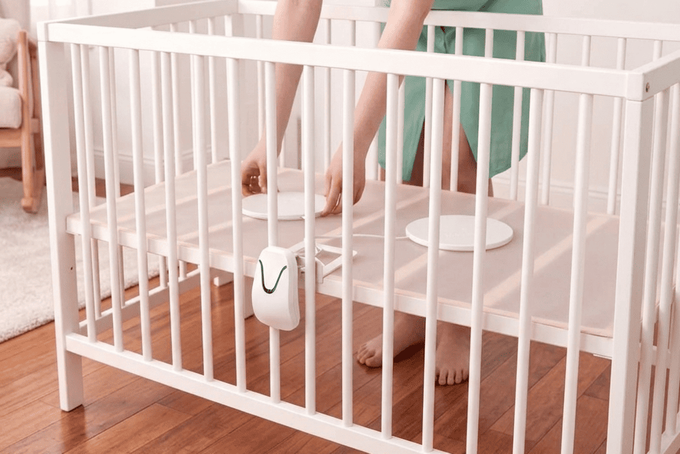
Babysense Home, known as the Babysense 7 in the US, is built on that same core technology. Not a consumer approximation of it. The same foundation, brought home.
What that means in practice:
- Built on the same under-mattress motion-sensing design trusted in Japanese care settings.
- The same clinical sensitivity thresholds have been validated in peer-reviewed research.
- The same proven detection ability will identify changes in a baby's breathing during sleep.
Babysense breathing motion monitors continuously track your baby's abdominal movement during sleep. If movement stops or drops below safe thresholds, an immediate alert is triggered, giving you time to respond. The same way it does for nurses in a neonatal ward, it does for you at home.
Even in a hospital nursery, where nurses are close by and watching constantly, a baby's breathing can be too subtle to catch by eye alone. That's why neonatal wards use a motion monitor like Babysense rather than relying on visual checks alone.
At home, a camera has the same limitations. It can show you your baby, but it can't reliably detect breathing the way a motion sensor can.
What Babysense Means for Your Family
It's worth being honest about what a breathing movement monitor can and can't do. No product can eliminate the risk of SIDS, and Babysense isn't marketed as a guarantee [4].
What it offers is an additional, practical layer of vigilance, the same one that Japan's hospitals have relied on for nearly three decades.
What the research backs up
When you choose Babysense, you're choosing based on:
- Nearly 30 years of continuous clinical deployment across Japanese hospitals.
- Rigorous trials published in peer-reviewed medical literature.
- Formal inclusion in Japan's national obstetric guidelines.
- Adoption by some of Japan's most demanding medical institutions.
- Citation in published academic literature on childcare safety.
That's a different kind of reassurance, and for a lot of parents, it makes a real difference.
Get the Support Where It Matters Most
Babysense Home, or Babysense 7 in the US, is there for the moments you can't be watching. When the house is dark and your baby is asleep down the hall, its sensor keeps track of their breathing motion, so you don't have to keep checking. If anything changes, you'll know right away. That means you can rest a little easier too.
It works best alongside the safe sleep habits your pediatrician recommends, adding a steady extra pair of eyes to everything you're already doing right. You're still the one who knows your baby best, and this gives you support where it matters most. If you'd like that extra backup close by, the Babysense 8 and Babysense Connect are further breathing movement monitors to explore.
References
1. Japanese Government Public Relations Online. (2025, July 1). Sudden death of a baby of unknown cause: Three points to reduce the risk of developing SIDS. https://www.gov-online.go.jp/article/201710/entry-8129.html
2. Minakami H, Hiramatsu Y, Koresawa M et al. (2014, June 2). Guidelines for obstetrical practice in Japan: Japan Society of Obstetrics and Gynecology (JSOG) and Japan Association of Obstetricians and Gynecologists (JAOG). J Obstet Gynaecol Res 2011; 37: 1174–1197. https://obgyn.onlinelibrary.wiley.com/doi/10.1111/jog.12419
3. Asai, T. (2023, December 18). Complete Guide to Preventing Serious Accidents in Childcare and Educational Facilities. https://www.shoeisha.co.jp/book/detail/9784798182339
4. U.S. Food and Drug Administration. (2019, October 17). Baby Products with SIDS Prevention Claims. https://www.fda.gov/medical-devices/products-and-medical-procedures/baby-products-sids-prevention-claims
FAQs
What is Babysense Home?
Babysense Home is a baby breathing motion monitor built on the same core technology as the Babysense J Plus, the hospital monitor used in Japanese neonatal wards. It uses an under-mattress sensor to continuously monitor your baby's abdominal movement during sleep and triggers an alert if movement stops or drops below safe thresholds.
Is Babysense Home the same as the hospital monitor used in Japan?
Babysense Home is built on the same foundational technology. It uses the same under-mattress motion-sensing design and reliable detection principles as the Babysense J Plus, adapted specifically as a consumer monitor for everyday home use.
Has Babysense been clinically validated?
Yes. Babysense has been the subject of rigorous clinical trials at Japan's leading universities, with findings published in peer-reviewed medical literature. In 2014, infant movement monitors were formally cited by name in the Clinical Guidelines for Obstetrical Practice, published by the Japan Society of Obstetrics and Gynecology (JSOG) and the Japan Association of Obstetricians and Gynecologists (JAOG).
Can Babysense Home prevent SIDS?
No baby monitor can prevent SIDS, and Babysense Home isn't marketed as a prevention tool. It provides continuous monitoring of your baby's breathing motion during sleep and alerts you immediately if movement stops or drops below safe thresholds, giving you time to respond. It works best as part of a broader approach that includes safe sleep practices recommended by your pediatrician.
Which hospitals use Babysense in Japan?
Babysense monitors are used across a wide range of Japanese medical institutions, including the National Center for Child Health and Development (NCCHD), Aiikukai Fukuda Hospital in Kumamoto, and Red Cross hospitals throughout Japan. Babysense Home is also featured in the Tokyo Metropolitan Government's Baby First Program.
Is Babysense Home suitable for use at home without medical training?
Yes. While the technology is rooted in clinical use, Babysense Home is specifically designed for home use. The sensor pads sit under the mattress without any wearables or skin contact, and the alert system is straightforward and easy to understand.