Newborn Breathing Rates: What's Normal and When to Call a Doctor
Newborns breathe between 40 and 60 times per minute, and their breathing often looks fast, irregular, or noisy compared to adults.






Updated August 25, 2026
AI Summary


As a new parent, it's natural to worry about your baby's breathing patterns. Sometimes you'll think they're breathing too fast, other times too slow, and occasionally they might seem to stop breathing altogether for a brief moment.
But there's no reason to panic. In this guide, we'll walk you through what a normal breath rate of a newborn actually looks like, why it can seem so strange, and the signs that genuinely need medical attention.
What Is a Normal Breath Rate for a Newborn?
A healthy newborn breathes between 40 and 60 breaths per minute. If you're looking for a rough average, around 45 breaths per minute is what you'd typically expect. A rate as low as 30 breaths per minute can also be acceptable [1].
To put that in perspective, adults breathe around 12 to 20 times per minute. So yes, your baby's breathing much faster than you, and that's completely normal.
It's best to understand that counting breaths at home isn't the best option to assess whether a newborn is having difficulty breathing; you should look at the overall picture instead.
Why Your Newborn's Breathing Looks So Different
Periodic Breathing and the Normal Breath Rate of a Newborn
The most common thing that worries parents is periodic breathing, where your baby briefly seems to stop breathing for a few seconds, then picks back up again. This is normal.
Because the part of the brain that controls breathing is still maturing, a newborn's breathing rate naturally fluctuates, especially during sleep. These pauses typically last five to ten seconds, and your baby stays calm and comfortable throughout.
Noisy Breathing
A congested or rattly sound doesn't automatically mean your baby is sick. Milk from spit-up can travel back into the nasal cavity and create a congested sound. A baby's nasal passages are also very small, which means even mild dryness or too-frequent suctioning can cause temporary swelling and noise.
If your baby's feeding well, seems comfortable, and their nostrils aren't flaring with each breath, the noise is most likely nothing to worry about.
Nose-Only Breathing
Now, newborns are nose-only breathers until around six weeks to six months of age. They don't yet know how to breathe through their mouth when their nose is blocked.
This means even mild nasal congestion can cause real discomfort and make feeding difficult. A cool mist humidifier can help relieve symptoms when this happens.
What to Watch for Beyond the Breathing Rate
This is where looking at the overall picture comes in. A baby breathing a little fast but who's calm, feeding well, and has a healthy skin colour is very different from a baby who's lethargic and pale.
Signs that something may be wrong include [2]:
- Retractions: The belly heaves noticeably with each breath, or the skin dimples between the ribs. This means your baby's working harder than usual to breathe.
- Cyanosis: A bluish or grey hue to the skin, especially around the face and lips. This can be a sign of a heart or lung problem.
- Nasal flaring: The nostrils widen with each breath, a sign of increased breathing effort.
- Wheezing: A whistling sound on the exhale, which can indicate narrowed airways.
- Stridor: A harsh noise on the inhale, which can signal an upper airway issue.
- Lethargy: Your baby is very difficult to wake or feels floppy when held.
- Fever: A temperature of 38°C (100.4°F) or higher, taken rectally. In newborns, this is always taken seriously.
- Poor feeding: Significantly reduced feeds over 24 hours or more.
When to Call the Doctor and When to Go Straight to Emergency
Call your doctor if your baby:
- Seems to be working harder than usual to breathe.
- Has significantly reduced feeds over more than one feeding.
- Is harder than usual to wake up.
- Has a fever of 38°C (100.4°F) or higher.
Call for medical assistance or go to the emergency room immediately if your baby:
- Has blue or grey skin anywhere on the face or body.
- Stops breathing for 20 seconds or more.
- Feels limp or unresponsive.
- Shows severe retractions or obvious signs of respiratory distress.
When you call or go in, it's helpful to mention any birth complications, NICU stays, known heart or lung conditions, or any recent illness exposure. That information helps the medical team assess your baby quickly and accurately.
Reading Your Newborn's Normal Breath Rate the Right Way
Most of the time, irregular-looking or noisy newborn breathing is completely normal. The brief pauses, the fast bursts, and the congested sounds are all part of how a newborn breathes while their brain and airways are still developing.
What matters is the full picture. A calm, well-fed baby with good skin colour who's breathing a little fast is almost always fine. A baby who seems unwell, is hard to rouse, or is visibly working to breathe needs to be seen quickly.
Trust your instincts. If something feels off and you're worried about your baby, call your doctor. And if something feels seriously wrong, don't wait.
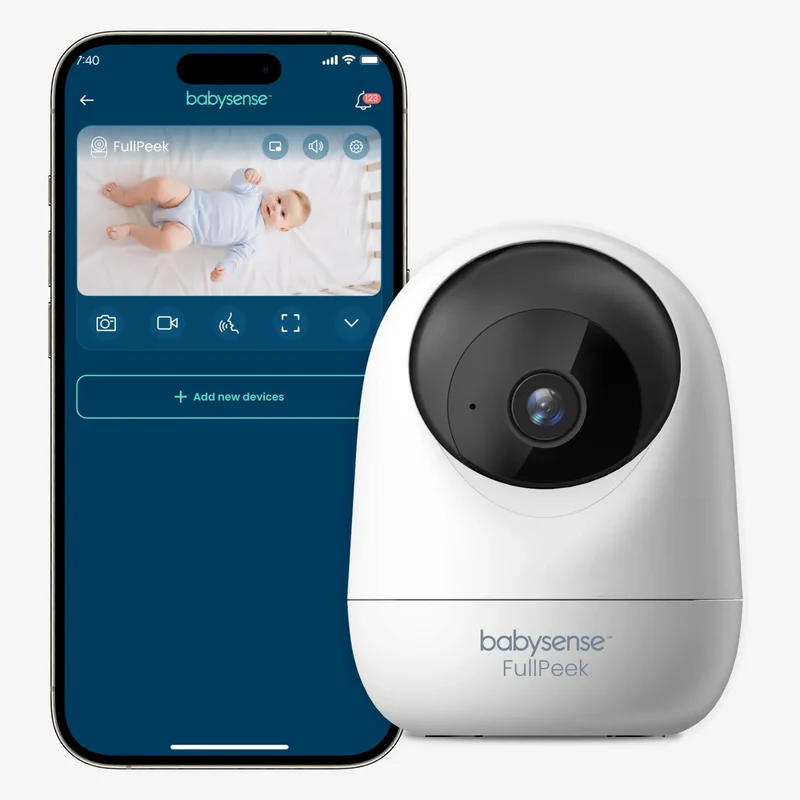
See Every Breath, Even in the Dark
The Babysense Video Monitor with breathing motion detection helps you see to your sleeping baby day and night.
References
1. Villines, Z. (2023, November 21). What to know about newborn respiratory rates. https://www.medicalnewstoday.com/articles/327164
2. Symptoms | NHLBI, NIH. (2022, March 24). NHLBI, NIH. https://www.nhlbi.nih.gov/health/newborn-breathing-conditions/symptoms
FAQs
Should I count my newborn's breaths at home?
It's not something most pediatricians recommend. Counting breaths accurately is difficult without medical training, and focusing on a number can cause more anxiety than it's worth. It's much more useful to observe how your baby looks overall: their colour, feeding, energy levels, and whether they seem to be working hard to breathe.
My baby makes a lot of noise while sleeping. Is that normal?
Often, yes. Congested or rattly sounds are commonly caused by milk refluxing into the nasal cavity or by dry air causing mild nasal swelling. If your baby's feeding well and seems comfortable, it's usually nothing to worry about. If the sound's accompanied by nasal flaring, retractions, or feeding difficulties, speak to your doctor.
What's the difference between periodic breathing and apnea?
Periodic breathing involves brief pauses of five to ten seconds that resolve on their own with no other symptoms. Apnea is a pause lasting 20 seconds or longer, often accompanied by a colour change or limpness. Periodic breathing is normal. Apnea needs emergency attention immediately.
When does periodic breathing resolve?
For most full-term babies, periodic breathing develops in the first month and resolves by around six months as the brainstem matures.
What's the average respiratory rate for a newborn?
The average respiratory rate for a newborn is around 45 breaths per minute, though anywhere between 30 and 60 breaths per minute is considered within the normal range for a healthy baby.