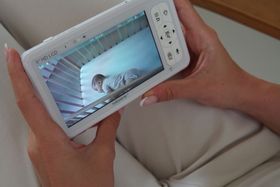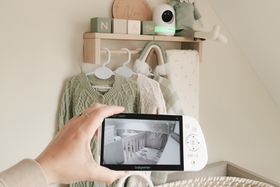
Babysense vs. Infant Optics: Which Is Best for Privacy?
How do Babysense and Infant Optics compare on connectivity, privacy, ease of use, and expandability? This guide breaks down each brand's approach and which type of family it suits best.






Updated August 25, 2026
AI Summary


Picking the right baby monitor isn't just about finding the clearest picture or the loudest alert. It's about privacy and finding a system that fits your lifestyle.
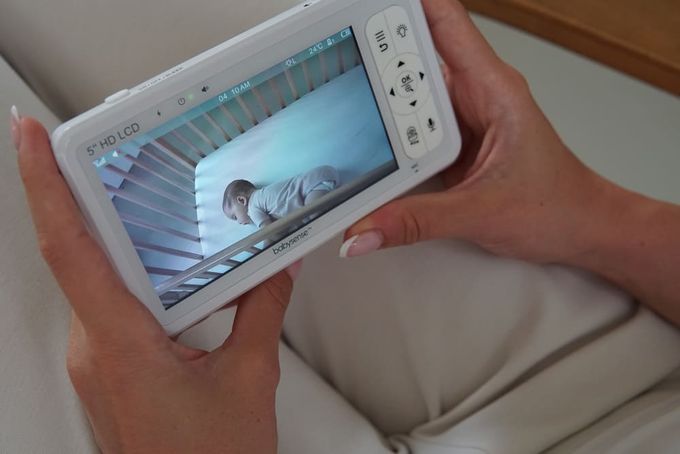
Babysense and Infant Optics take distinct approaches to nursery monitoring. Babysense offers an expansive lineup, spanning local non-Wi-Fi monitors with dedicated parent units, Wi-Fi smart models, and hybrid systems. Infant Optics keeps things streamlined, focusing exclusively on simple setups with a dedicated parent unit.
This guide breaks down where each brand excels, where they fall short, and which one makes more sense for your family.
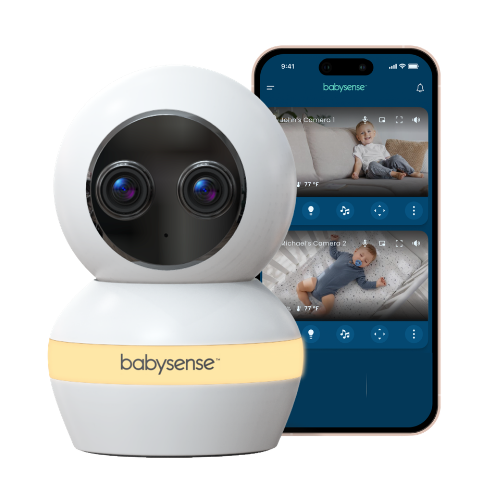
See the Full Babysense Range?
Browse the Babysense Video Monitor lineup and find the right fit for your nursery.
Quick Feature Overview: Babysense vs. Infant Optics
Even though they have different approaches, both brands share a solid monitoring foundation.
Feature | Babysense | Infant Optics |
|---|---|---|
Video Monitoring | ✓ | ✓ |
Breathing Movement Monitoring | ✓ | ✕ |
Night Vision | ✓ | ✓ |
Two-Way Audio | ✓ | ✓ |
Temperature Monitoring | ✓ | ✓ |
VOX Mode | ✓ | ✓ |
Multi-Camera Support | ✓ | ✓ |
Dedicated Parent Unit | ✓ | ✓ |
Wi-Fi Option Available | ✓ | ✕ |
No Mandatory Subscription | ✓ | ✓ |
Split-screen View | ✓ | ✕ |
It's important to understand, however, that neither of these devices is a medical diagnostic tool or a SIDS -prevention device.
They can only work best as an additional layer of awareness alongside safe sleep practices, and not a replacement for them [1].
How Babysense and Infant Optics Compare
Babysense Video Monitors and Non-Contact Breathing Movement Sensors

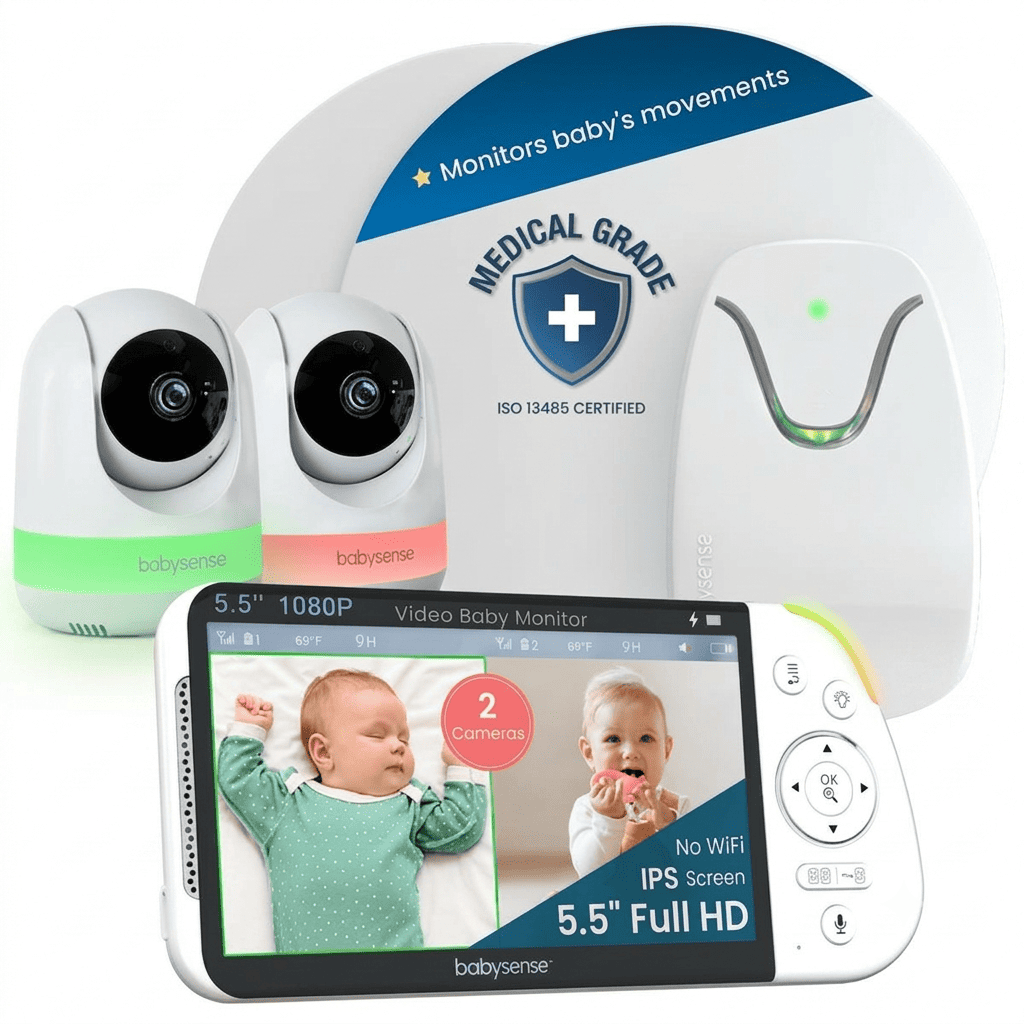
Babysense Best Sellers
More features, more flexibility, more ways to monitor.
Connectivity & Privacy
Non-Wi-Fi (FHSS 100% private/offline), Wi-Fi (encrypted app access), and hybrid options
Breathing Motion Monitor Option
Yes. Babysense 7, 8, and Connect (under-mattress, non-wearable movement tracking)
Multi-Camera Support
Supports up to 4 cameras with split-screen viewing capabilities
Babysense has built a range that genuinely grows with your family. Whether you want a simple non-Wi-Fi parent unit that guarantees complete privacy or a fully connected smart nursery system with sleep analytics and encrypted remote viewing, there's a Babysense model that fits.
That flexibility is one of its biggest strengths, especially if you value privacy control, travel frequently, work away from home, or share caregiving across multiple people in different locations.
The range also stands out for expandability. Most Babysense monitors support multiple cameras, split-screen viewing, and dedicated breathing motion monitoring, making them a strong long-term investment for growing families or if you're looking to broaden your setup safely.
Pros
- Wide range of models covering non-Wi-Fi (100% private), Wi-Fi, and hybrid connectivity options
- Remote access via app, with cloud encryption
- Expandable with up to four cameras and split-screen viewing on dedicated parent units
- Larger, higher-resolution screens on premium models
Cons
- Wi-Fi models depend on a stable internet connection for remote features
- Setup requires app connection on Wi-Fi and hybrid models
Infant Optics Video Monitors

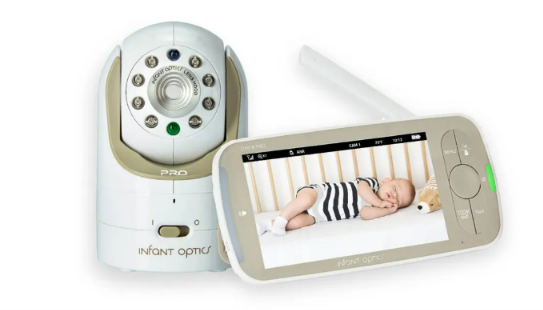
Infant Optics
Simple, private, and built to last
Connectivity & Privacy
Non-Wi-Fi FHSS only (100% private, closed-loop system)
Breathing Motion Monitor Option
No
Multi-Camera Support
Supports up to 4 cameras (split-screen available on DXR-8 PRO)
Infant Optics has earned a loyal following by mastering the basics: reliable, simple, and completely private monitoring.
Operating exclusively on a closed-loop FHSS signal, Infant Optics monitors bypass Wi-Fi entirely. That means there are no smartphone apps to pair, no cloud accounts to manage, and zero risk of unauthorized remote viewing or hacker interference.
Pros
- Fully private, non-Wi-Fi FHSS connection, so it's completely unhackable and offline
- True plug-and-play setup requiring no internet
- Interchangeable optical lens system
Cons
- No remote viewing options or smartphone app access when away from home
- Lacks breathing movement tracking and smart AI features like auto-tracking or cry detection alerts
- Requires keeping track of a dedicated parent unit monitor and charger
Key Differences Between Babysense and Infant Optics
Connectivity and Privacy Approach
- Babysense: Flexible options. Offers 100% offline non-Wi-Fi models (closed-loop FHSS) for complete privacy, as well as Wi-Fi and hybrid models with encrypted remote viewing via smartphone app.
- Infant Optics: Strictly offline. Operates exclusively on a closed-loop, unhackable FHSS signal with a dedicated parent unit, requiring no internet, Wi-Fi, or app.
Breathing Movement Monitoring
- Babysense: Dedicated non-contact tracking available. Integrates under-mattress motion sensors, including the non-Wi-Fi Babysense 7 and Babysense 8, and the smart Babysense Connect, with no wearables attached to your baby.
- Infant Optics: Video-only approach. Does not offer breathing movement monitoring or under-mattress motion sensors.
Remote Access and Smart Features
- Babysense: High smart versatility. Select Wi-Fi and hybrid models support remote smartphone viewing, sleep analytics, AI auto-tracking, and cry detection alerts.
- Infant Optics: Pure local viewing. Features no remote app access, no cloud connectivity, and no smart AI detection tools.
Lens and Camera Customization
- Babysense: Digital pan-tilt-zoom and multi-camera split-screen viewing (up to 4 cameras) on dedicated monitors.
- Infant Optics: Uses physical interchangeable optical lenses (wide-angle and optical zoom) alongside pan-tilt-zoom capabilities.
Setup Complexity and Travel Ease
- Babysense: Ranges from simple plug-and-play on dedicated parent units to moderate app/Wi-Fi pairing for smart models. Great for remote check-ins when traveling.
- Infant Optics: Cameras come pre-paired to the parent unit right out of the box with zero network configuration, making it exceptionally easy for travel or handoffs to caregivers.
Which Brand Is Right for Your Family?
The honest answer is that neither brand is better. They're built for different families with different priorities.
If you travel frequently, share caregiving across multiple people, or want a system that grows with your family, Babysense gives you more to work with. If you value simplicity, total privacy, and a monitor that any caregiver can pick up and use, Infant Optics is hard to beat.
The right device is simply the one that fits the way your family lives, as well as what you need your monitor to do.
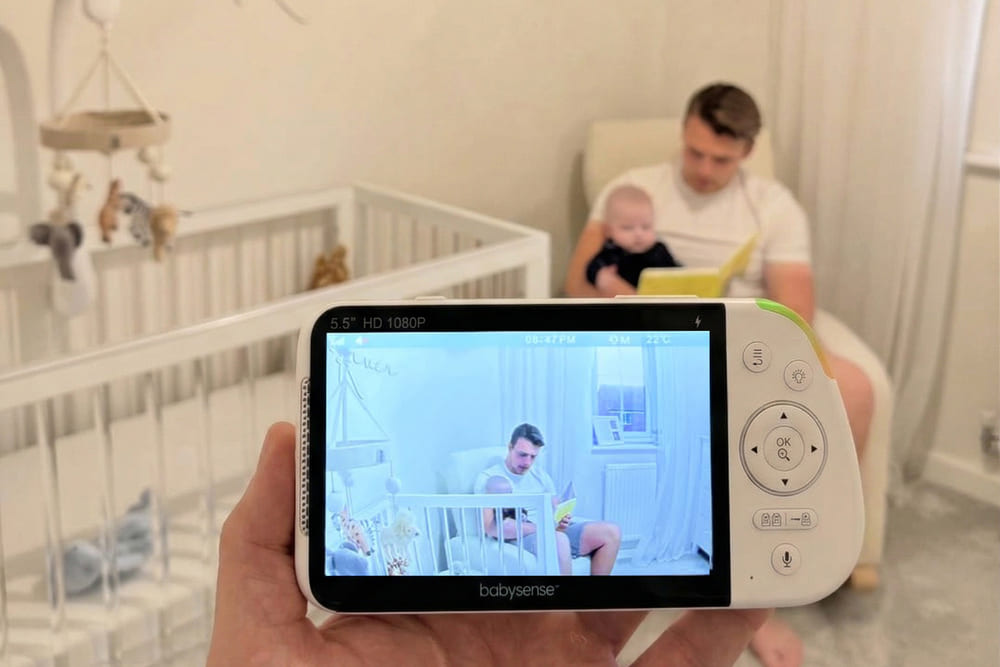
Browse the Full Range
Whichever direction you're leaning, the Babysense Video Monitor range has a model to match.
References
1. U of U Health Authors & Marketing and Communication. (2026, May 18). Are wearable baby monitors safe for sleep? a pediatrician explains. University of Utah Health | University of Utah Health. https://healthcare.utah.edu/healthfeed/2026/05/are-wearable-baby-monitors-safe-sleep-pediatrician-explains
FAQs
Is Babysense or Infant Optics better for privacy?
Both brands offer non-Wi-Fi options that keep your baby's feed completely private.
Can Babysense monitors be used without Wi-Fi?
Yes. Babysense offers several non-Wi-Fi models that operate on a dedicated FHSS connection, just like Infant Optics. The Wi-Fi and hybrid options are available on select models for parents who want remote access.
Does Babysense offer a breathing monitor?
Yes. Babysense offers the Babysense 7 and 8, and the Babysense Connect as under-mattress breathing-motion monitors that can be paired with their video monitors. Infant Optics doesn't offer a breathing monitor option.
Which brand is better for traveling?
It depends on what you need while traveling. Non-Wi-Fi options are simple to use at hotels or grandparents' homes. Wi-Fi models offer remote access from anywhere, but depend on a stable internet connection.