

7 Must-Have Baby Items for First-Time Moms (& What to Skip)
With so many baby products on the market, first-time moms need seven items that are genuinely essential in those early newborn weeks, including a car seat, rectal thermometer, cool mist humidifier, and video monitor. Four popular products aren't worth buying, like wearable vital trackers and nursery scent diffusers.





Published July 3, 2026
AI Summary


Before your baby arrives, getting the products you may need can feel completely overwhelming. Every brand seems to be telling you that you absolutely need their product, and it's hard to know what will actually get used versus what will collect dust in the corner of the nursery.
The truth is, you don't need nearly as much as the baby industry would have you believe. What you do need, though, really matters. Getting those essentials sorted in advance means one less thing to figure out when you're running on three hours of sleep, and your baby has just done something unexpected in a very inconvenient place.
This list cuts through the noise. Let's go over what's genuinely worth having, and what you can confidently leave on the shelf.
The Must-Have Baby Nursery Items Worth Buying
1. An Infant Car Seat
This is non-negotiable, and in many cases, your hospital won't discharge you without one. According to the AAP, car accidents are a leading cause of death in infants and children under four years old, and a properly installed infant car seat is one of the most effective ways to protect your baby [1].
It should be installed in the back seat in a rear-facing position, and your baby should stay rear-facing until they exceed the manufacturer's weight limit, which for most infant seats is around 30 to 35 pounds.
One thing worth knowing is that even if you don't own a car and plan to use ride-share services, having a car seat for your baby is still a good idea. There are no set regulations requiring them in hired cars, but using one highly increases your baby's safety on every trip.
2. A Rectal Thermometer
This one surprises a lot of parents, but it's really important. In the first three months of life, babies are vulnerable to serious bacterial infections like meningitis and urinary tract infections. A fever is often the only early sign that something is wrong, and catching it accurately matters [4].
A rectal temperature of 38 degrees Celsius (100.4 degrees Fahrenheit) or higher is considered a fever in a newborn, and a rectal thermometer is the only type that consistently gives an accurate reading at this age. Ear, forehead, and underarm thermometers are less reliable in young babies.
It might feel a little daunting at first, but the technique is straightforward, and your baby's nurse or pediatrician can walk you through it. It's one of those things that feels awkward once and then becomes second nature.
3. A Cool Mist Humidifier
Your baby will get a blocked nose. It's not a matter of if, but when, and when it happens, you'll be very glad you have this on hand.
Babies can't breathe through their mouths the way older children and adults can, so nasal congestion causes real discomfort and can make feeding difficult.
A cool mist humidifier moisturises the air and helps ease congestion naturally, without medication. It's one of the few things that genuinely helps.
4. A Breast Pump (If You're Breastfeeding)
The WHO recommends exclusive breastfeeding for babies for the first six months of life, but feeding directly from the breast isn't always practical or possible for every mum [5]. A breast pump gives you flexibility without having to give up on breastmilk.
Pumping lets you store milk for later, allows partners and other caregivers to help with feeds, and can actually support and increase your milk supply.
There are manual and electric options depending on your preference and how often you plan to use it. Either way, having one ready before the birth means you're not trying to figure it out in the middle of a feed at 3 am.
5. Newborn Hand Mitts
This one is small but genuinely useful in those first few months. Newborns' fingernails grow surprisingly fast, and because their hand coordination is still developing, they regularly scratch their own faces without meaning to.
Hand mitts cover those tiny fingers and prevent scratches while you get comfortable with the idea of trimming your baby's nails, which, understandably, feels terrifying at first.
They're not needed forever, just for those early weeks while you find your feet with nail trimming, and your baby starts gaining more control over their movements.
6. Wet Wipes
Simple, essential, and you will go through more of them than you can possibly imagine right now. Wet wipes make nappy changes so much easier, especially in those first days when your baby is passing meconium, the thick, dark, sticky first stool that clings to everything and is really a challenge to clean.
Beyond practicality, most wet wipes are pH-balanced to a slightly acidic formulation, which actually helps protect your baby's skin from diaper rash better than plain water does.
7. A Video Baby Monitor
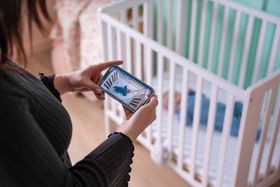
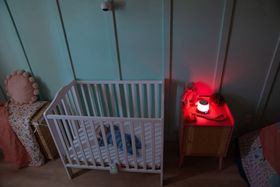
Being able to see and hear your baby without going into the room is something most parents don't fully appreciate until they have it. It means you can check on a sleeping baby without the risk of disturbing them, and it saves a lot of unnecessary trips down the hallway at 2 am.
When choosing a monitor, focus on clear, reliable video and audio rather than fancy extras. Some devices make big claims about tracking vitals and monitoring babies' breathing, but the research behind these features is limited, and inaccurate readings can cause unnecessary anxiety.
What matters is that you can see your baby clearly and hear them reliably, day and night.
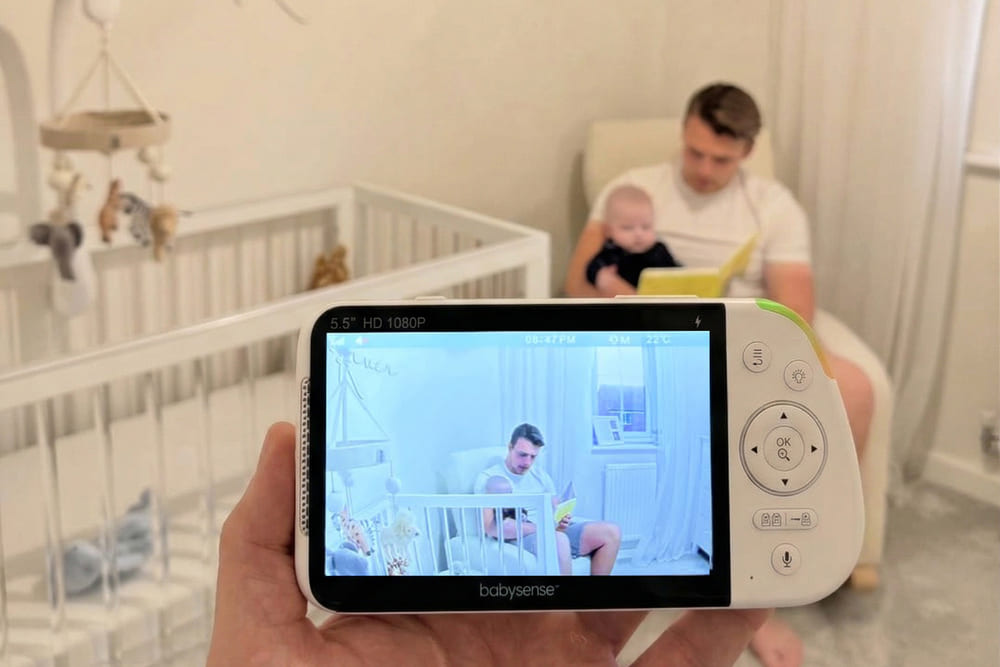
Know the Moment Your Baby Wakes Up
With a Babysense Video Monitor, you can see exactly when your baby is stirring.
Baby Nursery Items You Can Skip
1. Wearable Vital-Tracking Baby Monitors
These devices promise to monitor your baby's oxygen levels, heart rate, and breathing while they sleep, and they're often marketed directly at parents who are worried about SIDS. It makes sense that anxious new parents are drawn to them, but the evidence doesn't support the claims.
Wearable baby monitors have not been shown to reduce the risk of SIDS or improve sleep safety. What they do frequently do is generate false alarms, which does the opposite of reducing parental anxiety.
The best protection against SIDS remains a safe sleep environment:
A firm, flat surface.
Room-sharing with parents for the first six months.
2. Diaper Disposal Systems
They sound convenient. In practice, they create more work than they save. Health guidelines recommend emptying stool into the toilet, sealing the nappy in a bag, and disposing of it in the regular bin [6]. That's it.
Diaper disposal systems store soiled nappies in a sealed unit, which means at some point you have to deal with a container full of them all at once. It's not a pleasant task.
A small bin with a lid near the changing table, lined with nappy bags, does the same job with none of the drama.
3. Baby Food Machines
You don't need one, and most parents don't use them. A regular hand blender or small food chopper does the same job at a fraction of the cost. Pureeing soft-cooked fruits and vegetables doesn't require a dedicated appliance.
What matters when making homemade baby food isn't the equipment. It's safe food handling: washing produce thoroughly, cooking proteins fully, and storing everything properly.
If you'd like to make your own baby food, your existing kitchen appliances are more than up to the task.
4. Nursery Scent Diffusers
These are often marketed as a way to help babies sleep better, and tired parents understandably find that appealing. But for babies under six months, inhaling essential oils can irritate their lungs. Some scents, particularly eucalyptus, contain volatile compounds that are considered hazardous for infants [7].
Getting Everything Ready Before Baby Arrives
Having the right things in place before your baby comes home makes those first few weeks feel more manageable. Not easier exactly, because nothing quite prepares you for a newborn, but more manageable.
It's also worth thinking beyond the products. For example, having a support system in place. This matters just as much as having the right gear.
No amount of baby equipment replaces having people around you. Make sure you know who you can call.
The Items Your Baby Nursery Needs
You don't need to buy everything. You just need the right things, ready when you need them. An infant car seat, a rectal thermometer, a cool mist humidifier, a breast pump if you're breastfeeding, hand mitts, wet wipes, and a reliable video monitor will take you a very long way through those early newborn weeks.
The rest can wait, or in many cases, can be skipped entirely.
Trust your instincts, lean on your support system, and remember that your baby needs you far more than they need any product on the market. You've got this.
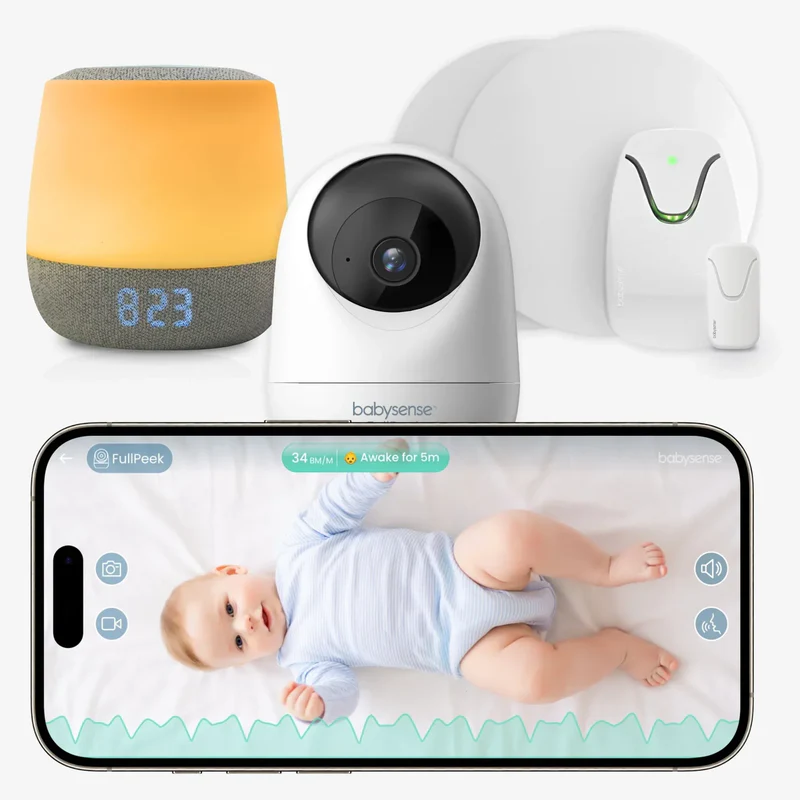
Get Clear, Reliable Monitoring
Babysense gives you everything you need to get some rest yourself.
HD video with infrared night vision
Sound-activated alerts so you're notified when something changes
Two-way audio and wide-angle lens with PTZ
References
1. Child passenger safety. (n.d.). https://www.aap.org/en/patient-care/early-childhood/early-childhood-health-and-development/safe-environments/child-passenger-safety/?srsltid=AfmBOopKlj5d6I1pRS4Ju8YSjqvnkIV36Cj7euxn8a4u9xE8sX89I_H-
2. Tessier, K. (2010). Effectiveness of hands-on education for correct child restraint use by parents. Accident Analysis & Prevention, 42(4), 1041–1047. https://doi.org/10.1016/j.aap.2009.12.011
3. [Fever in infants under the age of three months without sign of focal infection. Criteria of therapeutic decision]. (1994). PubMed. https://pubmed.ncbi.nlm.nih.gov/8078834/
4. Warm-mist versus cool-mist humidifier: Which is better for a cold? (n.d.). Mayo Clinic. https://www.mayoclinic.org/diseases-conditions/common-cold/expert-answers/cool-mist-humidifiers/faq-20058199
5. Nutrition. (n.d.). Exclusively breastfeed for 6 months. https://www.emro.who.int/nutrition/breastfeeding/exclusively-breastfeed-for-6-months.html
6. How to dispose of nappies: Step-by-Step guide for hygiene and safety. (n.d.). How to Dispose of Nappies: Step-by-Step Guide for Hygiene and Safety. https://www.phs.co.uk/resources/how-to-properly-dispose-of-nappies-step-by-step-tips-for-nappy-bin-users/
7. Are essential oils safe for children? (2024, October 23). Johns Hopkins Medicine. https://www.hopkinsmedicine.org/health/wellness-and-prevention/are-essential-oils-safe-for-children
8. Zhou, J., Tierney, N. K., McCarthy, T. J., Black, K. G., Hernandez, M., & Weisel, C. P. (2017). Estimating infants’ and toddlers’ inhalation exposure to fragrance ingredients in baby personal care products. International Journal of Occupational and Environmental Health, 23(4), 291–298. https://doi.org/10.1080/10773525.2018.1475446
FAQs
My baby seems unsettled even though I have everything they need. What should I check?
If your baby has fed recently and isn't hungry, it's worth doing a gentle head-to-toe check for physical discomfort. A hair or thread wrapped tightly around a tiny toe, known as a hair tourniquet, can cause significant pain and is easy to miss. Signs of breathing difficulty like retractions (the skin pulling in between the ribs with each breath) also need immediate attention. Colic is another common cause of prolonged crying in the first few weeks, typically in the evenings, and usually resolves by around three months. When in doubt, call your doctor.
Is it safe to use secondhand baby gear?
It can be, but it's worth checking a few things first. Look up whether the item has been recalled since it was purchased, as product recall lists are publicly available and easy to search. For furniture like cribs and highchairs, check for loose screws or signs of instability. For a secondhand car seat, find out if it has been in an accident and check the expiry date. Car seats have a lifespan and should not be used past it. If you're ever unsure, it's safer to buy new for items that directly affect your baby's safety.
When should I start getting these items ready?
Ideally before the third trimester. Some things, like a car seat, you'll need from the very first day. Others, like a breast pump or humidifier, are worth having at home before the birth so you're not ordering them in a panic when your baby is uncomfortable. The earlier you get the essentials sorted, the more relaxed you'll feel in those final weeks of pregnancy.
What if I can't afford all of these items?
The absolute non-negotiables are a car seat, a thermometer, and wet wipes. Everything else can be sourced secondhand, borrowed, or worked around. Many communities have baby gear lending schemes, and family members are often happy to help with specific items if asked. Focus on safety first and comfort second, and don't let the pressure to have everything perfectly in place add to your stress.