Traveling With a Newborn: Essential Tips for Your First Trip
Traveling with a newborn can feel like a big leap, but a little preparation goes a long way. Keep reading for the pediatrician-backed checks, packing tips, and car-versus-plane advice that will help your first trip feel calmer and keep your baby safe.




Updated October 1, 2026
AI Summary


Traveling with a newborn feels extremely daunting. Your first instinct might be to stay home, and there's nothing wrong with that, but if you need to travel or want to visit family, knowing what actually matters for your baby's safety changes everything.
We'll walk you through everything you need to know: preparing your baby for travel, choosing safe destinations, picking the right transport, planning strategically, and easing back into routine afterward.
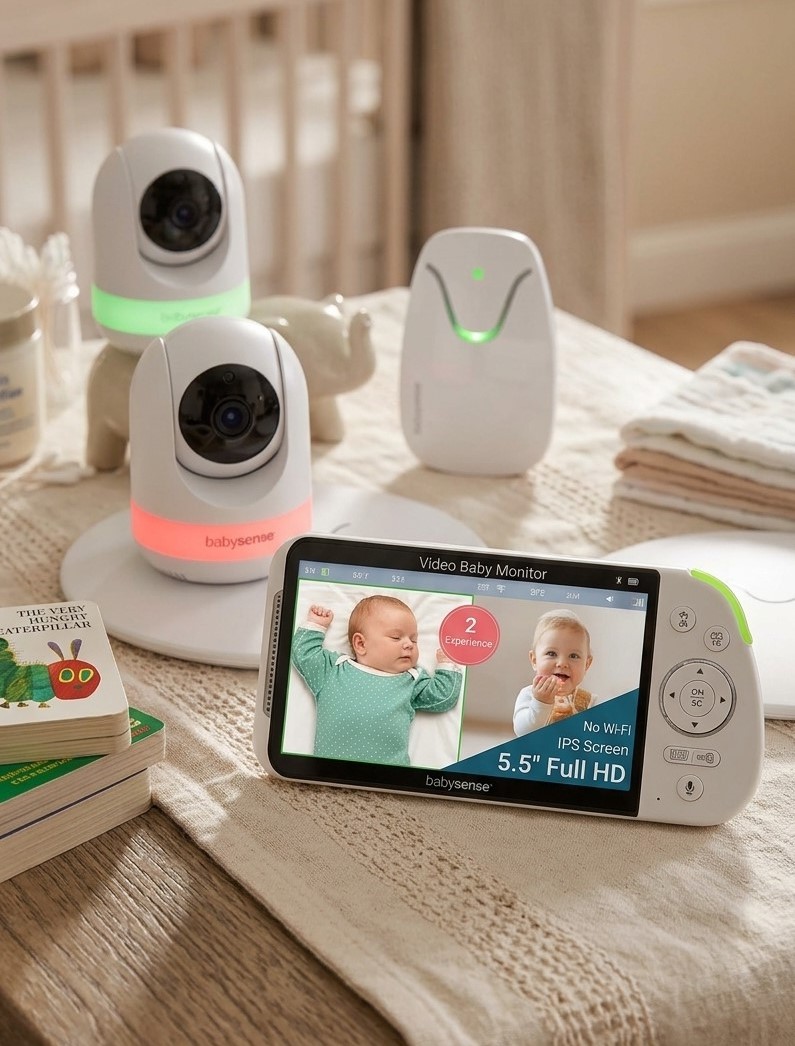
Complete Monitoring for Parents on the Go
Babysense HOME 2-in-1 bundle offers dual-camera non-Wi-Fi monitoring, night light, sound machine, and breathing movement detection.
Before You Book That Flight
The first step is to make sure your baby is truly ready to travel. Here's what your pediatrician will be looking for:
Feeding & Weight Gain
Is your baby feeding consistently and gaining weight? After birth, infants lose weight for the first day or two, then regain their birth weight around day 10 [1]. Your pediatrician will monitor this at visits when your baby is 3 to 4 days old, at two weeks, one month, and two months.
Once your baby is feeding reliably and gaining weight, travel becomes much more manageable.
Medical Conditions Requiring Extra Planning
That said, some babies have medical conditions that require extra consideration:
- Premature infants face higher risks of low oxygen levels during flights because of cabin pressure changes [2].
- Babies with lung or heart conditions like cystic fibrosis, bronchopulmonary dysplasia, or cyanotic heart disease need special planning [2].
Talk to your doctor about your baby's specific health history before making plans.
Where You Go Matters More Than You Think
Choosing the right destination means looking beyond the sights. Here's what matters most for your little one:
The Critical First Three Months
The first three months of life are critical for your baby's health. A fever (38°C/100.4°F or higher) can be the only sign of serious bacterial illnesses like meningitis or urinary tract infections [3].
Before you travel, know where your baby can receive immediate medical care if something goes wrong [4].
Disease Outbreaks & Vaccinations
Check for disease outbreaks at your destination. Measles is another major concern as infants can't be vaccinated until 6 to 12 months old, so high case numbers at your destination put your baby at serious risk.
If you're traveling to a malaria region, be aware that infants under three months old can't take preventive medication [5].
Air Quality
Some regions burn coal for heat, creating harmful particulate matter that irritates developing lungs. This can increase the risk of asthma, neurodevelopmental disorders, and poor growth [6]. Check air quality forecasts for your destination before booking.
Should You Travel by Car or Plane?
Deciding between car and plane travel comes down to weighing the health risks and practical challenges of each option.
Car Travel for Illness Prevention
Car travel reduces your baby's exposure to contagious illnesses. Airports and planes expose your newborn to high volumes of people and airborne infections [7]. Measles has even been documented spreading on airplanes and in airports [8].
The Car Seat Challenge
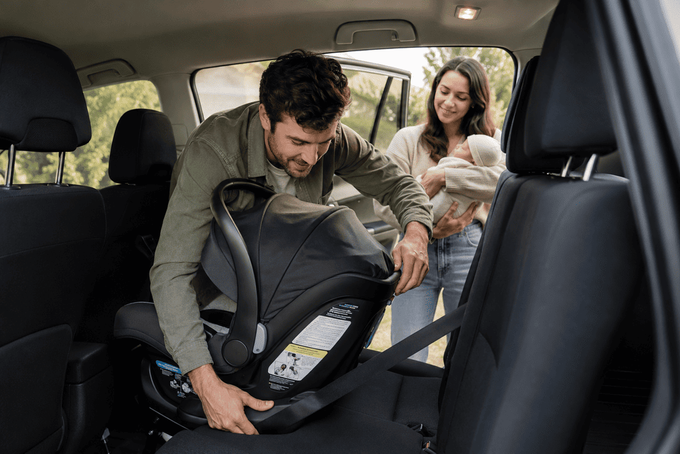
Although extended time in a car seat is not good either. The American Academy of Pediatrics (AAP) recommends removing your baby from the car seat every two to three hours [9]. Studies show oxygen levels can drop if infants sit in car seats too long, so breaks are essential [10].
If You Choose to Fly
Cabin pressure changes during takeoff and landing can affect your baby's ears. Your infant's eustachian tubes are smaller, making pressure changes more uncomfortable [11]. Be prepared with feeding during these moments to help ease the discomfort [12].
Five Essential Strategies for Your Trip
Thoughtful preparation in these five areas will help you feel confident and keep your baby comfortable throughout your journey.
1. Pack Smart for Comfort
- Diaper rash cream: It's hard to change diapers frequently while traveling, and newborn skin is sensitive [13]. In warm, humid destinations, your baby sweats inside the diaper, increasing the risk of moisture and irritation.
- Colic remedies: Colic is crying and discomfort with no known cause between two weeks and three months old [14]. The probiotic Lactobacillus reuteri provides relief and is available over-the-counter [14]. Simethicone gas drops have helped some families [15].
- Nasal saline drops: Airplane air is recirculated and dry, which irritates your baby's nasal passages [16]. Congested babies can't feed well. Nasal saline moisturizes the nasal mucosa and provides relief without medication [17].
2. Plan Your Feeding Strategy
For formula-fed babies, bring some formula or plan to purchase it at your destination.
For international travel, powdered infant formula may be an easier option for infants older than 3 months. Bottled water with an intact seal should be used to make the formula instead of tap water [19].
However, powdered infant formula is not recommended for infants under 3 months due to the risk of life-threatening infections from possible bacterial contamination [20]. Parents should only offer ready-to-feed infant formula to newborns [19].
3. Consider a Video Monitor for Rental Homes
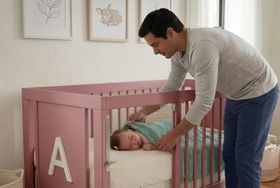
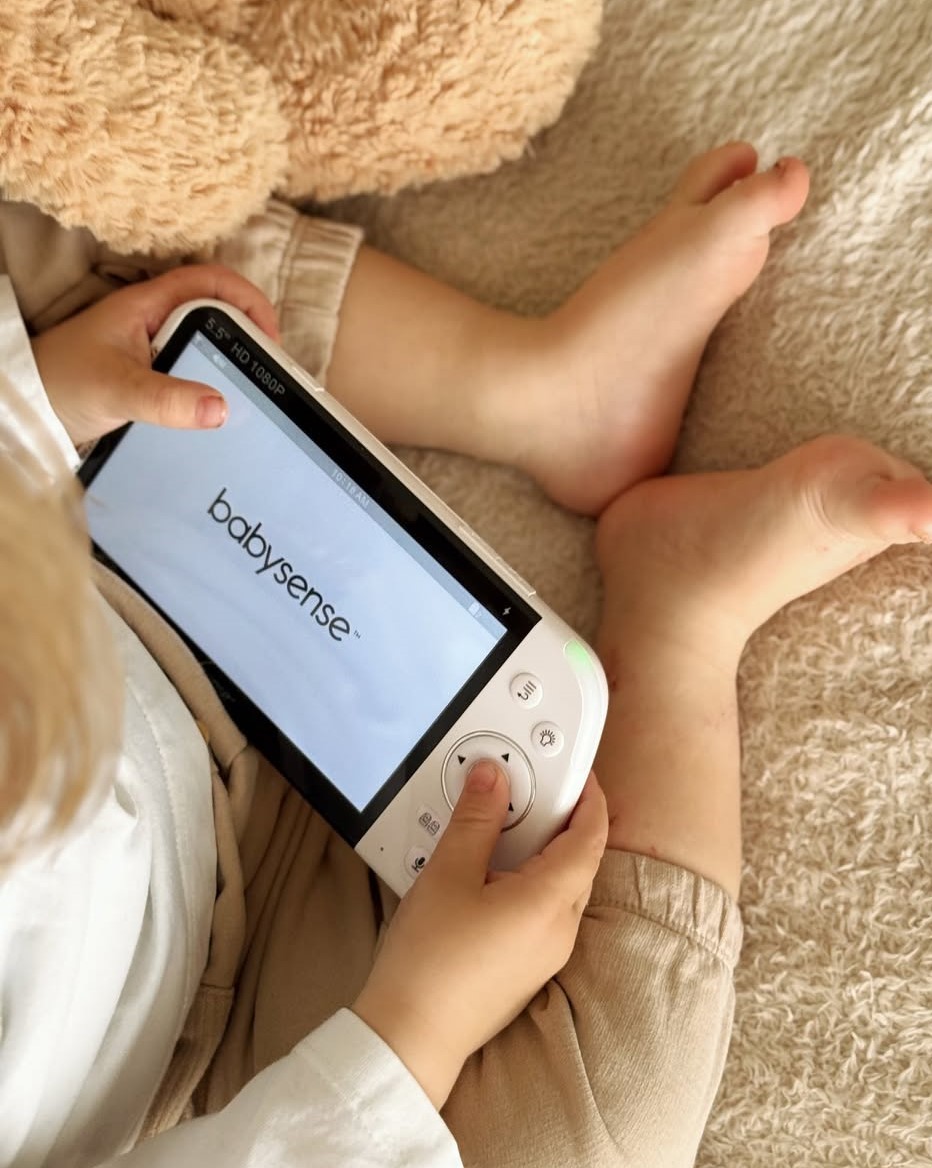
Many families now rent vacation homes instead of hotels. This gives more space and lets family members sleep in separate rooms. If your baby sleeps in another room, a video baby monitor helps you see if your baby is comfortable or needs attention.
Keep an Eye on Your Baby at Night
Check in on your little one without stepping into the room and disturbing their sleep.
4. Understand the Car Seat Question on Planes
During turbulence, you can't always hold your baby safely. The FAA recommends that infants under age two use safety restraints, though this isn't enforced [21].
5. Think About Medications and Medical Needs
If your baby takes prescribed medications, get the full amount needed before you travel. Internationally, medications vary by country, and some might not be available.
After You Get Home
You'll probably notice your baby needs a few days to adjust, especially if you crossed time zones. Your newborn's circadian rhythm becomes more established by age six months [24] and develops through sunlight exposure and hormones like melatonin and cortisol [25].
A Reality Check on First Trips
Traveling with a newborn takes real planning, from making sure your baby is feeding well to choosing the safest way to get there and packing the right essentials. Most trips go smoothly, but sometimes things don't go as planned, and trusting your gut matters just as much as any checklist [26].
Wherever your travels take you, a non-Wi-Fi video monitor like those from the Babysense range makes it easier to check on your baby in an unfamiliar room, whether that's a hotel or a rental home with everyone spread out. It's one small way to bring a little more ease to a trip that already asks a lot of you.
Travel with Confidence
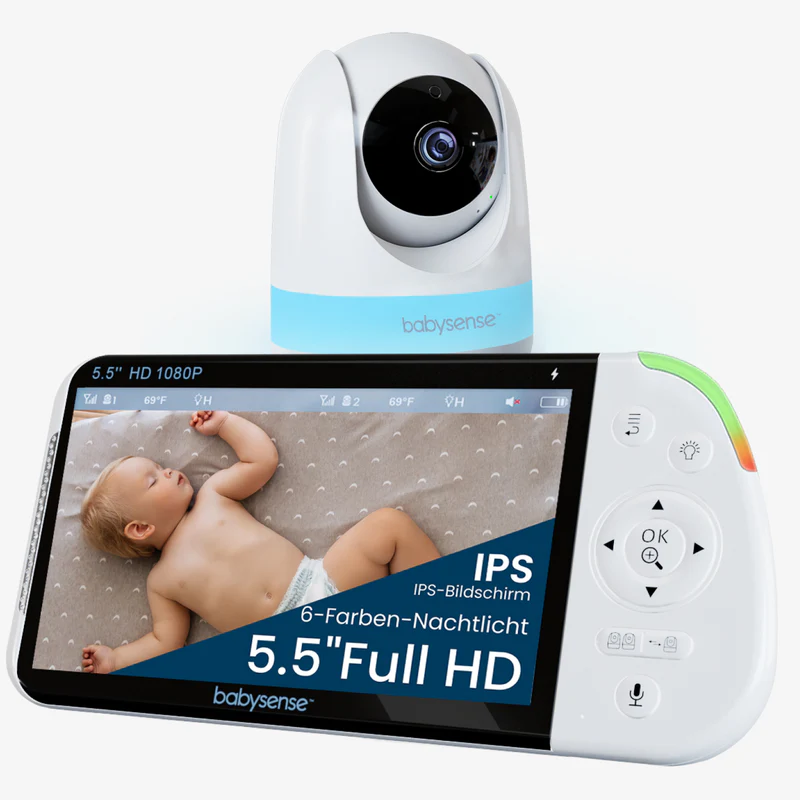
Whether you're crossing time zones or visiting family across town, Babysense non-Wi-Fi monitors work anywhere.
Explore CollectionReferences
1. American Academy of Pediatrics. (n.d.). Weight change nomograms for the first month after birth. Pediatrics, 138(6). https://publications.aap.org/pediatrics/article-abstract/138/6/e20162625/52570/Weight-Change-Nomograms-for-the-First-Month-After
2. National Center for Biotechnology Information. (n.d.). Hypoxia and airplane cabin pressure fluctuations in premature infants. PMC. https://pmc.ncbi.nlm.nih.gov/articles/PMC5899119/#Sec4
3. National Center for Biotechnology Information. (n.d.). Fever definition in newborns. PMC. https://pmc.ncbi.nlm.nih.gov/articles/PMC8363342/
4. JAMA Network. (n.d.). Meningitis and urinary tract infection in newborns. JAMA. https://jamanetwork.com/journals/jama/article-abstract/2842440
5. Centers for Disease Control and Prevention. (2017, September). Malaria prophylactic medication guidelines: Atovaquone-proguanil. CDC. https://www.cdc.gov/malaria/resources/pdf/fsp/drugs_2017/atovaquoneproguanil_2017.pdf
6. National Center for Biotechnology Information. (n.d.). Air pollution effects on infant development. PMC. https://pmc.ncbi.nlm.nih.gov/articles/PMC10363448/
7. Journal of the American Association for Infection Control. (2025, January). Infection risks in air travel: An overview. JSIC. https://journals.lww.com/jsic/fulltext/2025/01000/infection_risks_in_air_travel__an_overview_of.1.aspx
8. National Center for Biotechnology Information. (n.d.). Measles transmission on airplanes. PMC. https://pmc.ncbi.nlm.nih.gov/articles/PMC12477615/
9. American Academy of Pediatrics. (n.d.). Car seat removal recommendations. PMC. https://pmc.ncbi.nlm.nih.gov/articles/PMC2810673/
10. National Center for Biotechnology Information. (n.d.). Oxygen levels in car seats. PMC. https://pmc.ncbi.nlm.nih.gov/articles/PMC1693579/
11. AIMS Press. (2019, September). Eustachian tubes and ear discomfort during flight. AIMS Public Health. https://www.aimspress.com/article/doi/10.3934/publichealth.2019.3.320
12. AIMS Press. (2019, September). Sucking and swallowing effects on middle ear pressure. AIMS Public Health. https://www.aimspress.com/article/doi/10.3934/publichealth.2019.3.320
13. National Center for Biotechnology Information. (n.d.). Newborn skin sensitivity. NCBI Bookshelf. https://www.ncbi.nlm.nih.gov/books/NBK559067/
14. National Center for Biotechnology Information. (n.d.). Colic definition and Lactobacillus reuteri studies. NCBI Bookshelf. https://www.ncbi.nlm.nih.gov/books/NBK518962/
15. National Center for Biotechnology Information. (n.d.). Simethicone gas drops for colic. PMC. https://pmc.ncbi.nlm.nih.gov/articles/PMC12613564/
16. National Center for Biotechnology Information. (n.d.). Airplane air humidification levels. PMC. https://pmc.ncbi.nlm.nih.gov/articles/PMC7152029/
17. ScienceDirect. (2023, September). Saline moisturizing nasal mucosa. ScienceDirect. https://www.sciencedirect.com/science/article/pii/S0011393X23000346
18. Transportation Security Administration. (n.d.). Infant formula and breast milk rules. TSA. https://www.tsa.gov/travel/security-screening/whatcanibring/items/baby-formula
19. National Center for Biotechnology Information. (n.d.). Bottled water for infant formula and bacterial contamination. PMC. https://pmc.ncbi.nlm.nih.gov/articles/PMC6155361/
20. National Center for Biotechnology Information. (n.d.). Powdered infant formula safety for infants under 3 months. PMC. https://pmc.ncbi.nlm.nih.gov/articles/PMC10750023/
21. Federal Aviation Administration. (n.d.). Safety restraint requirements for infants and children. FAA. https://www.faa.gov/sites/faa.gov/files/about/initiatives/cabin_safety/regs/acob949.pdf
22. ScienceDirect. (2024, February). Turbulence-related pediatric injuries. ScienceDirect. https://www.sciencedirect.com/science/article/abs/pii/S2214140524002263
23. American Academy of Pediatrics. (n.d.). Acetaminophen safety in infants. AAP. https://www.aap.org/en/news-room/fact-checked/acetaminophen-is-safe-for-children-when-taken-as-directed-no-link-to-autism/
24. Nature. (2024, August). Circadian rhythm development by age six months. Nature. https://www.nature.com/articles/s41390-026-04780-4
25. National Center for Biotechnology Information. (n.d.). Sunlight exposure and pituitary hormones. PMC. https://pmc.ncbi.nlm.nih.gov/articles/PMC9109407/
26. ScienceDirect. (2022, May). COVID-19 transmission on planes. ScienceDirect. https://www.sciencedirect.com/science/article/pii/S1201971222001631
27. National Center for Biotechnology Information. (n.d.). Pertussis (whooping cough) and encephalitis. PMC. https://pmc.ncbi.nlm.nih.gov/articles/PMC8482022/
28. National Center for Biotechnology Information. (n.d.). Haemophilus influenzae infections. NCBI Bookshelf. https://www.ncbi.nlm.nih.gov/books/NBK562176/
29. Pediatric Infectious Disease Journal. (2022, September). Pneumococcal meningitis. PIDJ. https://journals.lww.com/pidj/fulltext/2022/09000/changing_incidence_of_invasive_pneumococcal.23.aspx
30. National Center for Biotechnology Information. (n.d.). Measles complications. NCBI Bookshelf. https://www.ncbi.nlm.nih.gov/books/NBK448068/
31. National Center for Biotechnology Information. (n.d.). Measles transmission on airplanes and in airports. PMC. https://pmc.ncbi.nlm.nih.gov/articles/PMC13077922/
32. PubMed. (2005, September). International infant formula nutritional standards. PubMed. https://pubmed.ncbi.nlm.nih.gov/16254515/
33. Consumer Reports. (n.d.). Hotel crib laws and vacation rentals. Consumer Reports. https://www.consumerreports.org/babies-kids/child-safety/infant-safe-sleep-hotel-crib-a2699766043/
34. National Center for Biotechnology Information. (n.d.). Newborn sleep patterns. PMC. https://pmc.ncbi.nlm.nih.gov/articles/PMC4173090/
35. ScienceDirect. (2023, May). Infant mobility development. ScienceDirect. https://www.sciencedirect.com/science/article/pii/S1878929324000756
FAQs
Can I use wearable monitors while traveling with my newborn?
No. Wearable monitors produce false alarms that can lead to unnecessary emergency room visits, especially abroad. They also use lithium batteries that can't go in checked baggage. A stationary video monitor in your rental is a better choice.
What's the risk with acetaminophen for newborns?
Don't give it to babies under three months. Fever is often the only sign of serious bacterial infections, and acetaminophen masks this warning. For babies over three months, it can help with ear pain 30 minutes before takeoff.
What vaccines should my baby have before traveling?
Infants start vaccines at two months. Pertussis causes breathing spasms and brain infection.[27] Haemophilus influenzae causes meningitis with possible hearing loss.[28] Pneumococcal infections cause meningitis with serious neurological consequences.[29] Measles is life-threatening[30] and has spread on planes and in airports.[31] The more you can wait, the better protected your infant is.
What if I'm traveling domestically vs. internationally?
Domestically, you can find infant formula easily. Internationally, bring ready-to-feed formula for newborns under three months. For babies over three months, powdered formula with sealed bottled water works. International formulas must meet the same nutritional standards,[32] so equivalent versions are safe.
Should I book a hotel with a crib available?
Yes. Hotels must provide cribs meeting federal safety standards,[33] though compliance varies. Vacation rentals often don't include cribs,[33] so confirm availability before booking.
Is my baby easier to travel with than a toddler?
Yes. Newborns sleep 17 hours daily[34] and lack toddler mobility,[35] so they stay in your arms. Toddlers need constant entertainment and create more travel stress overall.