8 Best Baby Monitors with Room Temperature Sensors
A roundup of the eight best baby monitors with reliable room temperature sensors, covering standout options like the Babysense PRO for private, non-Wi-Fi monitoring and the Babysense Touch for combined temperature and humidity tracking.






Published October 6, 2026
AI Summary


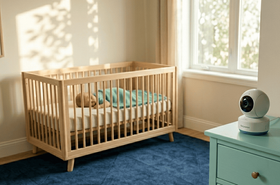
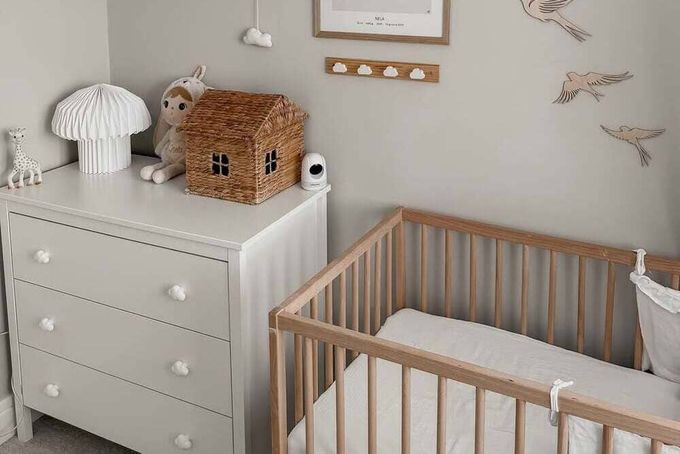
Newborns can't regulate their own body temperature the way adults can, and they won't show obvious signs of discomfort if their room gets too hot or too cold. That makes keeping an eye on your nursery's temperature one of the quieter but more important parts of newborn care.
A baby monitor with a reliable temperature sensor takes the guesswork out of it, so you're not relying on a hand pressed against the wall to decide whether to add another layer or turn on the fan.
Here are the 8 best baby monitors with room temperature sensors, covering everything from simple non-Wi-Fi options to combined temperature and humidity tracking.
Want Reliable Temperature Monitoring
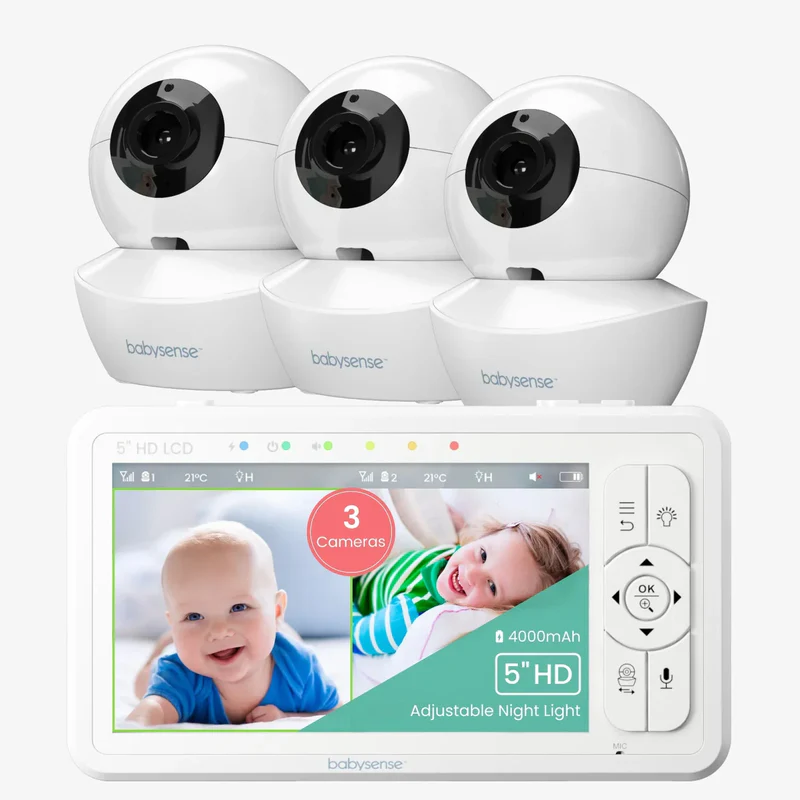
Browse the Babysense Video Monitor range and find the right fit.
A Quick Look at All 8 Monitors with Room Temperature Sensors
Babysense PRO with 1 Camera
A non-Wi-Fi monitor with temperature alerts and a wide-angle pan, tilt, and zoom camera, so you can see what's causing the temperature shift, not just that one happened.
Motorola Nursery PIP1610 HD Connect
Tracks temperature and humidity on a 1080p display with both a dedicated parent unit and app access, making it a practical fit for families with multiple caregivers.
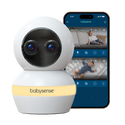
Babysense Touch with 2 Cameras
A large 7-inch touchscreen paired with Wi-Fi app access, tracking both temperature and humidity with no subscription fees for alerts or family sharing.
Show more
Why Room Temperature Monitoring Actually Matters
A newborn's skin surface area is large relative to their body mass, which means heat moves in and out of their body faster than it does for an adult. They also don't have the same fat reserves to store body heat, and they can't shiver or sweat the way adults do to regulate their temperature [1].
That combination makes them vulnerable to overheating and overcooling, often without showing any visible signs of discomfort.
Temperature vs Humidity: What's the Difference?
A temperature sensor tells you how warm or cool the room is. A humidity sensor tells you how much moisture is in the air, and this is vital to know [2]:
- High humidity can create a breeding ground for bacteria and allergens, which may affect your baby's respiratory tract.
- Low humidity (below 30%) can dry out the nasal passages, leading to congestion, and may also aggravate sensitive skin or eczema.
If your baby has any respiratory sensitivity or you live somewhere with extreme seasonal humidity swings, a monitor that tracks both temperature and humidity gives you a much fuller picture of the nursery environment.
What Can Go Wrong With Temperature Monitoring
A few things can throw off a monitor's temperature reading without you realizing it:
- Placement matters more than you'd expect. A monitor mounted near a window, a heating vent, or in a corner with trapped air can show a reading that has nothing to do with the actual temperature near your baby's crib.
- Even the device's own battery or night-vision LEDs can generate enough heat to skew the reading slightly.
Keeping the monitor close to the crib, away from direct sunlight and airflow sources, gives you the most accurate picture.
Wi-Fi vs Non-Wi-Fi: Does It Affect Temperature Tracking?
Yes, in a few ways:
- Wi-Fi monitors send temperature data to an app in real time and often store historical records, so you can track patterns over days or weeks. The trade-off is that alerts depend on a stable internet connection, and a weak signal can delay notifications.
- Non-Wi-Fi monitors transmit data directly to the parent unit using FHSS (Frequency Hopping Spread Spectrum). There's no historical data to review, but alerts tend to be faster and more reliable overnight since they don't depend on the internet.
What to Look for in a Temperature Alert System
- Gentle alerts for minor changes, urgent alerts for real concerns. A good monitor shouldn't sound an alarm over a one-degree shift. Save the loud alerts for genuinely concerning changes.
- Visual temperature history. A simple chart makes it easier to spot patterns without having to decode raw numbers.
- Customizable high and low limits. Being able to set your own thresholds, ideally with guidance from your pediatrician, helps cut down on unnecessary anxiety.
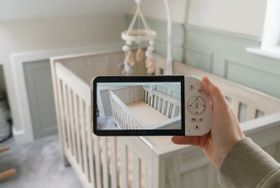
- An at-a-glance display. A glowing readout or color-coded screen means you can check the temperature without unlocking your phone or opening an app.
- Dual sensor cross-checking. Some monitors pair a wall-mounted sensor with a wearable sensor for a more accurate, baby-specific reading.
The 8 Best Baby Monitors with Room Temperature Sensors
1

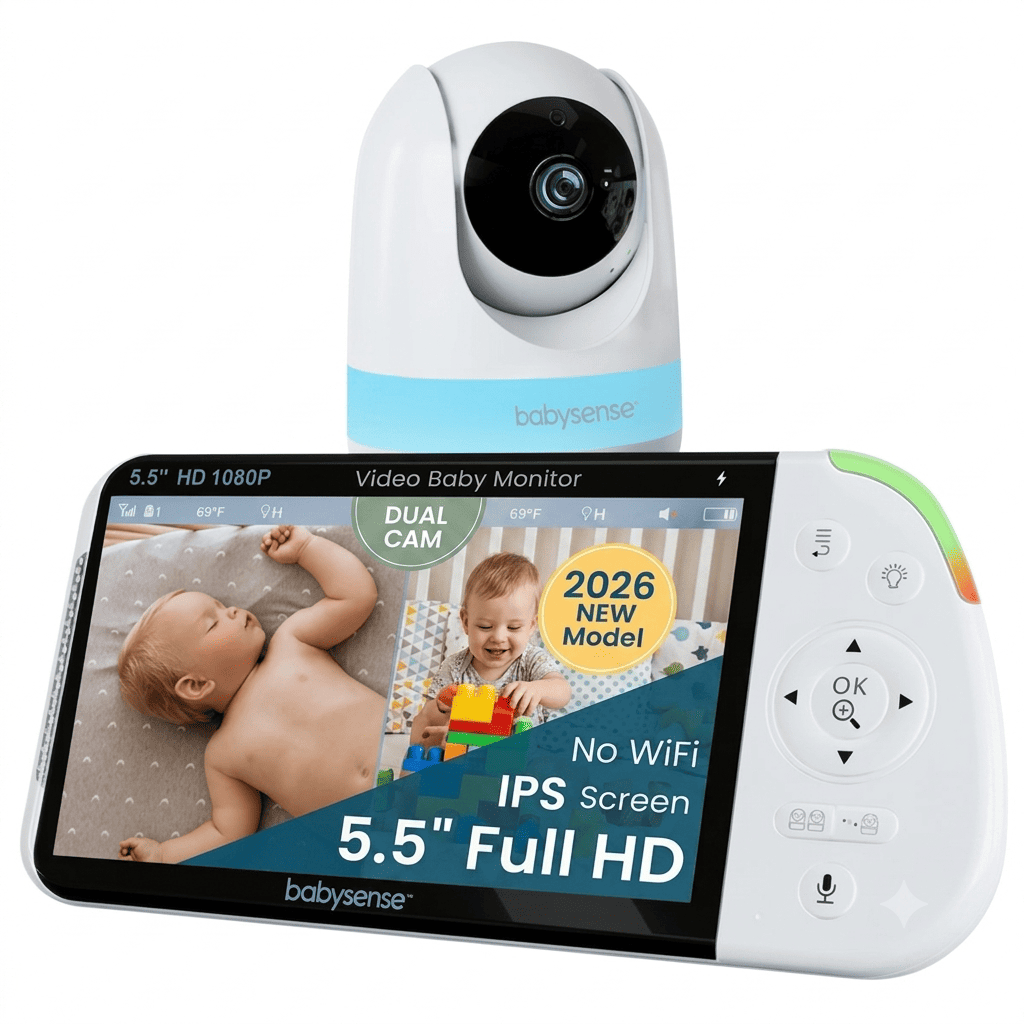
Babysense PRO with 1 Camera
Private monitoring with peace of mind built in.
Connectivity
Non-Wi-Fi, FHSS
Temperature Tracking
Yes
Humidity Tracking
No
Why we chose this monitor
The Babysense PRO pairs temperature alerts with a wide-angle pan, tilt, and zoom camera, so you're not just getting a number on a screen. If the temperature shifts, you can actually check whether your baby has kicked off a blanket or is sleeping in a draft, giving you context alongside the reading.
It runs on a closed-loop, non-Wi-Fi connection with a range of up to 1,000 feet, which makes it a strong choice for larger homes or multi-floor setups where you want a private connection you don't have to think about.
Pros and cons
Private, hack-proof non-Wi-Fi connection
Long 1,000ft range, suitable for larger homes
A wide-angle camera gives a visual context for temperature changes
Simple, direct monitoring through the parent unit
No humidity tracking
Temperature accuracy depends on correct placement
2

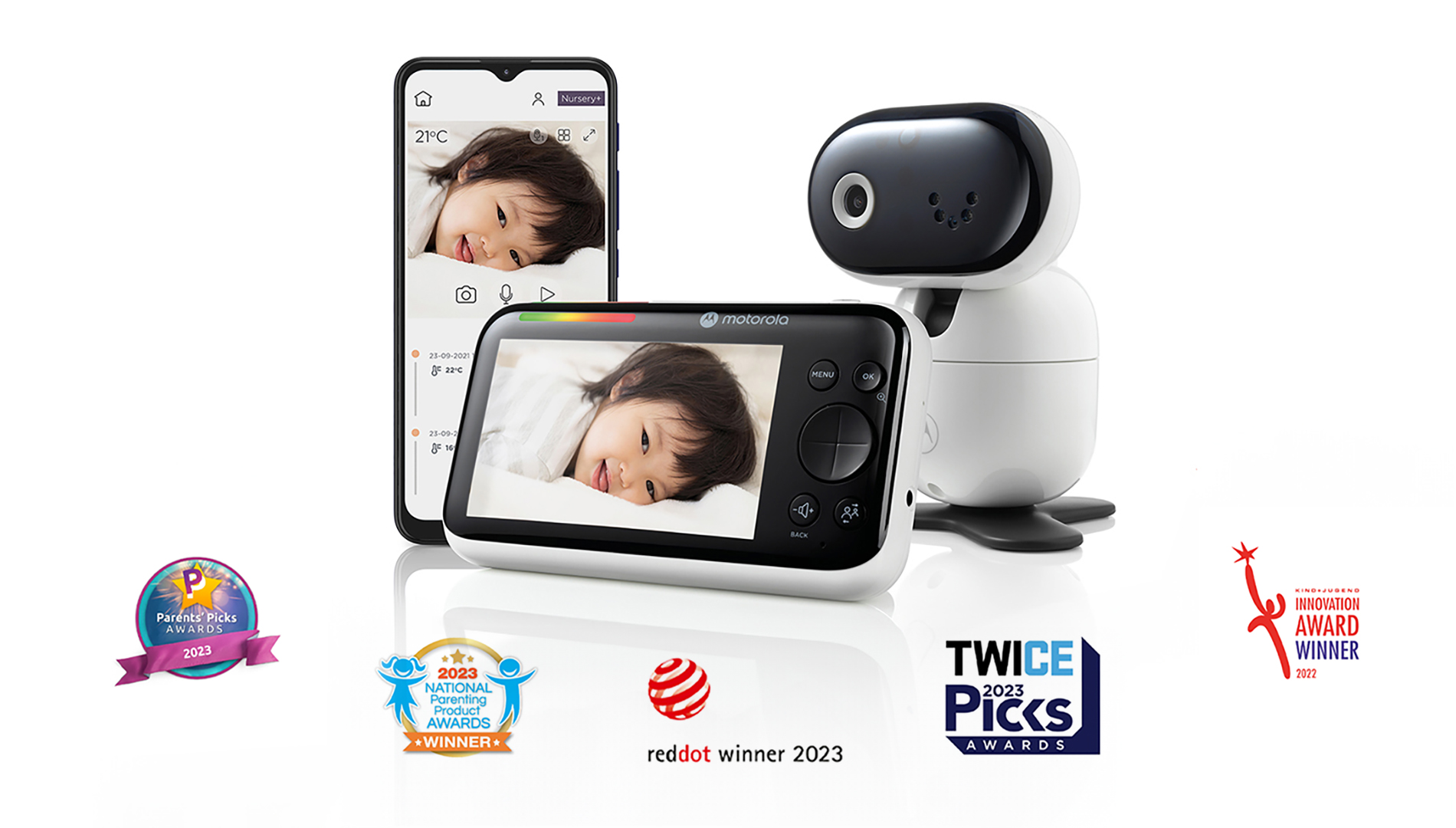
Motorola Nursery PIP1610 HD Connect
Local screen, remote access, no compromise.
Connectivity
Wi-Fi and local parent unit
Temperature Tracking
Yes
Humidity Tracking
Yes
Why we chose this monitor
This monitor stands out for combining a dedicated parent unit with smart app access, giving you both local and remote monitoring in one system. The 1080p display shows temperature and humidity alongside live video, and a triple-layer security system means you can control exactly who has access to the feed.
It's particularly useful for families managing a baby with respiratory sensitivities, since the humidity display lets you track moisture levels alongside temperature, especially helpful during long, dry winters when humidifiers are in regular use.
Pros and cons
Combined local and remote monitoring
Tracks both temperature and humidity
1080p display for sharp video quality
Relies on internet connectivity for remote features
Measures temperature near the device, not necessarily the crib
No environmental trend reports
3
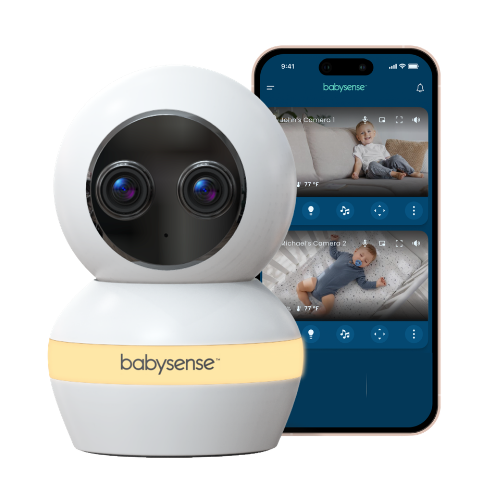
Babysense Touch with 2 Cameras
A complete environmental picture, right on your phone.
Connectivity
Wi-Fi and app-based
Temperature Tracking
Yes
Humidity Tracking
Yes
Why we chose this monitor
The Babysense Touch tracks both temperature and humidity, which matters because the two are often connected when it comes to nursery comfort. The 7-inch touchscreen gives you a sharp local view, while the app lets you check in remotely with no subscription fees for smart alerts or family sharing.
It's a strong fit for parents who are already comfortable with smart home devices, or who live somewhere with frequent temperature and humidity swings and want a system that adapts with them.
Pros and cons
Tracks temperature and humidity together
Large 7-inch touchscreen for local viewing
No subscription fees for smart alerts or family sharing
Remote access via app for working or travelling parents
Accuracy depends on monitor placement relative to the crib
Remote features depend on a stable internet connection
4

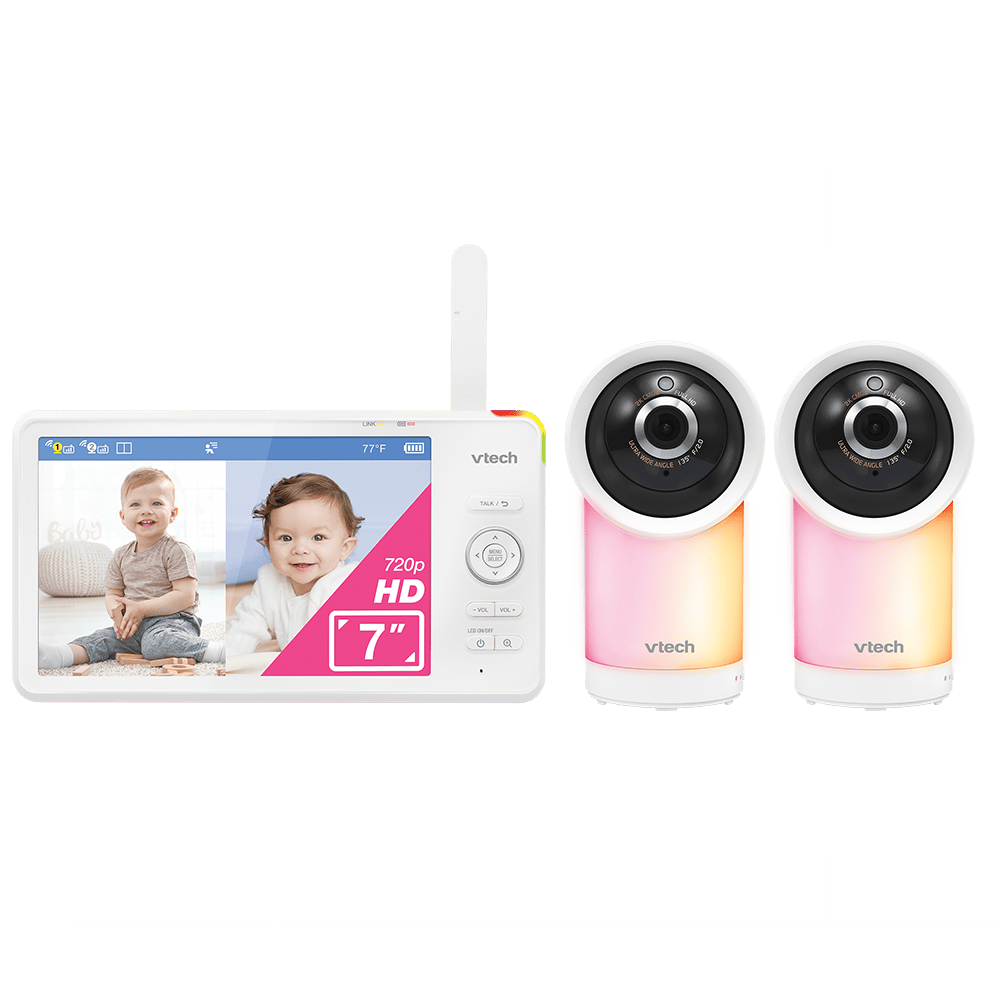
VTech RM7766-2HD
Local or remote, your choice, your control.
Connectivity
Wi-Fi and local parent unit
Temperature Tracking
Yes
Humidity Tracking
Yes
Why we chose this monitor
The VTech RM7766-2HD gives you the flexibility of both a parent unit and an app, without requiring an ongoing subscription. The 30x zoom is a standout feature here, letting you check in on small details like blanket position or whether your baby has shifted into an uncomfortable spot, useful context when the temperature reading shifts unexpectedly.
It's a good fit for parents who travel and want remote access, but also want a reliable home setup that doesn't depend on the cloud.
Pros and cons
Combines temperature and humidity tracking
30x zoom for detailed visual checks
No subscription required for app access
Switching between local and remote modes can feel complex
Wi-Fi dependent for remote features
Setup has more steps than a simple non-Wi-Fi monitor
5
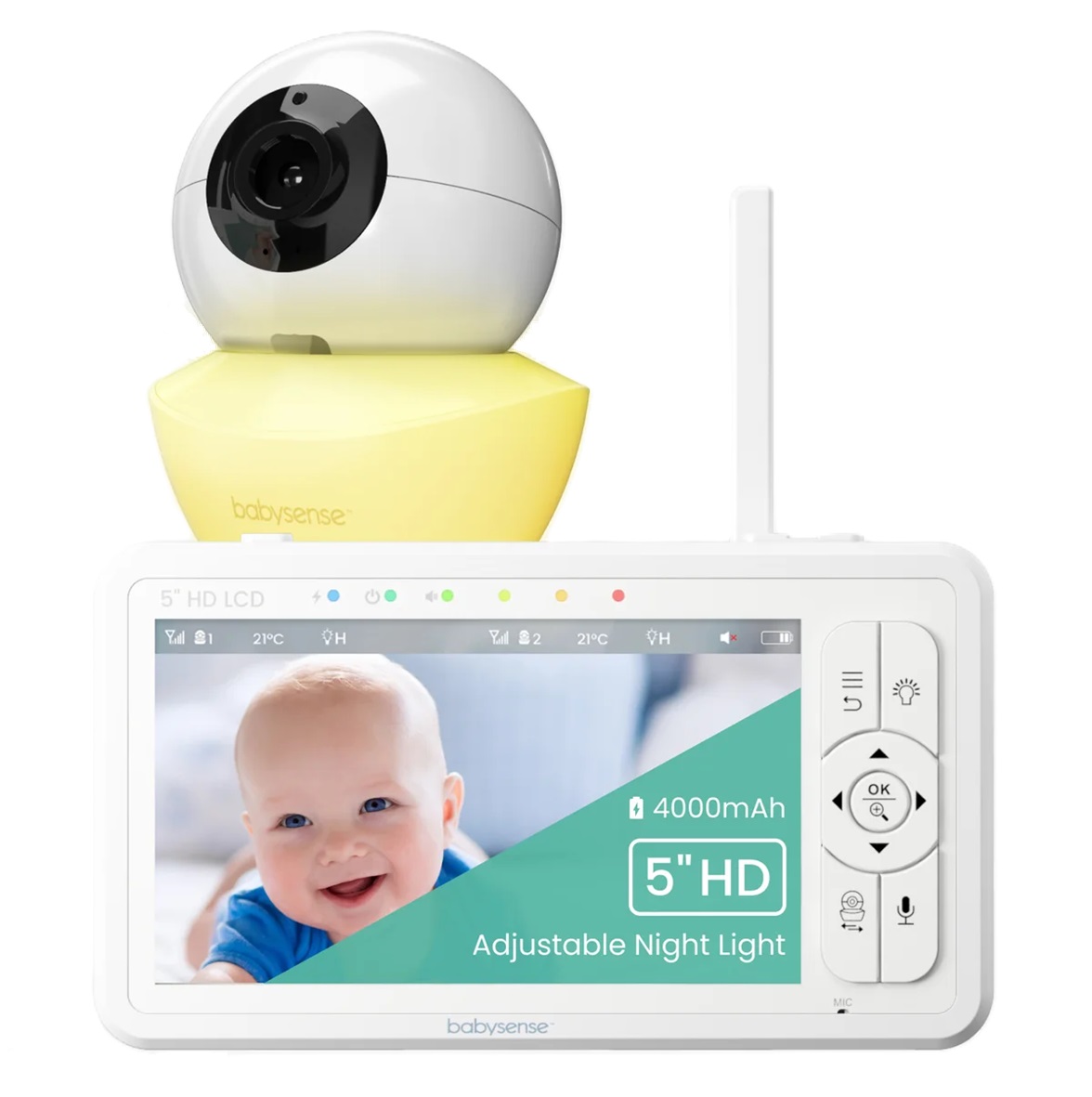
Babysense HD S2
Two rooms, two temperature readings, one screen.
Connectivity
Non-Wi-Fi
Temperature Tracking
Yes
Humidity Tracking
No
Why we chose this monitor
The Babysense HD S2 is especially useful for parents monitoring more than one child or room, since the split-screen view shows temperature readings from both spaces at once. That makes it easy to spot if one room is running warmer or cooler than the other and adjust accordingly.
It's a solid non-Wi-Fi option for families who want simple, reliable monitoring without depending on an internet connection, and it's easy to hand off to caregivers who aren't comfortable with apps.
Pros and cons
Split-screen view shows temperature in two rooms at once
Fully private, non-Wi-Fi connection
Pan, tilt, and zoom camera for visual context
Simple enough for any caregiver to use
No humidity tracking
Audio is only available for one room at a time
6

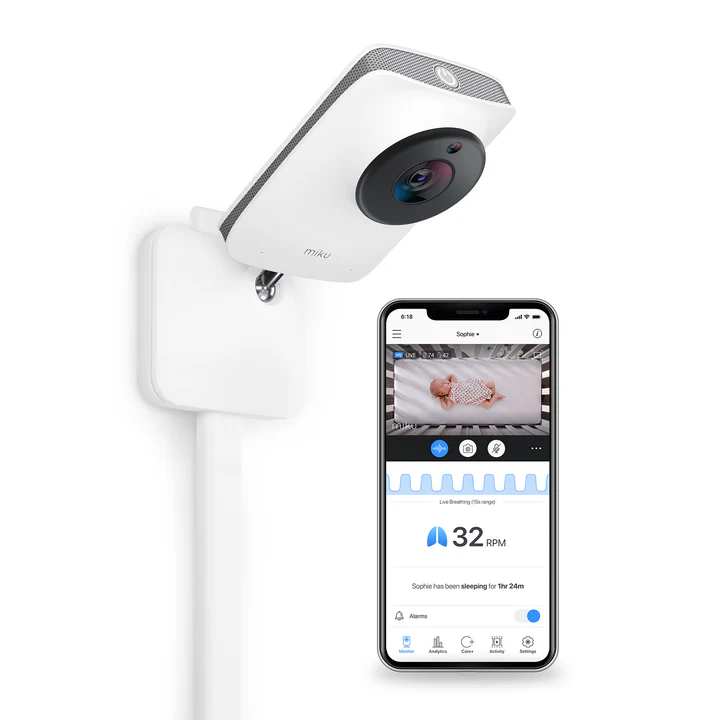
Miku Pro Smart Baby Monitor
Breathing, temperature, and humidity, all without a wearable.
Connectivity
Wi-Fi and app-based
Temperature Tracking
Yes
Humidity Tracking
Yes
Why we chose this monitor
The Miku Pro combines temperature and humidity tracking with contact-free breathing motion detection, giving parents a fuller environmental and respiratory picture without attaching anything to the baby. The breathing detection works through blanket layers and in dim lighting, and the app lets you customize alerts based on your own comfort thresholds.
This is a strong option for parents who want extra reassurance around breathing patterns alongside standard temperature and humidity tracking, particularly if your baby has shown early signs of breathing irregularities.
Pros and cons
Contact-free breathing motion detection
Tracks temperature, humidity, sound, and light
No charging required for the sensor
Higher price point than most monitors on this list
The volume of data and alerts can feel overwhelming
Relies on a stable internet connection
7
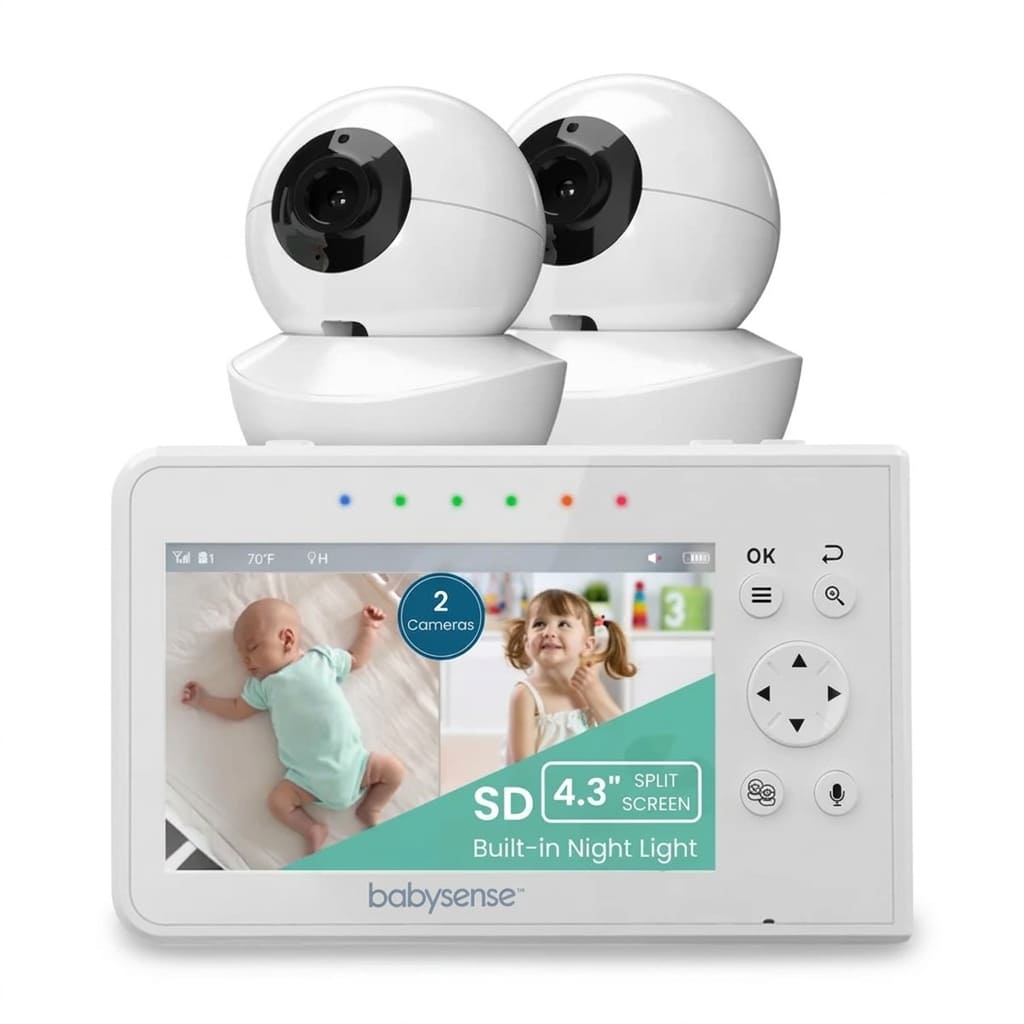
Babysense V43
Affordable, private, and surprisingly capable.
Connectivity
Non-Wi-Fi
Temperature Tracking
Yes
Humidity Tracking
No
Why we chose this monitor
The Babysense V43 is one of the most affordable monitors on this list without cutting corners on the essentials. It comes with two cameras, split-screen viewing, VOX sound activation, and temperature alerts, all on a private, non-Wi-Fi connection.
It's a practical choice for small to medium homes, monitoring two children at once, and it's easy enough for grandparents or other caregivers to pick up without any tech experience.
Pros and cons
Budget-friendly without sacrificing core features
Two cameras with split-screen viewing
Fully private, non-Wi-Fi connection
Easy for any caregiver to use
Smaller screen, especially in split-screen mode
No simultaneous audio from both rooms
8

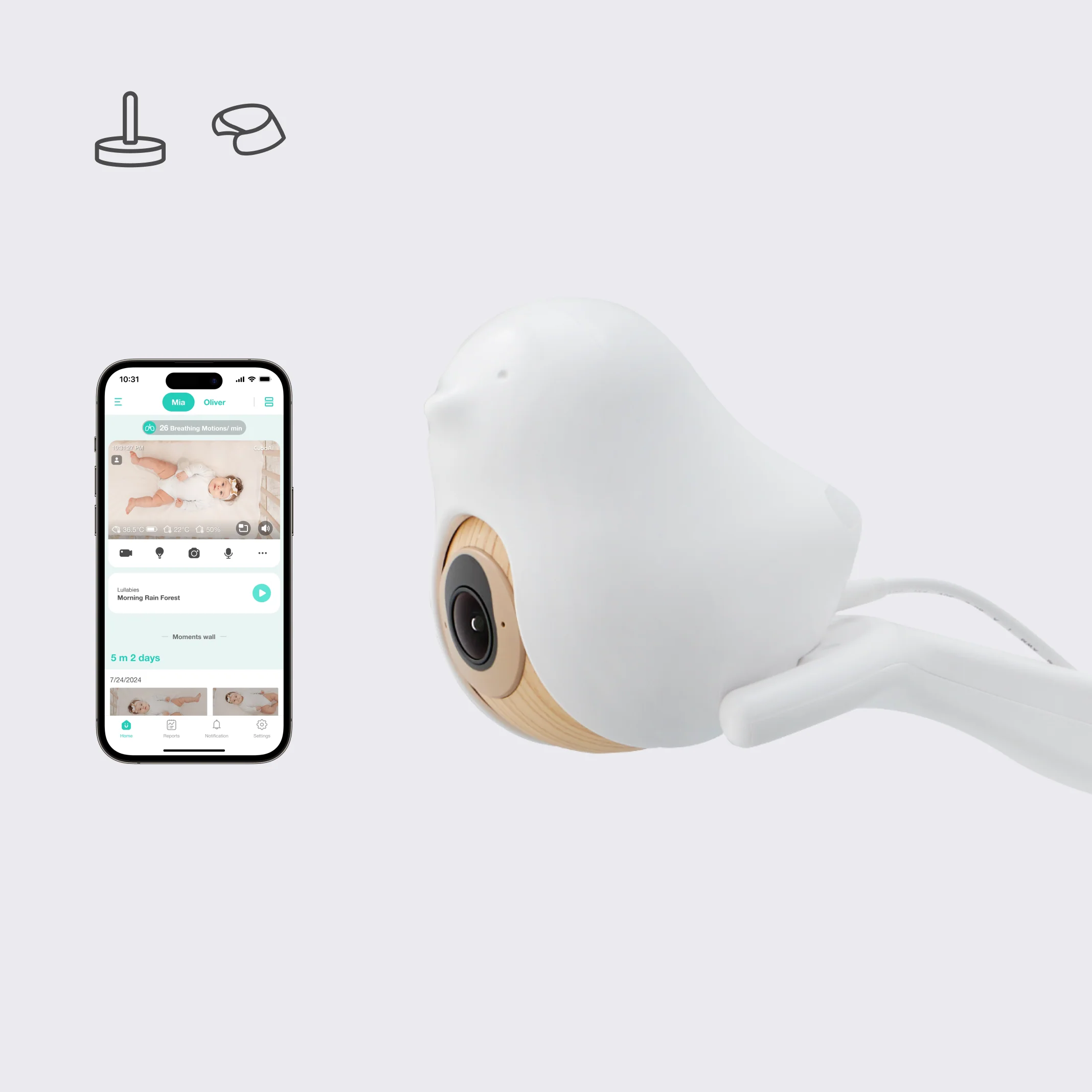
CuboAi Smart Baby Monitor 3
Smart enough to spot what a thermometer alone can't.
Connectivity
Wi-Fi and app-based
Temperature Tracking
Yes
Humidity Tracking
Yes
Why we chose this monitor
The CuboAi Smart Baby Monitor 3 goes further than most monitors on this list by combining temperature and humidity tracking with AI-powered sleep safety alerts. It can detect if your baby's face is covered, if they've rolled into an unsafe position, or if a cough pattern suggests the air might be too dry, giving real context to environmental changes rather than just a number.
It's a good long-term option too, since it remains useful well beyond the newborn stage, continuing to track movement and safety alerts as your baby grows into a toddler.
Pros and cons
AI-powered safety alerts, including face coverage and rolling detection
Tracks temperature, humidity, and cough patterns together
2.5K HD video quality, even in low light
Smart features require a subscription
The volume of alerts and data can feel like a lot to manage
Higher price point than simpler monitors
Choosing the Right Baby Monitor with a Temperature Sensor
The best monitor for your nursery depends on what you actually need. If you want simple, private, non-Wi-Fi monitoring, the Babysense PRO or Babysense V43 are reliable starting points. If you want combined temperature and humidity tracking with smart features, the Babysense Touch or CuboAi Smart Baby Monitor 3 are worth a closer look.
Whatever you choose, remember that a few decimal points of precision rarely matter as much as correct placement. Keep the monitor close to the crib, away from windows, vents, and direct sunlight, and you'll get a far more accurate read on what your baby is actually experiencing.
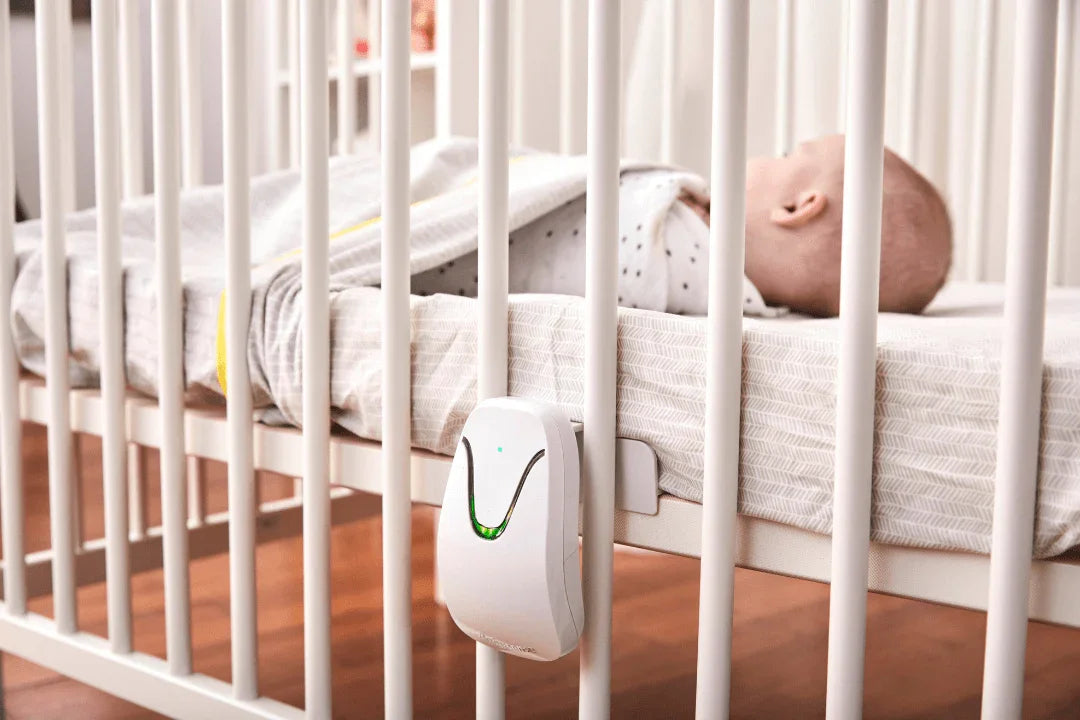
Monitor Your Baby's Breathing With Confidence
Babysense monitors track your baby's breathing movements without any wires or wearables.
References
[1] Philadelphia, C. H. O. (n.d.). Warmth and Temperature Regulation | Children’s Hospital of Philadelphia. Children’s Hospital of Philadelphia. https://www.chop.edu/pages/warmth-and-temperature-regulation
[2] Boston Children’s Hospital. (n.d.). Pediatric Environmental Health Center. https://www.childrenshospital.org/services/pediatric-environmental-health-center/hhomes/humidity
FAQs
Why is room temperature monitoring important for babies?
Newborns can't regulate their body temperature as effectively as adults and won't always show visible signs of discomfort. A temperature monitor helps you catch overheating or overcooling before it becomes a problem.
Should I get a monitor with both temperature and humidity tracking?
It depends on your environment. If you live somewhere with significant seasonal humidity changes, or your baby has any respiratory sensitivity, a combined temperature and humidity monitor gives you a fuller picture of nursery conditions.
Why does my monitor show a different temperature than expected?
Placement is usually the cause. Monitors near windows, heating vents, or corners with trapped air can give inaccurate readings. Keep the monitor close to the crib and away from direct sunlight or airflow sources for the most accurate reading.
Do I need a separate room thermometer if my monitor has a temperature sensor?
Not necessarily, but it can be useful for cross-checking accuracy, especially if you suspect the monitor's placement is affecting its readings, or if your baby needs more detailed monitoring for health reasons.
Are Wi-Fi monitors more accurate than non-Wi-Fi ones for temperature tracking?
Not necessarily more accurate, but Wi-Fi monitors typically offer historical data and real-time app updates, while non-Wi-Fi monitors tend to give faster, more reliable alerts overnight since they don't depend on an internet connection.
What temperature should a baby's room be kept at?
Most pediatric guidance recommends a nursery temperature between 68 to 72°F (20 to 22°C). It's always best to confirm specific guidance with your pediatrician, especially for newborns or babies with health concerns.