Newborn Sleep Cues vs. Hunger Cues: How to Tell the Difference
Newborn hunger and sleep cues can look strikingly similar, which makes them easy to mix up. This guide breaks down the key signs of each, so you can respond to what your baby actually needs.






Updated September 30, 2026

AI Summary


Being a parent for the first time can be exhausting and overwhelming, especially when you can't figure out what your newborn actually wants. Are they hungry? Are they tired? It's hard to tell, and that's completely normal.
In this post, we'll help you learn the difference between hunger and tiredness cues, so you can spend less time guessing and more time on what matters.
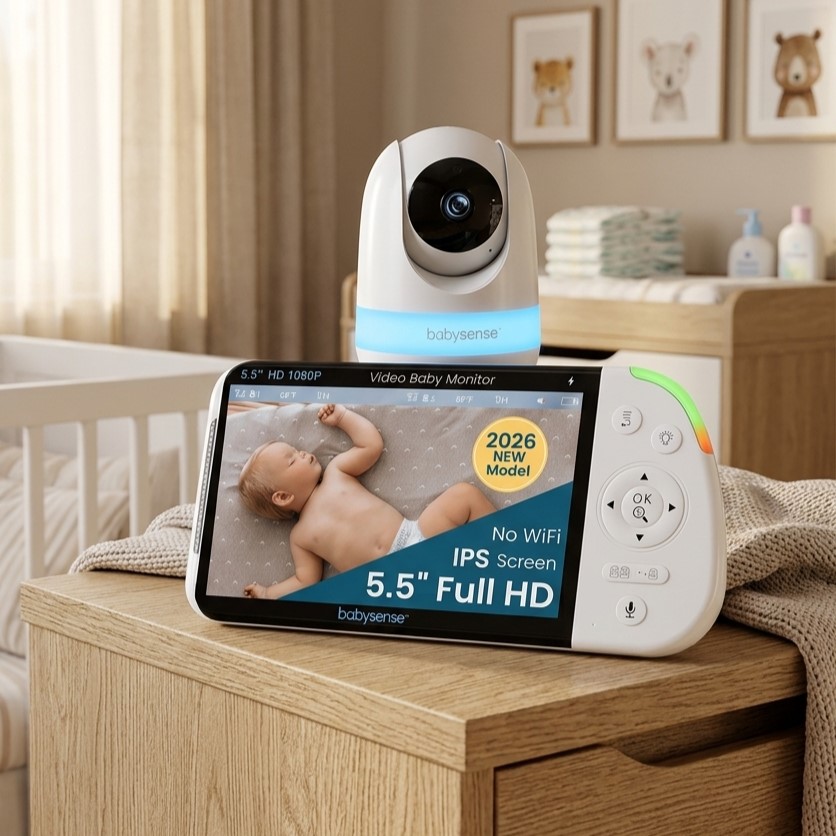
Take the Guesswork Out of Baby Cues
Babysense non-Wi-Fi monitors give you the high-definition clarity to spot the difference.
Why It's Really Hard to Read Your Baby's Cues
Responsive feeding assumes you can recognize when your baby is hungry versus tired. But the truth is, feeding cues and behaviors are shaped by so many factors, including your baby's physical traits, their personality, and the environment around them [1].
A lot of it depends on your baby's individual characteristics and even your own tendencies as a parent.
What Happens When You Misread Your Baby's Cues
Misreading your baby's cues can send things spiraling fast. Say your baby is fussing and sucking their fist, so you assume hunger and offer a feed. But they were actually overtired, not hungry, so the feed doesn't help. They're still crying, and now you're both frustrated.
The opposite happens too. You try to put a genuinely hungry baby down for a nap, and neither need gets met, which is its own kind of chaos.
The bigger long-term concern is overfeeding. When babies gain weight too quickly (which can happen when parents misread cues), they face a higher risk of childhood obesity down the road [2].
On the flip side, not feeding enough has serious consequences. Babies who don't get adequate nutrition early on can face long-term developmental issues.
Sleep Deprivation Clouds Your Judgment
This one might hit close to home. When you're running on little sleep, your brain has a harder time paying attention. You might miss cues you'd normally catch, or read the ones you do notice the wrong way. This is simply what sleep deprivation does to anyone's brain [3].
Your Baby Is Genuinely One of a Kind
Every baby sleeps differently. Some babies are super sleepy, others less so. The same goes for how they signal hunger or tiredness. What looks like a sleep cue in one baby might be a hunger cue in another. That's why you can't just memorize a list of signals and call it a day [3].
Reading your baby's cues is a skill you build by watching and learning over days and weeks, not something you get right from a formula.
5 Newborn Critical Hunger Cues
Your baby's hunger signals come in three stages: early, active, and late. They start subtly and get louder and more obvious if you don't respond.
1. Rooting
Rooting is one of the most valuable hunger cues to catch. Your baby turns their head toward anything grazing their cheek and opens their mouth searching for the nipple [4].
In real life, you'll see it as nuzzling into your shoulder or turning toward fabric. It happens when your baby is calm and alert, the perfect moment to feed before frustration kicks in. Once crying starts, it's much harder for your baby to coordinate feeding [5].
2. Hand-to-Mouth Movement and Fist Sucking
Your baby bringing their fists to their mouth and sucking signals active hunger. Early on, movements are gentle. As hunger builds, sucking becomes rapid and rhythmic [6].
But the problem is that hand-sucking is also how babies soothe themselves [7]. A drowsy baby with heavy eyelids, sucking their hand, is probably self-soothing. An alert, wide-eyed baby doing the same with urgency is asking for food [8].
3. Lip Smacking and Mouth Opening
You might hear this before you see it. Lip smacking is a soft, repetitive movement sometimes with a clicking sound. These are early hunger cues that appear before your baby seems unsettled. Respond right away, before crying starts [9].
These can also look like self-soothing in a drowsy baby transitioning between sleep cycles. The key difference is arousal level: hunger-related lip smacking comes with increasing alertness, while sleep-related smacking happens in a still, eyes-closed baby [9].
4. Increased Alertness and Restlessness
As hunger builds, your baby goes from quiet sleep into an activated state with wide eyes, moving limbs, and searching movements. This is frequently misread because similar behaviors signal overstimulation [10].
The critical difference is direction: a hungry baby searches toward you and moves toward your face and chest. An overstimulated baby turns away and arches backward [11].
5. Fussing
Fussing is low-grade vocal distress between silence and full crying, a middle-stage hunger cue. By this point, your baby has moved through earlier signals, and the window is closing. Feeding during fussing prevents escalation to inconsolable crying that makes feeding harder [3].
» Learn when to contact your pediatrician about sleep concerns.
The 5 Most Critical Sleep Cues
1. Yawning
Yawning signals your baby is transitioning to sleep [13]. Two or three yawns in a short window, especially with less eye contact or slowing movements, means your baby is getting tired [14]. It's a middle-to-late cue, so earlier signs have probably already passed. When you see it, dim the lights and lower the noise right away [15].
2. The Glazed Stare
Your baby's eyes stay open, but go kind of blank and unfocused. This is actually your best window to catch tiredness before it becomes overtired chaos. The difference from quiet alertness is that a tired baby doesn't respond to you, and everything slows down [16].
3. Decreased Activity
Your baby was moving around and engaging, and suddenly everything just... Stops. Limbs slow, facial expressions flatten, interest drops [15]. It's easy to miss or mistake for contentment, but the direction matters: engagement keeps dropping [15].
4. Eye Rubbing
Your baby rubs their eyes repeatedly, often with a little frown. This is a late cue, and the window between this and an overtired meltdown can be super short, sometimes just 5-10 minutes; treat it as urgent [15].
5. Overtired Crying
This crying sounds different from hunger crying, whinier, more inconsolable, and it escalates no matter what you do. Your baby might arch their back and cry in waves that don't stop [15].
Between 15-35% of parents deal with infant sleep problems in the first six months, so you're definitely not alone if this is happening [17].
» Learn more about healthy sleep cycles and baby sleep regression.
How to Decide When Cues Overlap
Timing is your best filter. Use the two-hour rule: if it's been two or more hours since the last feed and your baby shows hunger cues, feed. If they ate recently but are yawning or glazed-eyed, go for sleep.
Watch the direction too. A hungry baby moves toward you, more alert, more movement, searching for your chest or face. A tired or overstimulated baby does the opposite, as movements slow, engagement drops, and they turn away.
Diaper output helps confirm things are on track. By day five, breastfed babies should have six or more wet diapers daily with pale or clear urine [18].

Catch Cues Before the Crying Starts
Crying is a late signal. The Babysense PRO helps you catch the earliest hunger and sleep shifts with HD night vision and zero-lag audio.
References
1. National Center for Biotechnology Information. (n.d.). Feeding cues and behaviors shaped by numerous factors. PMC. https://pmc.ncbi.nlm.nih.gov/articles/PMC4991302/
2. National Center for Biotechnology Information. (n.d.). Formula-fed newborns overfed on first day of life. PMC. https://pmc.ncbi.nlm.nih.gov/articles/PMC7055094/
3. National Center for Biotechnology Information. (n.d.). Maternal sleep and parenting quality. PMC. https://pmc.ncbi.nlm.nih.gov/articles/PMC5057392/
4. PubMed. (n.d.). Rooting reflex in newborns. PubMed. https://pubmed.ncbi.nlm.nih.gov/30251406/
5. American Academy of Pediatrics. (n.d.). How often and how much should your baby eat. AAP HealthyChildren.org. https://www.healthychildren.org/English/ages-stages/baby/feeding-nutrition/Pages/how-often-and-how-much-should-your-baby-eat.aspx
6. National Center for Biotechnology Information. (n.d.). Early, active, and late hunger cues in newborns. PMC. https://pmc.ncbi.nlm.nih.gov/articles/PMC9993530/
7. National Center for Biotechnology Information. (n.d.). Non-nutritive sucking in infants. NCBI Bookshelf. https://www.ncbi.nlm.nih.gov/books/NBK556112/
8. National Center for Biotechnology Information. (n.d.). Distinction between hunger and self-soothing behaviors. PMC. https://pmc.ncbi.nlm.nih.gov/articles/PMC6458048/
9. United States Department of Agriculture. (n.d.). Baby's hunger cues. USDA WIC Breastfeeding Support. https://wicbreastfeeding.fns.usda.gov/babys-hunger-cues
10. PubMed. (n.d.). Infants communicate readiness to eat. PubMed. https://pubmed.ncbi.nlm.nih.gov/31779012/
11. National Center for Biotechnology Information. (n.d.). Responsive feeding guidelines. PMC. https://pmc.ncbi.nlm.nih.gov/articles/PMC8178105/
12. National Center for Biotechnology Information. (n.d.). Infant crying, hunger, and feeding intervals. PMC. https://pmc.ncbi.nlm.nih.gov/articles/PMC9113474/
13. National Center for Biotechnology Information. (n.d.). Yawning in preterm neonates. PMC. https://pmc.ncbi.nlm.nih.gov/articles/PMC9075618/
14. PubMed. (n.d.). Yawning in newborns. PubMed. https://pubmed.ncbi.nlm.nih.gov/12325143/
15. National Center for Biotechnology Information. (n.d.). Neonatal behavioral states and sleep duration. PMC. https://pmc.ncbi.nlm.nih.gov/articles/PMC3034475/
16. National Center for Biotechnology Information. (n.d.). Glazed stare and quiet alertness in newborns. PMC. https://pmc.ncbi.nlm.nih.gov/articles/PMC4266544/
17. National Center for Biotechnology Information. (n.d.). Infant sleep problems in first six months. PMC. https://pmc.ncbi.nlm.nih.gov/articles/PMC7952858/
18. American Academy of Pediatrics. (n.d.). How to tell if baby is getting enough milk. AAP HealthyChildren.org. https://www.healthychildren.org/English/ages-stages/baby/breastfeeding/Pages/How-to-Tell-if-Baby-is-Getting-Enough-Milk.aspx
19. American Academy of Pediatrics. (n.d.). Warning signs of breastfeeding problems. AAP HealthyChildren.org. https://www.healthychildren.org/English/ages-stages/baby/breastfeeding/Pages/Warning-Signs-of-Breastfeeding-Problems.aspx
20. National Center for Biotechnology Information. (n.d.). Systematic analysis of infant sleep monitoring products. PMC. https://pmc.ncbi.nlm.nih.gov/articles/PMC12406816/
21. PubMed. (n.d.). Nutritive sucking patterns in infants. PubMed. https://pubmed.ncbi.nlm.nih.gov/8958342/
22. University of Washington. (n.d.). Feeding assessment and sucking patterns. University of Washington Growing Program. https://depts.washington.edu/growing/Assess/Feeding.htm
23. American Academy of Pediatrics. (n.d.). Clinical practice guideline: Management of neonatal jaundice. Pediatrics. https://publications.aap.org/pediatrics/article/150/3/e2022058859/188726/Clinical-Practice-Guideline-Revision-Management-of
24. National Center for Biotechnology Information. (n.d.). Infant temperament and maternal sensitivity. PMC. https://pmc.ncbi.nlm.nih.gov/articles/PMC6598438/
25. National Center for Biotechnology Information. (n.d.). Infant temperament and sleep-wake behaviors. PMC. https://pmc.ncbi.nlm.nih.gov/articles/PMC3190304/
FAQs
Can baby monitors help parents distinguish between hunger and sleep cues?
Monitors alert you to crying and movement but cannot replace direct observation for subtle cues like rooting or lip-smacking. While reliable monitors improve parental sleep and lower anxiety, poor performance can increase stress, and over-reliance can lead to risky medical self-diagnosing [20]. Direct observation remains essential.
How can parents tell if a baby is sucking for hunger versus comfort?
Hungry babies suck with rhythm, depth, and audible swallowing at a 1:1 suck-to-swallow ratio [21, 22]. Comfort sucking is lighter and faster, with a 6:1 or 8:1 ratio and no consistent swallowing [22]. Consider context: if they fed 45 minutes ago and look drowsy, it is likely comfort.
What is the difference between normal newborn sleepiness and concerning sleepiness?
Healthy tired babies wake for feeds, show alertness during wake windows, and respond to gentle stimulation. Concerning sleepiness means a baby cannot be roused to feed, lacks alertness entirely, or is lethargic [23]. This can signal dehydration, jaundice, or infection, and warrants prompt medical review.
Do newborn temperament and cue expression vary between babies?
Yes, significantly. Some infants display loud, predictable cues, while others have muted or ambiguous signals [24]. Sleep-wake behaviors naturally vary based on temperament and environment [25]. If your baby has quiet cues, it is a neurobiological reality (not a parenting failure) and a pediatrician can help you decode them.
Is sleeping through the night a sign of a healthy newborn?
No. In the first few weeks, a newborn sleeping longer than four hours is a concern. The AAP advises waking infants for around-the-clock feedings to ensure healthy weight gain and establish milk supply [19].