7 Best Owlet Alternatives: For Simpler Baby Monitoring
Owlet is known for its wearable oxygen and heart-rate tracking, but it may not be the right fit for every family. This post compares seven Owlet alternatives, covering monitoring approach, features, and who each one suits best.






Updated October 1, 2026
AI Summary


Whether you're a brand-new parent or a few kids into this, picking a baby monitor today can start to feel like a research project of its own. There are cameras, sensors, wearables, and apps, and it's easy to end up chasing every feature instead of figuring out what your family actually needs.
Owlet is one of the best-known names in baby monitoring, mostly for its wearable sock that tracks oxygen and heart rate. But that approach isn't right for every parent. This post compares seven alternatives so you can find the monitor that best fits your family's routine.
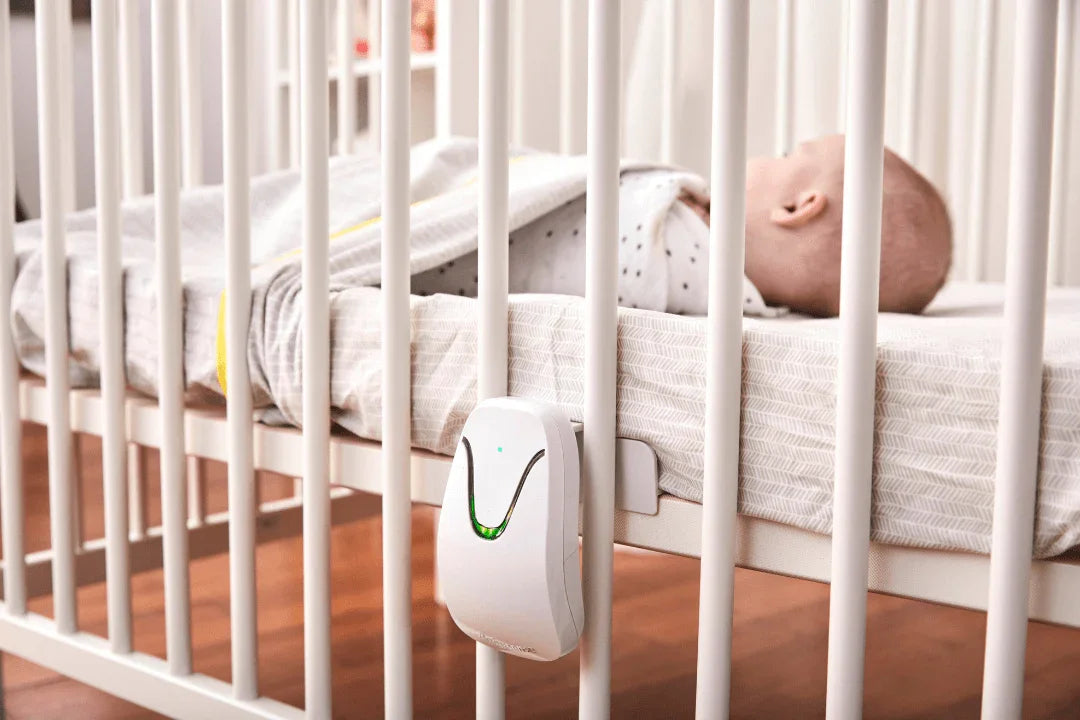
Not Sure Which Monitor Fits Your Family?
Compare Babysense's video and breathing motion monitors to find the right fit.
Why Parents Consider Owlet Alternatives
You might start looking beyond Owlet once you realize that your priorities go past physiological tracking. Other common reasons include cost, reliance on a smartphone app, wearable comfort, and wanting a simpler monitoring experience.
Many families also want something easier to hand off to grandparents or babysitters who may not want to manage an app and its notifications.
What Actually Affects Day-to-Day Satisfaction
Some concerns worth weighing before deciding on the best baby monitor include:
- Budget: Ongoing costs add up if a monitor requires accessories or a subscription.
- Long-term usability: Whether the monitor stays useful past the newborn stage.
- Monitoring more than one child: Some systems scale more easily than others.
- Travel flexibility: Portability matters if you're often away from home.
- Dependence on Wi-Fi: Connectivity issues can affect reliability day-to-day.
When It's More About Anxiety Than Fit
Sometimes it's less about a real gap in features and more about anxiety. Some parents chase increasingly advanced features hoping to remove all uncertainty. But no consumer monitor can guarantee a baby's safety or replace routine medical care and safe sleep practices.
The most useful purchase decisions usually come down to practical needs and ease of use, not the amount of data a monitor can generate.
It's also worth understanding what kind of monitoring you're comparing. These are the most common types:
- Breathing motion monitors add another layer, flagging changes in breathing movement without measuring vital signs directly.
- Wellness trackers add physiological data like heart rate or oxygen without diagnosing anything.
- True medical monitoring only happens under clinical supervision with validated equipment.
Keep in mind that none of the products in this post fall into that last category. No baby monitor, wearable or otherwise, has been approved by the FDA to prevent SIDS (Sudden Infant Death Syndrome)[1].
Best Owlet Baby Monitor Alternatives
Here's how seven alternatives compare, based on their monitoring approach, features, and who each one tends to suit.
1. Babysense: Breathing Movement and Video Monitoring

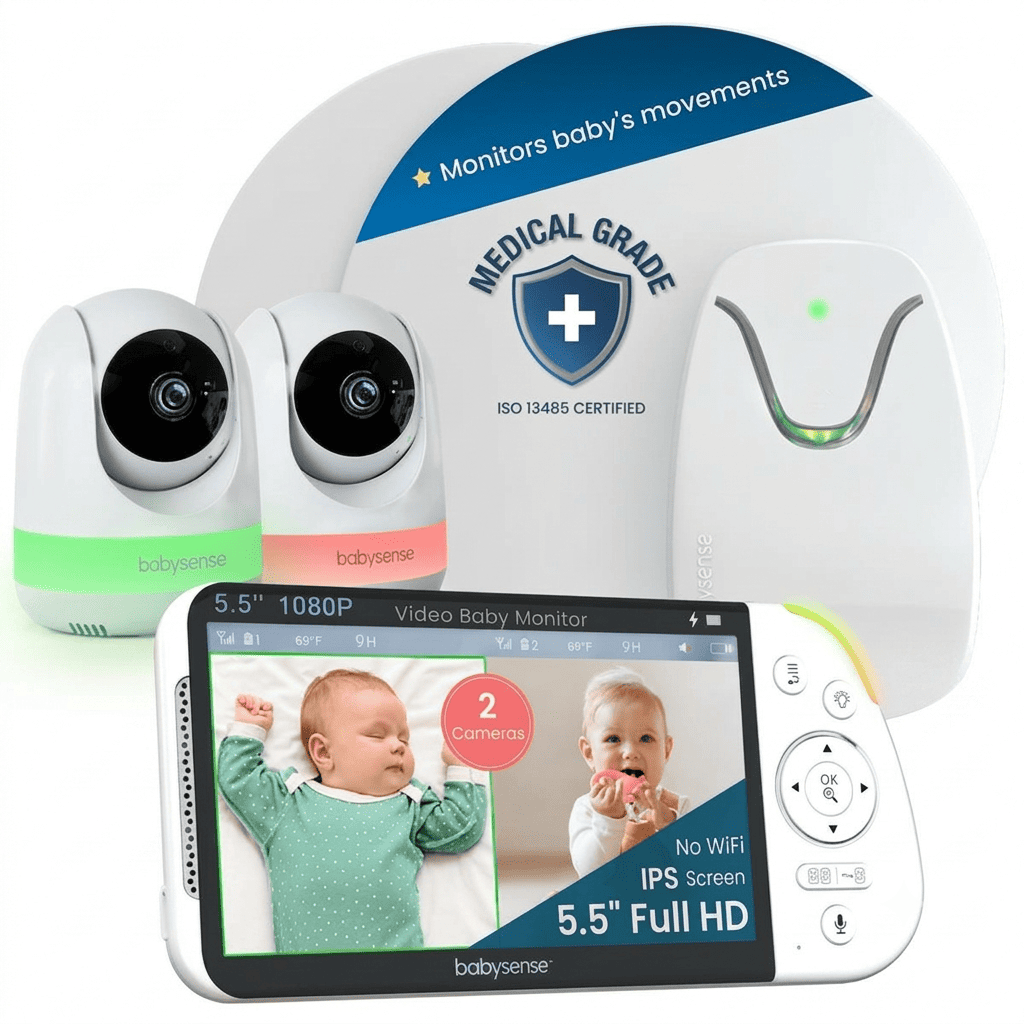
Babysense takes a different approach to Owlet by focusing on video, audio, and non-contact breathing movement detection rather than a wearable that tracks oxygen or heart rate.
Babysense's breathing movement models use two under-mattress sensor pads to detect breathing movement, so nothing needs to be attached to your baby at all.
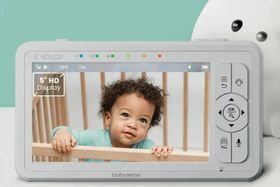
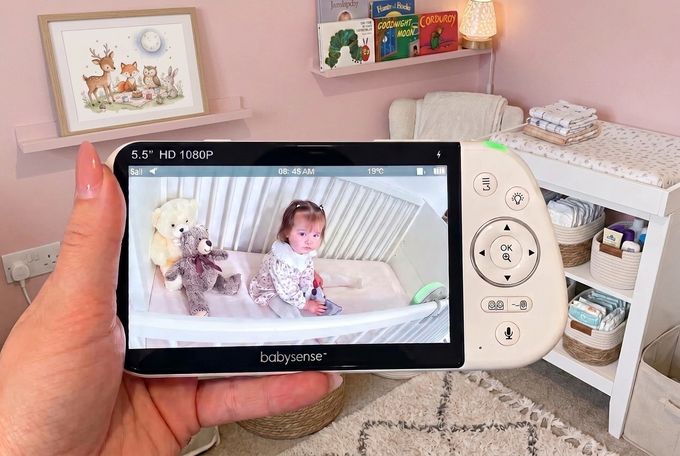
Babysense also offers an extensive range of video monitors. Depending on the model, you'll get FHSS for a private, non-Wi-Fi connection, or smart Wi-Fi and hybrid setups with video, split-screen viewing, pan-tilt-zoom, temperature monitoring, and two-way audio.
For parents looking for a more comprehensive solution, there are also breathing movement and video monitor bundles to cover all your bases.
Quick comparison with Owlet
| Babysense | Owlet |
|---|---|---|
Monitoring type | Video, audio, and breathing movement | Oxygen and heart rate |
Wearable required | No | Yes |
Connectivity | Wi-Fi, non-Wi-Fi, or hybrid | Wi-Fi only |
Subscription needed | No | Sometimes, for full app features |
Why Babysense stands out
For parents who'd rather skip the sock or clip altogether, it's one of the more complete alternatives on this list, and a simpler way to stay aware of your baby without managing wearable hardware or physiological data.
- Owlet centers its value around oxygen and heart-rate data. But a monitor bundle from Babysense offers breathing movement alerts, along with standard video monitoring, without any hardware attached to your baby.
- Alerts are designed to flag what actually matters rather than every small shift, so you're left with more peace of mind than anxiety.
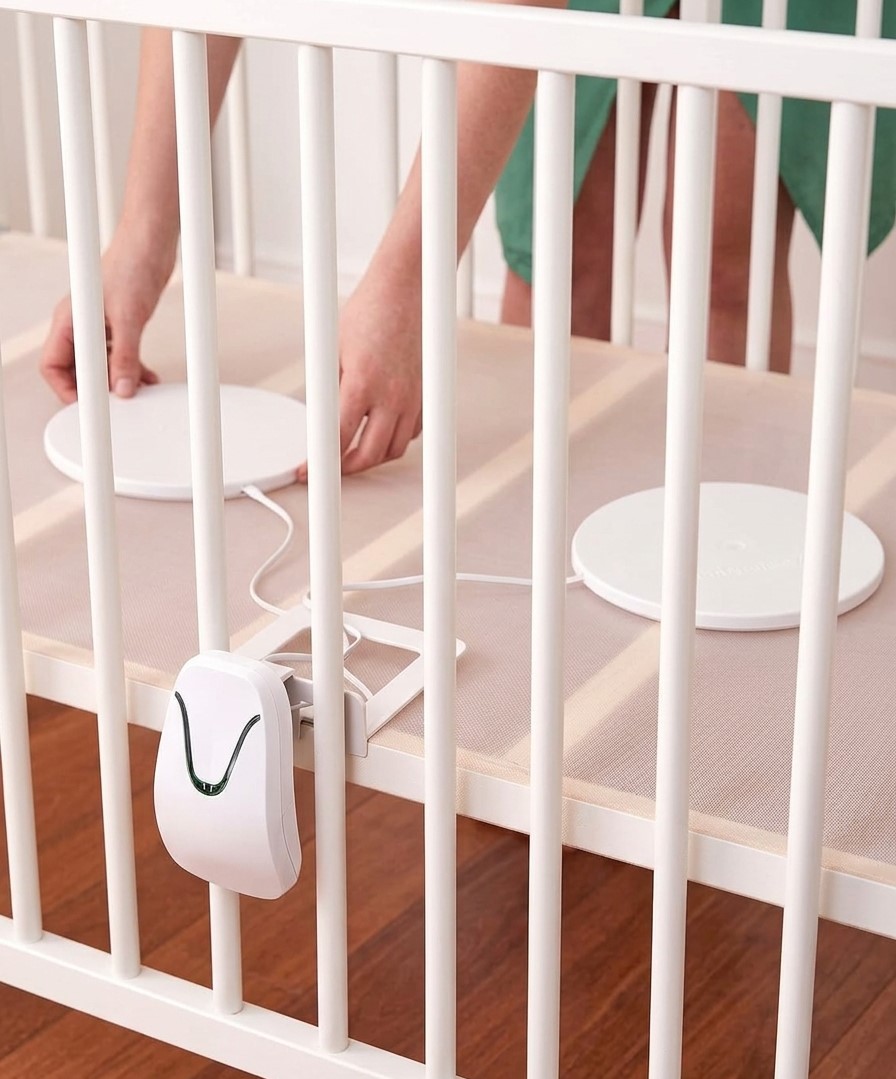
- Babysense breathing motion monitors track breathing movement using two sensor pads placed under the mattress, no wearable involved, and send a real-time alert if movement stops or drops below a safe threshold.
- On the video side, monitors like the Babysense Touch use AI auto-tracking to keep your baby in frame, so you're not manually adjusting the camera every time they move.
- Non-Wi-Fi models use a closed-loop connection directly between the camera and parent unit, which keeps things private and off any outside network entirely.
- The system scales well too, supporting up to four cameras and a range of up to 1,000 ft on non-Wi-Fi models, so it holds up as your family grows rather than needing to be swapped out.
- Multiple caregivers can access the app remotely, and Babysense Connect takes it further by syncing sleep data across the household through the Smart Nursery app.
Skip the Wearable
See how Babysense monitors breathing movements without anything attached to your baby.
2. Nanit: AI-Powered Sleep Analytics Camera

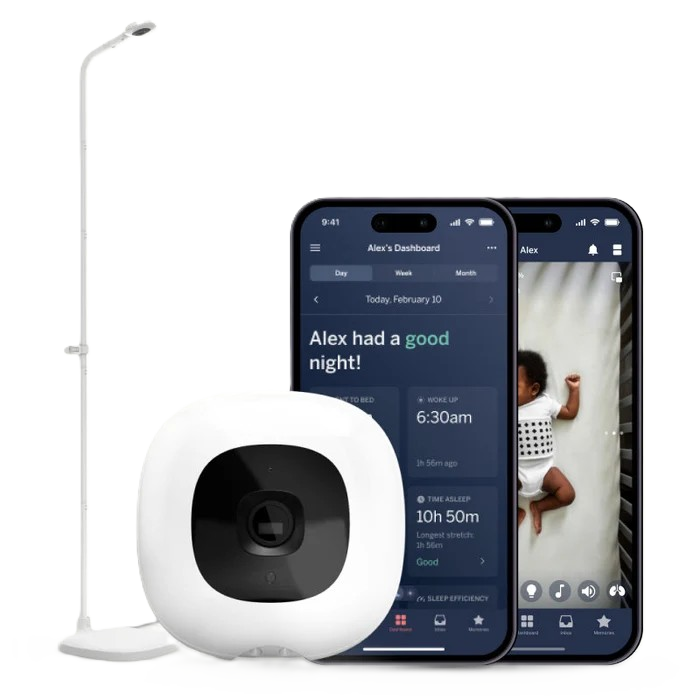
Nanit takes a camera-first approach, using an overhead HD camera and computer vision to track sleep patterns and breathing motion.
It relies on Wi-Fi connectivity, with live HD video, two-way audio, temperature and humidity tracking, and sleep analytics delivered through the app, often paired with an ongoing insights subscription for deeper reporting.
Quick comparison with Owlet
| Nanit | Owlet |
|---|---|---|
Monitoring type | Camera-based sleep and breathing motion | Oxygen and heart rate |
Wearable required | No | Yes |
Connectivity | Wi-Fi only | Wi-Fi only |
Subscription needed | Yes, for full insights | Sometimes, for full app features |
Why Nanit stands out
Nanit simplifies monitoring into one visual, camera-based system instead of a wearable feeding you numbers.
- Oxygen saturation and heart rate aren't measured here, so it won't offer the same reassurance Owlet provides on that front.
- Multi-camera support scales reasonably well from newborn through toddler years.
3. Sense-U: Modular Wearable Monitor

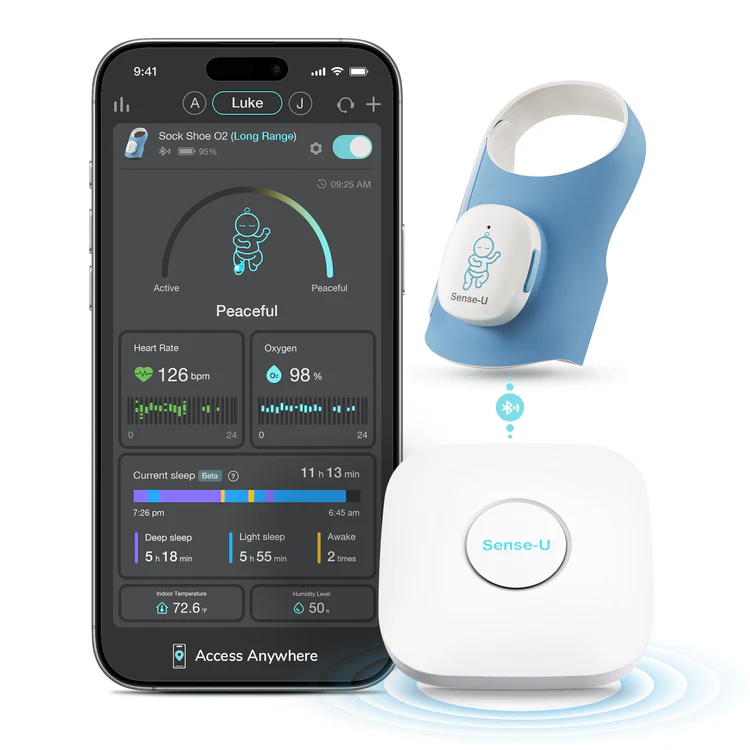
Sense-U offers a clip-on wearable that tracks breathing motion, body position, and temperature, giving you a more budget-friendly, modular alternative to Owlet's Smart Sock system.
It relies on a wearable sensor paired with an app or optional base station to track breathing movement and sleep position. However, it doesn't consistently include oxygen saturation or heart-rate data the way Owlet does.
Quick comparison with Owlet
| Sense-U | Owlet |
|---|---|---|
Monitoring type | Breathing motion and position | Oxygen and heart rate |
Wearable required | Yes | Yes |
Oxygen/heart-rate tracking | No | Yes |
Subscription needed | No | Sometimes, for full app features |
Why Sense-U stands out
Sense-U keeps wearable monitoring simple, without the higher cost or subscription layers that Owlet's ecosystem often involves.
- Breathing motion and body position, including stomach sleeping, get tracked through a clip-on sensor.
- Starting with a basic sensor and adding components later is possible, rather than committing to a full system right away.
- Oxygen saturation and heart rate aren't tracked consistently across the lineup, so it sits between simple observation and Owlet's full biometric approach.
4. Miku: Contact-Free Breathing Monitor

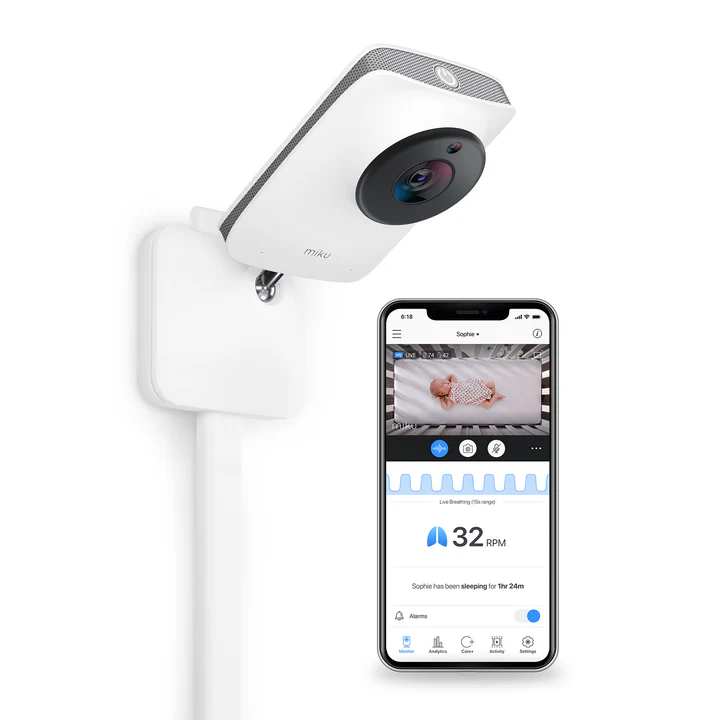
Miku uses radar-based sensing and HD video to estimate breathing patterns without any sock, band, or clip attached to your baby, an entirely contact-free approach compared to Owlet's wearable.
It relies on Wi-Fi connectivity, combining infrared HD video with contact-free respiration tracking, temperature and humidity monitoring, and two-way audio through the app.
Quick comparison with Owlet
| Miku | Owlet |
|---|---|---|
Monitoring type | Contact-free breathing estimation | Oxygen and heart rate |
Wearable required | No | Yes |
Connectivity | Wi-Fi only | Wi-Fi only |
Subscription needed | Yes, for full insights | Sometimes, for full app features |
Why Miku stands out
Miku simplifies things by removing the wearable altogether, so there's nothing to attach or manage.
- Video, sound, and breathing estimation come combined in one system, rather than juggling separate devices.
- Estimates are based on sensing and algorithms rather than direct measurement, so precision doesn't match Owlet's pulse oximeter.
- Scaling across multiple rooms is more limited, since it's designed mainly as a single, premium nursery monitor.
5. VTech: Non-Wi-Fi Video and Audio Monitor

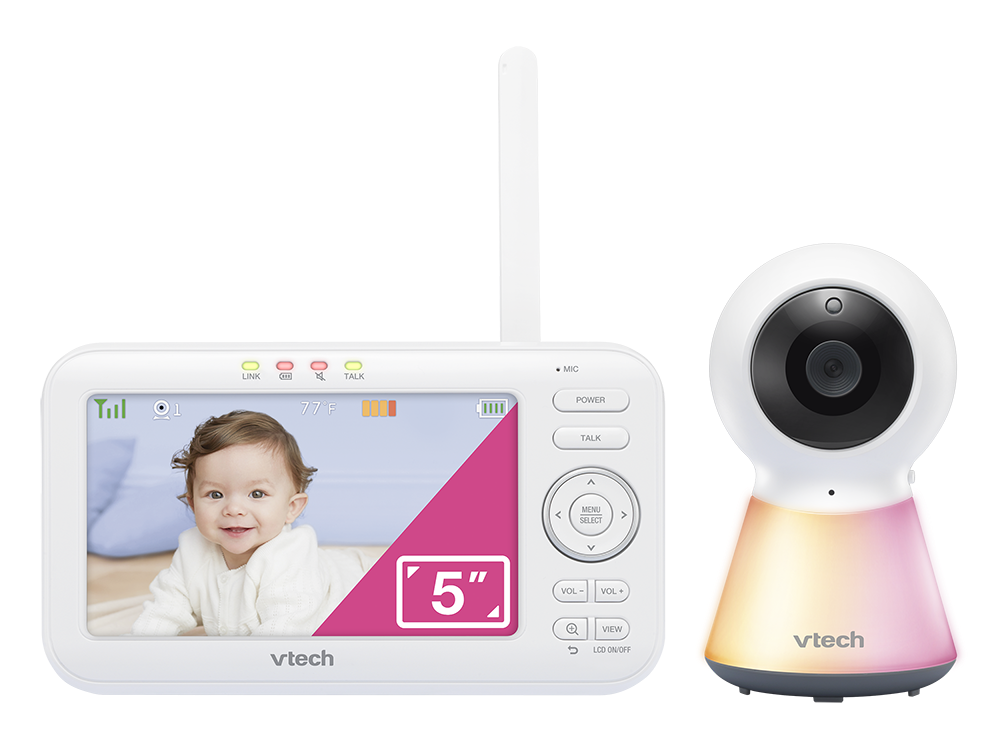
VTech focuses on dedicated parent-unit monitoring with direct video transmission, a more traditional approach than Owlet's app-driven wearable system.
It relies on FHSS connectivity in most models, avoiding Wi-Fi, with live video, audio detection, temperature monitoring, motion alerts, and pan-tilt-zoom control through a handheld parent unit.
Quick comparison with Owlet
| VTech | Owlet |
|---|---|---|
Monitoring type | Video and audio | Oxygen and heart rate |
Wearable required | No | Yes |
Connectivity | Mostly non-Wi-Fi (FHSS) | Wi-Fi only |
Subscription needed | No | Sometimes, for full app features |
Why VTech stands out
It's about as simple as monitoring gets. It's a great plug-and-play monitor with no app, wearable, or subscription to manage.
- Most models skip Wi-Fi entirely, so there's minimal reliance on your home network or the cloud.
- Oxygen saturation, heart rate, and sleep analytics aren't part of the picture, keeping things simpler by design.
- It supports multiple cameras for siblings or different rooms, though remote access is more limited than app-based systems.
6. Infant Optics: Non-Wi-Fi Video Monitor

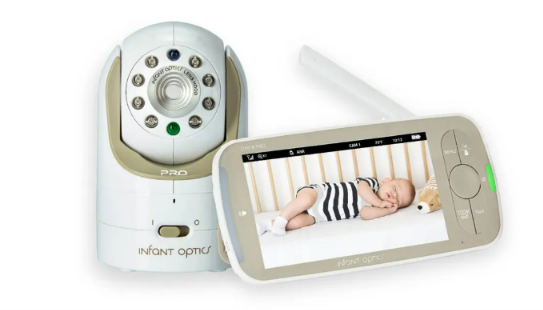
Infant Optics offers a closed, non-Wi-Fi video monitoring system, prioritizing dependable video and audio over the wearable, app-based tracking Owlet is known for.
It relies on FHSS transmission through a dedicated parent unit, with live video, infrared night vision, two-way audio, and pan-tilt-zoom control, but no oxygen, heart rate, or sleep analytics.
Quick comparison with Owlet
| Infant Optics | Owlet |
|---|---|---|
Monitoring type | Video and audio | Oxygen and heart rate |
Wearable required | No | Yes |
Connectivity | Non-Wi-Fi (FHSS) | Wi-Fi only |
Subscription needed | No | Sometimes, for full app features |
Why Infant Optics stands out
Infant Optics simplifies monitoring down to video and audio alone, with nothing else to set up or maintain.
- Infant Optics doesn't rely on Wi-Fi or an app, so it's best for privacy as there's no internet dependency and no account setup required.
- Oxygen, heart-rate, and sleep data aren't tracked, making this a much smaller data set than Owlet by design.
- Handing the monitor to grandparents or babysitters is simple, since there's no app or login involved.
7. Motorola Nursery: Hybrid Video Monitor

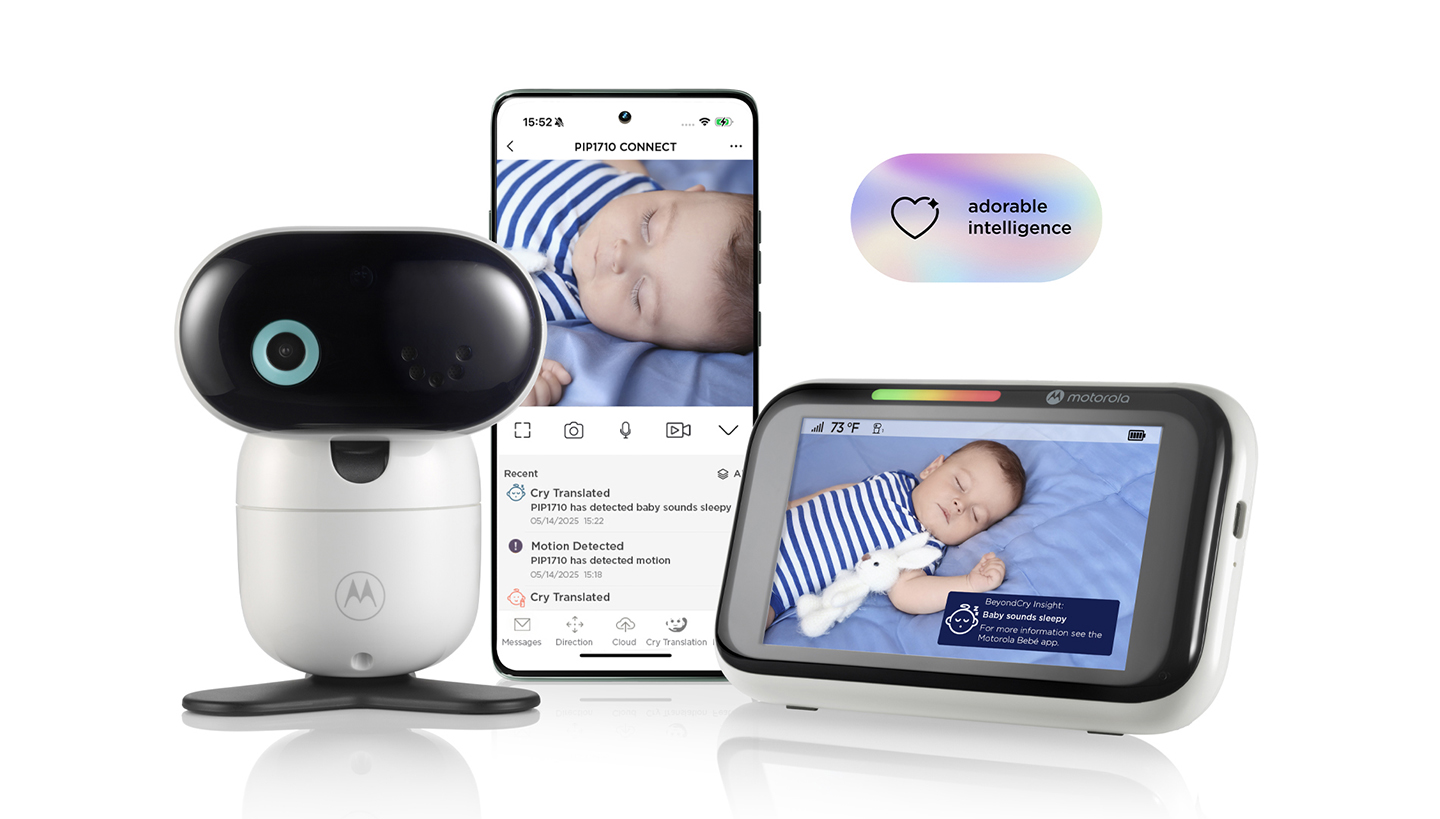
Motorola Nursery offers both a dedicated parent unit and app-based remote access, giving you more flexibility than Owlet's wearable-only approach.
It relies on a hybrid setup depending on the model, live HD video, infrared night vision, temperature monitoring, motion and sound alerts, and remote camera control through the app or parent unit.
Quick comparison with Owlet
| Motorola Nursery | Owlet |
|---|---|---|
Monitoring type | Video and audio | Oxygen and heart rate |
Wearable required | No | Yes |
Connectivity | Wi-Fi, non-Wi-Fi, or both | Wi-Fi only |
Subscription needed | No | Sometimes, for full app features |
Why Motorola Nursery stands out
It simplifies the choice between local and remote viewing, without ever needing a wearable to get there.
- Viewing the nursery through a dedicated screen or the app is possible, so you're not locked into one method.
- It supports multiple cameras, which works well for siblings, twins, or monitoring more than one room.
- Oxygen, heart-rate, and sleep analytics aren't included, keeping the focus on visual awareness rather than physiological data.
- Usefulness continues well past infancy, since the cameras double as ordinary room monitors as your child grows.
Finding the Right Fit for Your Family
If tracking oxygen and heart rate is what you're after specifically, Owlet's wearable approach still fills that niche. But if you're more drawn to observation, breathing movement, or sleep coaching, without a wearable or with more connectivity flexibility, an alternative like Babysense is likely a better long-term fit.
Start with the problem you're actually trying to solve, not the most feature-heavy option available. Think about who'll be using the monitor, whether you want a wearable at all, and how much data you'll realistically look at day-to-day.
References
1. Center for Devices and Radiological Health. (2025, September 16). Do not use unauthorized infant devices for monitoring vital signs: FDA safety communication. U.S. Food And Drug Administration. https://www.fda.gov/medical-devices/safety-communications/do-not-use-unauthorized-infant-devices-monitoring-vital-signs-fda-safety-communication
FAQs
Is there a cheaper alternative to Owlet?
Yes. Babysense, VTech, and Infant Optics are non-Wi-Fi options with no subscription costs. Alternatively, Sense-U offers wearable tracking similar to Owlet's concept at a lower price point.
What's the best Owlet alternative that doesn't require a wearable?
Babysense, Nanit, Miku, VTech, Infant Optics, and Motorola Nursery all monitor without requiring your baby to wear anything. Babysense and Miku specifically offer different types of breathing monitoring without a wearable component.
Which Owlet alternative is best for multiple caregivers?
Motorola Nursery and Babysense both support easy caregiver access: Motorola Nursery through app sharing, and Babysense through dedicated parent units that don't require an account setup.